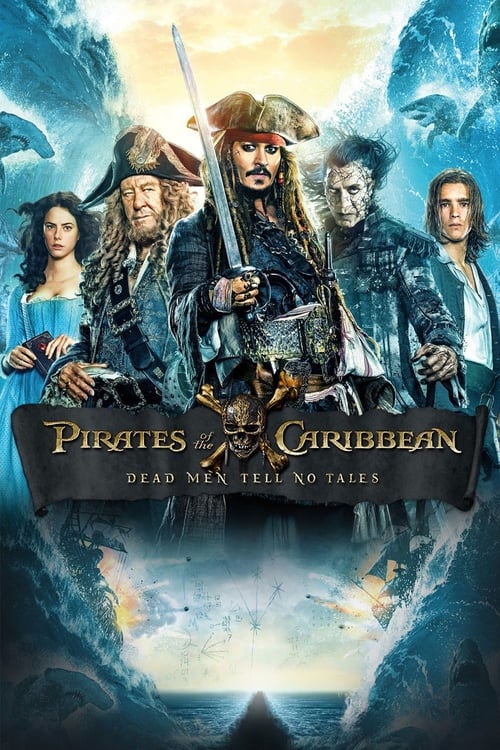
Pirates of the Caribbean: Dead Men Tell No Tales
2017 · Directed by Espen Sandberg
Woke Score
CriticCritic Score
Audience
Ultra Based
Critics rated this 35 points above its woke score. Among Ultra Based films, this critic score ranks #1358 of 1469.
Representation Casting
Score: 25/100
Kaya Scodelario as Carina Smyth provides a female lead character, and the cast includes international actors like Golshifteh Farahani, but the film's racial and gender diversity remains limited and somewhat tokenistic.
LGBTQ+ Themes
Score: 0/100
No LGBTQ+ themes, representation, or narrative elements are present in the film.
Feminist Agenda
Score: 10/100
While Carina is positioned as intelligent and independent, the film's female characters never interact meaningfully, and she ultimately functions as a romantic interest within a male-centered narrative.
Racial Consciousness
Score: 5/100
The film contains no explicit engagement with racial themes or consciousness, though it includes some international cast members in supporting roles.
Climate Crusade
Score: 0/100
No climate-related themes or environmental consciousness is present in the narrative.
Eat the Rich
Score: 0/100
The film contains no critique of capitalism, wealth accumulation, or economic systems; the plot is driven by treasure-seeking and personal gain.
Body Positivity
Score: 0/100
No body diversity or body positivity messaging is evident in the film.
Neurodivergence
Score: 0/100
No neurodivergent representation or themes are present in the narrative.
Revisionist History
Score: 0/100
The film makes no attempt to revisit or reframe historical narratives; it is a fantasy adventure unconcerned with historical accuracy or reinterpretation.
Lecture Energy
Score: 0/100
The film contains no preachy moralizing or explicit messaging about social issues; it prioritizes entertainment over cultural instruction.


Synopsis
Thrust into an all-new adventure, a down-on-his-luck Capt. Jack Sparrow feels the winds of ill-fortune blowing even more strongly when deadly ghost sailors led by his old nemesis, the evil Capt. Salazar, escape from the Devil's Triangle. Jack's only hope of survival lies in seeking out the legendary Trident of Poseidon, but to find it, he must forge an uneasy alliance with a brilliant and beautiful astronomer and a headstrong young man in the British navy.
Consciousness Assessment
Pirates of the Caribbean: Dead Men Tell No Tales arrives as a film almost aggressively unconcerned with contemporary cultural sensibilities. It is a conventional adventure spectacle, concerned primarily with spectral combat, comedic stumbling, and the pursuit of a magical trident. Johnny Depp's Jack Sparrow remains the narrative center, a character whose primary traits involve inebriation and self-interested scheming. The film takes no particular interest in interrogating power structures, institutional oppression, or the machinery of systemic inequality.
The presence of Kaya Scodelario as Carina Smyth, an astronomer and horologist, provides the film's sole concession to female participation in its narrative. Yet this concession is minimal. Mediaversity Reviews observed that the film's two female characters never exchange dialogue, suggesting a compositional indifference to meaningful female representation. Carina functions as a plot device and romantic interest rather than as a character with independent thematic weight. The film's broader cast includes some international actors, yet this casting reflects commercial calculation rather than any commitment to progressive representation.
The screenplay contains no discernible engagement with climate catastrophe, anti-capitalist sentiment, neurodivergence, body diversity, or revisionist historical consciousness. It is fundamentally a film about acquisition and adventure, uncomplicated by social commentary. The undead Spanish captain Salazar and his ghost crew serve as antagonists defined by revenge rather than by any meaningful ideological conflict. This is entertainment designed to occupy two hours of attention through action sequences and established franchise affection, not to advance or complicate cultural consciousness.
Analysis generated by our Consciousness Algorithm
Critic Reviews
“The pacing is spot-on, the set-pieces memorable and all the characters are allowed to shine, without it ever becoming The Johnny Depp Show.”
“Johnny Depp’s drunken Captain Jack Sparrow stumbles into yet another seafaring adventure, which has its rocky moments but also offers an engaging tale with family legacies, above-average swashbuckling and a fantastic new villain courtesy of Javier Bardem”
“"Dead Men” works well enough as a stand-alone, swashbuckling comedic spectacle, thanks to the terrific performances, some ingenious practical effects, impressive CGI and a steady diet of PG-13 dialogue peppered with not particularly sophisticated but (I have to admit) fairly funny sexual innuendo.”
“This movie is truly unhinged — not crazed, which might be interesting, but devoid of the usual hinges that connect one sequence with another. ”
Consciousness Markers
Kaya Scodelario as Carina Smyth provides a female lead character, and the cast includes international actors like Golshifteh Farahani, but the film's racial and gender diversity remains limited and somewhat tokenistic.
No LGBTQ+ themes, representation, or narrative elements are present in the film.
While Carina is positioned as intelligent and independent, the film's female characters never interact meaningfully, and she ultimately functions as a romantic interest within a male-centered narrative.
The film contains no explicit engagement with racial themes or consciousness, though it includes some international cast members in supporting roles.
No climate-related themes or environmental consciousness is present in the narrative.
The film contains no critique of capitalism, wealth accumulation, or economic systems; the plot is driven by treasure-seeking and personal gain.
No body diversity or body positivity messaging is evident in the film.
No neurodivergent representation or themes are present in the narrative.
The film makes no attempt to revisit or reframe historical narratives; it is a fantasy adventure unconcerned with historical accuracy or reinterpretation.
The film contains no preachy moralizing or explicit messaging about social issues; it prioritizes entertainment over cultural instruction.