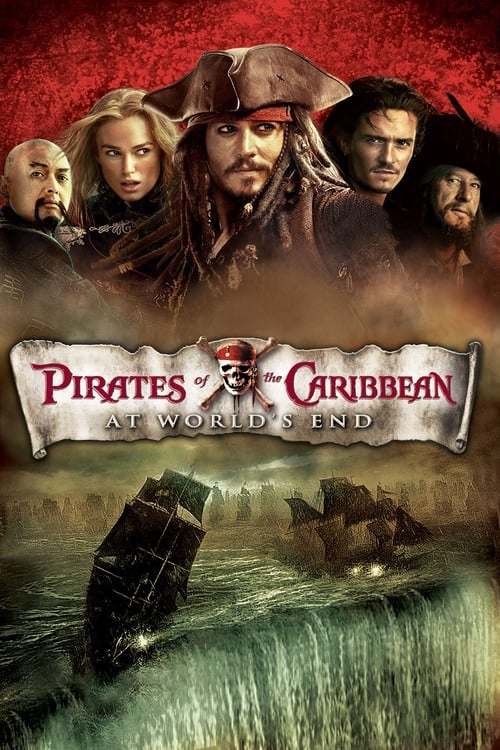
Pirates of the Caribbean: At World's End
2007 · Directed by Gore Verbinski
Woke Score
CriticCritic Score
Audience
Ultra Based
Critics rated this 35 points above its woke score. Among Ultra Based films, this critic score ranks #1163 of 1469.
Representation Casting
Score: 25/100
The cast is predominantly white and male. Elizabeth Swann (Keira Knightley) is present and active, but female representation remains minimal and secondary to male action heroes.
LGBTQ+ Themes
Score: 15/100
Captain Jack Sparrow's ambiguous mannerisms are played for comedy and eccentricity rather than genuine representation. No substantive LGBTQ+ themes or characters exist in the narrative.
Feminist Agenda
Score: 20/100
Elizabeth Swann participates in action sequences and leadership moments, but the film contains no meaningful exploration of gender dynamics or feminist themes. Her arc is subordinate to the larger adventure plot.
Racial Consciousness
Score: 10/100
The film treats colonialism and imperialism as backdrop rather than subject matter. There is no critical engagement with racial power structures or historical injustice.
Climate Crusade
Score: 0/100
No climate-related themes, messaging, or environmental consciousness appears anywhere in the film.
Eat the Rich
Score: 5/100
Pirates operate as adventure figures rather than anti-capitalist rebels. Economic systems and wealth inequality receive no critical examination.
Body Positivity
Score: 0/100
The film contains no body positivity messaging or celebration of diverse body types. Appearances are treated conventionally.
Neurodivergence
Score: 0/100
No neurodivergent representation or themes are present in the film.
Revisionist History
Score: 10/100
While the film uses historical piracy as inspiration, it makes no attempt to revise historical narratives about colonialism, slavery, or maritime history in service of progressive themes.
Lecture Energy
Score: 15/100
The film avoids any preachy tone about social issues. Its only lecture-adjacent moments are Captain Barbossa's speeches about piracy, which are entertainment-focused rather than consciousness-raising.


Synopsis
Captain Jack Sparrow is trapped in Davy Jones' Locker when his pirate brethren begin a desperate quest to locate and rescue him. Follow their wild seafaring adventures from exotic Singapore to World's End and beyond.
Consciousness Assessment
Pirates of the Caribbean: At World's End operates in a cultural register so removed from contemporary social consciousness that evaluating it for progressive sensibilities feels almost quaint. This is a film that exists in a fantasy realm of CGI tentacles, British naval officers, and supernatural curses, where the primary concern is whether the next action sequence will involve more ship-based acrobatics than the last. The film contains a few female characters of varying competence (Keira Knightley's Elizabeth Swann gets to fight and lead, which is something), but they exist in service to the plot rather than as vehicles for exploring gender dynamics or representation. One might note that the film's treatment of colonialism, slavery, and imperial power is entirely incidental to its narrative concerns, which is to say it treats these as mere set dressing for a pirate adventure. The Barbossa-Sparrow dynamic and various betrayals among the pirates occupy the film's moral universe far more than any engagement with systemic inequality.
What emerges from this third installment is a pure adventure spectacle indifferent to the cultural conversations happening around it. The cast is predominantly white, the romantic subplot is perfunctory, and the film's only apparent social consciousness involves a few jokes about Captain Jack's ambiguous sexuality (coded as eccentric mannerism rather than identity representation). There is no climate messaging, no body positivity arc, no neurodivergent representation, no anti-capitalist critique. The film simply does not concern itself with these frameworks. Its pirates are not rebels against economic systems but colorful rogues operating in a fantasy space where such critiques would be tonally inappropriate. For a 2007 blockbuster, this represents a film made entirely in the old register of adventure cinema, before the cultural shifts that would later reshape studio productions.
This is not a failing of the film, precisely. It is a film that knows what it is and commits fully to that identity. Yet from the vantage point of social consciousness assessment, it reads as a relic from a moment before such considerations became part of the blockbuster calculation. The film is content to entertain without consciousness.
Analysis generated by our Consciousness Algorithm
Critic Reviews
“The most visually spectacular, action-packed and surreal of the adventures of Capt. Jack Sparrow (Johnny Depp).”
“I won't be able to talk anybody into or out of the Pirates of the Caribbean experience now, so I'll simply offer sage advice: Hit the bathroom just before it starts. To miss any five-minute chunk of this densely plotted trilogy-capper will leave you confused.”
“Exciting, distracting and quite possibly permanently concentration impairing, what Pirates of the Caribbean: At World's End offers is a wonderfully scenic medley of impressive action sequences so lengthy, elaborate and numerous that remembering what came before becomes a kind of test of mental focus.”
“Has no narrative throughline, no emotional spine. It's a mess.”
Consciousness Markers
The cast is predominantly white and male. Elizabeth Swann (Keira Knightley) is present and active, but female representation remains minimal and secondary to male action heroes.
Captain Jack Sparrow's ambiguous mannerisms are played for comedy and eccentricity rather than genuine representation. No substantive LGBTQ+ themes or characters exist in the narrative.
Elizabeth Swann participates in action sequences and leadership moments, but the film contains no meaningful exploration of gender dynamics or feminist themes. Her arc is subordinate to the larger adventure plot.
The film treats colonialism and imperialism as backdrop rather than subject matter. There is no critical engagement with racial power structures or historical injustice.
No climate-related themes, messaging, or environmental consciousness appears anywhere in the film.
Pirates operate as adventure figures rather than anti-capitalist rebels. Economic systems and wealth inequality receive no critical examination.
The film contains no body positivity messaging or celebration of diverse body types. Appearances are treated conventionally.
No neurodivergent representation or themes are present in the film.
While the film uses historical piracy as inspiration, it makes no attempt to revise historical narratives about colonialism, slavery, or maritime history in service of progressive themes.
The film avoids any preachy tone about social issues. Its only lecture-adjacent moments are Captain Barbossa's speeches about piracy, which are entertainment-focused rather than consciousness-raising.