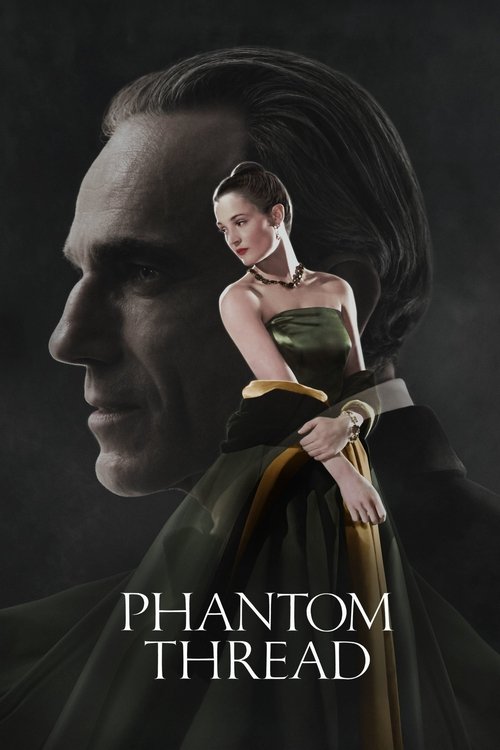
Phantom Thread
2017 · Directed by Paul Thomas Anderson
Woke Score
CriticCritic Score
Audience
Ultra Based
Critics rated this 82 points above its woke score. Among Ultra Based films, this critic score ranks #129 of 1469.
Representation Casting
Score: 0/100
The cast is predominantly white and British, reflecting the period setting without deliberate representation work. No evidence of casting diversity beyond what the 1950s London haute couture world would naturally contain.
LGBTQ+ Themes
Score: 0/100
No LGBTQ+ themes, representation, or subtext present in the film. The narrative centers exclusively on a heterosexual romantic relationship.
Feminist Agenda
Score: 15/100
The film engages with feminist critique of toxic masculinity and power imbalance, but does so ambiguously and without clear moral positioning. Alma's agency remains questionable, and the narrative ultimately romanticizes rather than condemns the controlling dynamic.
Racial Consciousness
Score: 0/100
No racial consciousness or commentary present. The film exists in an all-white world without acknowledgment or exploration of racial dynamics.
Climate Crusade
Score: 0/100
No climate themes or environmental consciousness evident in the narrative or visual storytelling.
Eat the Rich
Score: 0/100
While the film depicts the luxury fashion industry, it does not critique capitalism or class systems. The narrative treats wealth and artistic patronage as natural and aesthetically beautiful.
Body Positivity
Score: 0/100
No body positivity themes present. The film's focus on haute couture and perfect tailoring inherently emphasizes aesthetic standards and body conformity rather than acceptance.
Neurodivergence
Score: 0/100
No representation or discussion of neurodivergence. Reynolds Woodcock's controlling behavior is presented as artistic perfectionism rather than any condition worthy of commentary.
Revisionist History
Score: 0/100
The film does not engage in revisionist history. It depicts 1950s London haute couture without reframing historical events or power structures.
Lecture Energy
Score: 20/100
The film carries a subtle lecture energy through its careful composition and framing of toxic masculinity, though Anderson resists explicit moral instruction. The ambiguity itself functions as a kind of intellectual posturing.


Synopsis
In 1950s London, a renowned dressmaker's meticulous lifestyle begins drastically changing as his relationship with his young muse intensifies.
Consciousness Assessment
Paul Thomas Anderson's "Phantom Thread" presents itself as an examination of toxic masculinity through the lens of haute couture, yet the film's actual engagement with such themes proves deliberately oblique. Reynolds Woodcock, the fastidious designer at the film's center, dominates and manipulates his young muse Alma with the same meticulous control he applies to fabric and seam. Critics noted the film's exploration of abusive power dynamics, though Anderson's approach remains fundamentally ambiguous about whether the narrative endorses or critiques this arrangement. The film oscillates between gothic romance and psychological study, treating the protagonist's cruelty as an aesthetic choice rather than a moral problem to be reckoned with.
What saves "Phantom Thread" from scoring higher on contemporary progressive sensibilities is its studied refusal to offer moral clarity or to position Alma as anything other than a willing participant in her own subordination. The film employs the language of feminist critique without the substance, allowing viewers to project their own interpretations onto its beautifully composed scenes of emotional manipulation. Lesley Manville's Cyril, the designer's sister and business partner, receives more agency and dimension than Alma herself, which undercuts any pretense toward gender consciousness. The film's period setting provides convenient cover for attitudes that would be immediately recognizable as troubling in a contemporary context.
The production design and cinematography demonstrate technical mastery, but these formal achievements do not translate into progressive content. "Phantom Thread" remains a film about a man's artistic genius justified through romantic entanglement, a narrative that predates contemporary social consciousness by decades and shows little interest in complicating its own premises. Anderson's characteristic detachment, which can function as satire in other contexts, here reads as indifference to the actual implications of what the film depicts.
Analysis generated by our Consciousness Algorithm
Critic Reviews
“The director’s most outwardly accessible movie in ages, Phantom Thread is at once an evocative period drama and a magical fable about lonely, solipsistic people finding solace in their mutual sense of alienation.”
“There is such pure delicious pleasure in this film, in its strangeness, its vehemence, its flourishes of absurdity, carried off with superb elegance.”
“The odd scenarios keep coming, fast and thick. Phantom Thread is built along the theoretically familiar lines of gothic romance – if you had to pick a predecessor, it would probably be Hitchcock’s Rebecca – but it’s very hard in the moment to work out where on earth it’s going, or even how conventionally romantic Reynolds and Alma’s relationship actually is.”
“There’s no doubt Phantom Thread will be forever lauded as a great fashion movie, but I don’t think it’s even a good one. Its view of how fashion is made feels desiccated and airless, as if beautiful clothes can come into being only under a dome of oppression and anxiety.”
Consciousness Markers
The cast is predominantly white and British, reflecting the period setting without deliberate representation work. No evidence of casting diversity beyond what the 1950s London haute couture world would naturally contain.
No LGBTQ+ themes, representation, or subtext present in the film. The narrative centers exclusively on a heterosexual romantic relationship.
The film engages with feminist critique of toxic masculinity and power imbalance, but does so ambiguously and without clear moral positioning. Alma's agency remains questionable, and the narrative ultimately romanticizes rather than condemns the controlling dynamic.
No racial consciousness or commentary present. The film exists in an all-white world without acknowledgment or exploration of racial dynamics.
No climate themes or environmental consciousness evident in the narrative or visual storytelling.
While the film depicts the luxury fashion industry, it does not critique capitalism or class systems. The narrative treats wealth and artistic patronage as natural and aesthetically beautiful.
No body positivity themes present. The film's focus on haute couture and perfect tailoring inherently emphasizes aesthetic standards and body conformity rather than acceptance.
No representation or discussion of neurodivergence. Reynolds Woodcock's controlling behavior is presented as artistic perfectionism rather than any condition worthy of commentary.
The film does not engage in revisionist history. It depicts 1950s London haute couture without reframing historical events or power structures.
The film carries a subtle lecture energy through its careful composition and framing of toxic masculinity, though Anderson resists explicit moral instruction. The ambiguity itself functions as a kind of intellectual posturing.