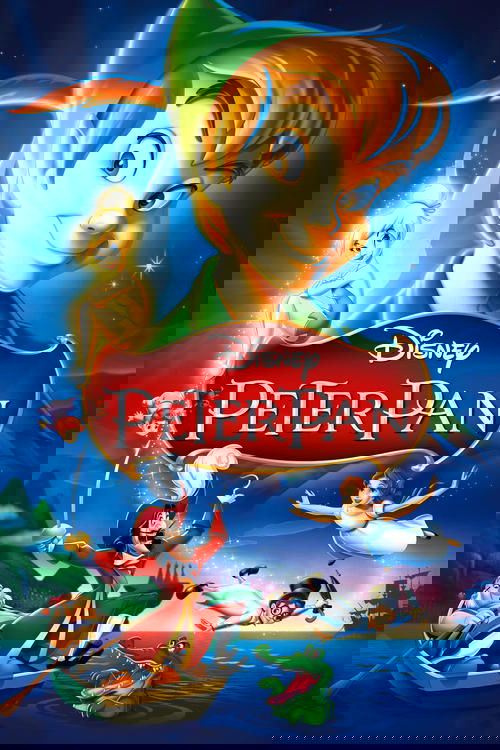
Peter Pan
1953 · Directed by Clyde Geronimi
Woke Score
CriticCritic Score
Audience
Ultra Based
Critics rated this 60 points above its woke score. Among Ultra Based films, this critic score ranks #808 of 1469.
Representation Casting
Score: 25/100
The film features a multiethnic cast of Lost Boys, suggesting some diversity in supporting characters, but this appears incidental rather than intentional. The lead characters are exclusively white.
LGBTQ+ Themes
Score: 0/100
No LGBTQ+ themes or representation are present in the film. Peter Pan's relationship with Wendy and the other children is entirely platonic and presented in traditional family terms.
Feminist Agenda
Score: 15/100
Wendy is portrayed primarily as a maternal figure who mothers the Lost Boys and serves a nurturing role. While she has agency in the story, the film does not present her arc as a critique or celebration of traditional feminine roles.
Racial Consciousness
Score: 78/100
The film contains highly problematic depictions of Native Americans as 'redskins' with stereotypical speech patterns and subservient characterization. This is offensive by modern standards, though it was unremarkable in 1953.
Climate Crusade
Score: 0/100
There is no environmental consciousness or climate messaging in the film. The magical island exists as a timeless space without any engagement with ecological themes.
Eat the Rich
Score: 5/100
The film contains no anti-capitalist messaging or critique of wealth and class structures. Captain Hook's villainy is personal rather than systemic.
Body Positivity
Score: 0/100
The film presents conventionally attractive characters and makes no statement regarding body diversity or body positivity. This is not a concern of the narrative.
Neurodivergence
Score: 0/100
There is no representation of neurodivergent characters or any engagement with disability and neurological difference in the film.
Revisionist History
Score: 10/100
The film takes considerable liberties with J.M. Barrie's source material but does not engage in conscious historical revisionism or attempt to reframe historical events.
Lecture Energy
Score: 5/100
The film is primarily concerned with entertainment and adventure. It does not present heavy-handed moral lessons or pause the narrative to deliver speeches about social issues.


Synopsis
Leaving the safety of their nursery behind, Wendy, Michael and John follow Peter Pan to a magical world where childhood lasts forever. But while in Neverland, the kids must face Captain Hook and foil his attempts to get rid of Peter for good.
Consciousness Assessment
Peter Pan arrives as a curious artifact of mid-century animation, a work that predates modern social consciousness by decades yet somehow manages to contain within itself the seeds of what would later become controversial. The film presents a world of perpetual childhood adventure, a fantasy untethered from the moral complexities that would eventually demand reckoning. The narrative itself is conservative in its emotional architecture: children are better off playing than growing up, a premise that requires no political scaffolding to support it.
The film's most obvious liability emerges in its treatment of the island's indigenous population. The depiction of Native Americans as "redskins" who speak in broken English and are portrayed as bumbling, superstitious, and ultimately subservient to the plot's white protagonists represents a form of casual dehumanization that was accepted in 1953 but has not aged well. This is not complicated storytelling born from genuine moral complexity. It is simply the unreflective racism of the era, rendered in watercolor and cel animation. The film makes no attempt to critique or examine this portrayal. It simply presents it as the natural order of things.
Beyond this obvious problem, the film largely exists in a pre-ideological space. Wendy is presented as maternal and domestic without this being particularly celebrated or critiqued. The Lost Boys are a multiethnic ensemble, though this reflects casting convenience rather than any progressive impulse. The narrative makes no statements about gender, class, disability, or environmental concerns. The film is neither progressive in modern terms nor actively hostile to such concerns. It is simply a product of its time, which is to say it carries the casual prejudices of its time without the self-awareness to interrogate them.
Analysis generated by our Consciousness Algorithm
Critic Reviews
“Like the schoolkids in this adventure, from the opening images to the closing credits, I do, I do, I do believe in fairy tales.”
“tT never grow up is unspeakably sad, and this is the first Peter Pan where Peter's final flight seems not like a victory but an escape.”
“Hogan whips up a high-energy family entertainment that fairly erases memory of the other filmed versions of Barrie's tale.”
“Needs more than happy thoughts to get off the ground.”
Consciousness Markers
The film features a multiethnic cast of Lost Boys, suggesting some diversity in supporting characters, but this appears incidental rather than intentional. The lead characters are exclusively white.
No LGBTQ+ themes or representation are present in the film. Peter Pan's relationship with Wendy and the other children is entirely platonic and presented in traditional family terms.
Wendy is portrayed primarily as a maternal figure who mothers the Lost Boys and serves a nurturing role. While she has agency in the story, the film does not present her arc as a critique or celebration of traditional feminine roles.
The film contains highly problematic depictions of Native Americans as 'redskins' with stereotypical speech patterns and subservient characterization. This is offensive by modern standards, though it was unremarkable in 1953.
There is no environmental consciousness or climate messaging in the film. The magical island exists as a timeless space without any engagement with ecological themes.
The film contains no anti-capitalist messaging or critique of wealth and class structures. Captain Hook's villainy is personal rather than systemic.
The film presents conventionally attractive characters and makes no statement regarding body diversity or body positivity. This is not a concern of the narrative.
There is no representation of neurodivergent characters or any engagement with disability and neurological difference in the film.
The film takes considerable liberties with J.M. Barrie's source material but does not engage in conscious historical revisionism or attempt to reframe historical events.
The film is primarily concerned with entertainment and adventure. It does not present heavy-handed moral lessons or pause the narrative to deliver speeches about social issues.