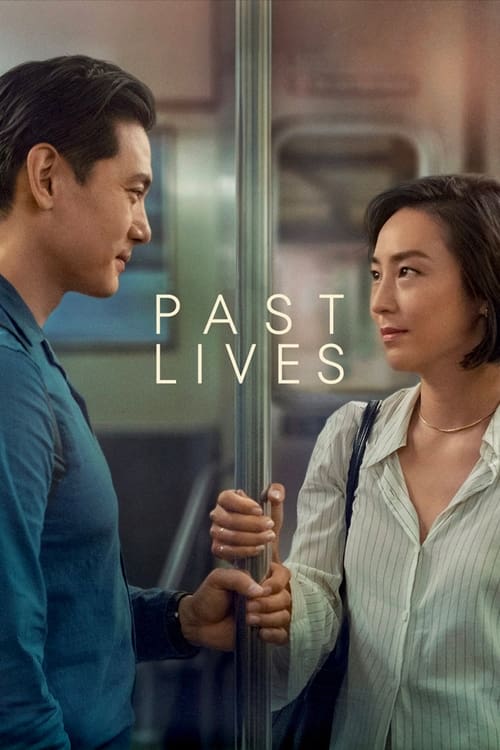
Past Lives
2023 · Directed by Celine Song
Woke Score
CriticCritic Score
Audience
Based
Critics rated this 66 points above its woke score. Among Based films, this critic score ranks #12 of 345.
Representation Casting
Score: 35/100
The film features Asian and Asian-American actors in lead roles, and was directed by a Korean-Canadian woman. However, the casting reflects the story's context rather than explicit progressive intention.
LGBTQ+ Themes
Score: 0/100
The film contains no LGBTQ+ themes, characters, or representation. The romantic relationships depicted are heterosexual.
Feminist Agenda
Score: 25/100
The female protagonist exercises agency in her choices and relationships, but the film does not frame this as feminist critique. Gender dynamics are present but not interrogated.
Racial Consciousness
Score: 40/100
Immigration, cultural identity, and the Korean-American experience are central to the narrative. The film acknowledges racial and cultural particularity but does not foreground this as social commentary.
Climate Crusade
Score: 0/100
No climate-related themes, symbolism, or commentary appears in the film.
Eat the Rich
Score: 0/100
The film contains no critique of capitalism or systems of wealth. Economic structures are not examined or challenged.
Body Positivity
Score: 0/100
The film contains no body positivity messaging or commentary. Bodies are presented without ideological framing.
Neurodivergence
Score: 0/100
No neurodivergent characters or themes are present in the film.
Revisionist History
Score: 0/100
The film makes no attempt to reframe or reinterpret historical events or narratives.
Lecture Energy
Score: 10/100
The film maintains restraint in its thematic delivery, allowing viewers to draw conclusions. There is minimal preachy explanation or moral instruction from characters.


Synopsis
After decades apart, childhood friends Nora and Hae Sung are reunited in New York for one fateful weekend as they confront notions of destiny, love, and the choices that make a life.
Consciousness Assessment
Celine Song's directorial debut presents a meditation on fate and immigration that arrives with considerable restraint. The film centers on Nora, a Korean-American woman who reconnects with her childhood sweetheart after two decades of separation, exploring the paths not taken and the ones chosen. Crucially, the film does not announce its themes with trumpets. It simply exists, observing its characters with patience and allowing the audience to contemplate the weight of cultural displacement without preachy commentary.
The representation of Asian characters here deserves scrutiny. Greta Lee (herself Korean-American) and Teo Yoo (South Korean) are cast in a love story that acknowledges their ethnic identity as context rather than subject matter. The film was directed by a Korean-Canadian woman in her first feature, and the production involved Korean and international partners. Yet this is not the same as deliberate casting strategy for progressive representation. The characters happen to be Asian. Their immigration experience and cultural particularity matter to the narrative, but the film treats these as lived reality, not pedagogical opportunity.
The work exhibits minimal lecture energy. It contains no speeches about systemic oppression, no moments where a character explains their identity to others. The love triangle at the heart of the film, while centering a woman's agency and desire, does not position itself as a corrective statement about gender or power dynamics. The film simply asks whether love can survive circumstance and geography, a question as old as cinema itself. This restraint, in the current moment, registers as nearly oppositional.
Analysis generated by our Consciousness Algorithm
Critic Reviews
“There are three superb performances at the picture’s centre, but none is more radiant than that of Greta Lee, gracefully capturing the spirit of a searching soul who seems to understand things about the nuances of love that are beyond the grasp of the rest of us.”
“Past Lives is an exquisitely wistful drama that speaks with an honesty so affectingly crisp it will turn your conceptions of love, identity and fate on their head.”
“Past Lives is not concerned with regret. It is instead a thoughtful, humane rumination on what may be fixed in personal history but remains forever fluid in the mind.”
“There’s a disconcerting shrewdness underneath its patina of tastefulness — it’s too calculating to achieve the transcendent almost-romance it strives for but never inhabits. ”
Consciousness Markers
The film features Asian and Asian-American actors in lead roles, and was directed by a Korean-Canadian woman. However, the casting reflects the story's context rather than explicit progressive intention.
The film contains no LGBTQ+ themes, characters, or representation. The romantic relationships depicted are heterosexual.
The female protagonist exercises agency in her choices and relationships, but the film does not frame this as feminist critique. Gender dynamics are present but not interrogated.
Immigration, cultural identity, and the Korean-American experience are central to the narrative. The film acknowledges racial and cultural particularity but does not foreground this as social commentary.
No climate-related themes, symbolism, or commentary appears in the film.
The film contains no critique of capitalism or systems of wealth. Economic structures are not examined or challenged.
The film contains no body positivity messaging or commentary. Bodies are presented without ideological framing.
No neurodivergent characters or themes are present in the film.
The film makes no attempt to reframe or reinterpret historical events or narratives.
The film maintains restraint in its thematic delivery, allowing viewers to draw conclusions. There is minimal preachy explanation or moral instruction from characters.