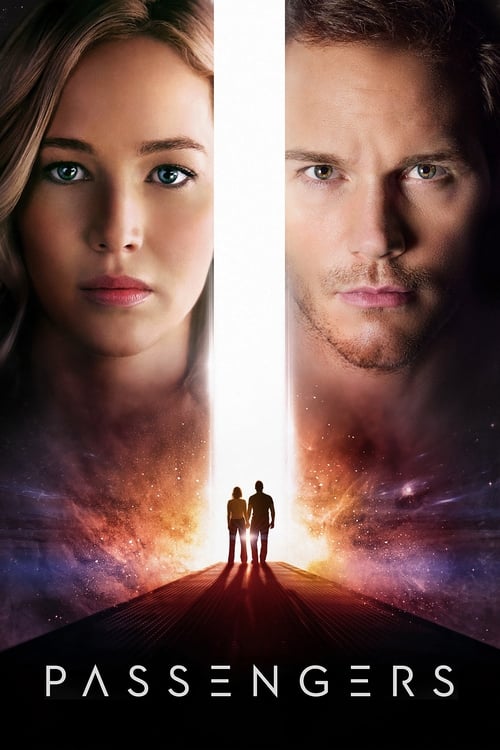
Passengers
2016 · Directed by Morten Tyldum
Woke Score
CriticCritic Score
Audience
Ultra Based
Critics rated this 32 points above its woke score. Among Ultra Based films, this critic score ranks #1344 of 1469.
Representation Casting
Score: 45/100
The film features Jennifer Lawrence and Chris Pratt as co-leads with relatively equal prominence in marketing and billing, representing a surface-level commitment to gender-neutral casting. However, the narrative structure subordinates Lawrence's character to Pratt's agency and desires.
LGBTQ+ Themes
Score: 0/100
No LGBTQ+ themes, characters, or representation are present in the film. The romance is exclusively heterosexual.
Feminist Agenda
Score: 15/100
While a female lead is present, the narrative fundamentally undermines any feminist reading by romanticizing a scenario built on the male protagonist's violation of the female protagonist's consent. The film does not interrogate or critique this dynamic.
Racial Consciousness
Score: 0/100
The film contains no meaningful exploration of race, racial identity, or racial dynamics. Supporting characters of color (Laurence Fishburne, Andy Garcia) are present but serve purely functional roles.
Climate Crusade
Score: 0/100
No climate-related themes or environmental consciousness are present in the film.
Eat the Rich
Score: 0/100
The film contains no critique of capitalism, class structures, or economic systems. The setting in space allows it to sidestep any engagement with material conditions.
Body Positivity
Score: 0/100
The film presents conventionally attractive leads in a glossy sci-fi setting. There is no engagement with body diversity or body positivity messaging.
Neurodivergence
Score: 0/100
No representation of neurodivergent characters or exploration of neurodivergence is present.
Revisionist History
Score: 0/100
As a science fiction film set in the future, the film contains no historical narrative or revisionist engagement with history.
Lecture Energy
Score: 10/100
The film occasionally gestures toward moral reflection through dialogue, particularly in conversations between characters about their situation, but stops short of genuine thematic commitment or systematic exploration of its ethical premises.


Synopsis
A spacecraft traveling to a distant colony planet and transporting thousands of people has a malfunction in its sleep chambers. As a result, two passengers are awakened 90 years early.
Consciousness Assessment
Passengers exists in a peculiar state of cultural limbo, a film that arrived in the mid-2010s with progressive casting credentials but fundamentally conservative narrative instincts. Jennifer Lawrence and Chris Pratt share top billing as the film's two leads, and on the surface level, this represents the sort of gender-neutral star vehicle that modern studios have learned to greenlight. Yet the film's actual plot mechanics work against any progressive reading: Pratt's character awakens Lawrence's character from her sleep pod without consent, trapping her in a romantic scenario she never chose. The film attempts to frame this as a romantic dilemma rather than a violation, a tonal miscalculation that undercuts any meaningful engagement with its ethical premises. The narrative refuses to fully reckon with what it has constructed, instead pivoting toward spectacle and reconciliation.
The film's social consciousness barely registers beyond its casting choices. There are no meaningful explorations of identity, no interrogation of systemic structures, no acknowledgment of the ways power dynamics shape human relationships. Michael Sheen appears as a bartender and Laurence Fishburne as a captain, roles that do nothing to complicate or enrich the film's thematic landscape. The film is set in space, which conveniently absolves it of any need to engage with contemporary social reality. Its concerns are purely interpersonal, and even there it stumbles badly, mistaking a man's loneliness for an excuse rather than recognizing it as the source of a profound moral transgression.
What ultimately defines Passengers is its absence of cultural awareness. This is not a film attempting progressive messaging and failing, nor is it a film that earnestly engages with difficult moral questions. It is a film that happened to cast two major stars and then told a deeply regressive story without appearing to notice the contradiction. The film's box office performance reflected this confusion, opening modestly and finding more success internationally than domestically, suggesting that audiences were picking up on something fundamentally unresolved at its core.
Analysis generated by our Consciousness Algorithm
Critic Reviews
“Cruising somewhere between therapy drama and paranoid thriller, this middlebrow tone poem aims for ambiguity but often veers into soporific, suspending answers (and often, viewer interest) en route to an ending that explains all.”
“Turns out to be just another dud in the genre of revisionist mysteries that have been messing with our heads since Haley Joel Osment saw dead people. Only this time, the big reveal doesn't so much twist the plot as snap its neck.”
“A supernatural thriller so mechanically inept and lacking in suspense that it doesn't even pass muster as lowbrow Halloween-ready entertainment.”
Consciousness Markers
The film features Jennifer Lawrence and Chris Pratt as co-leads with relatively equal prominence in marketing and billing, representing a surface-level commitment to gender-neutral casting. However, the narrative structure subordinates Lawrence's character to Pratt's agency and desires.
No LGBTQ+ themes, characters, or representation are present in the film. The romance is exclusively heterosexual.
While a female lead is present, the narrative fundamentally undermines any feminist reading by romanticizing a scenario built on the male protagonist's violation of the female protagonist's consent. The film does not interrogate or critique this dynamic.
The film contains no meaningful exploration of race, racial identity, or racial dynamics. Supporting characters of color (Laurence Fishburne, Andy Garcia) are present but serve purely functional roles.
No climate-related themes or environmental consciousness are present in the film.
The film contains no critique of capitalism, class structures, or economic systems. The setting in space allows it to sidestep any engagement with material conditions.
The film presents conventionally attractive leads in a glossy sci-fi setting. There is no engagement with body diversity or body positivity messaging.
No representation of neurodivergent characters or exploration of neurodivergence is present.
As a science fiction film set in the future, the film contains no historical narrative or revisionist engagement with history.
The film occasionally gestures toward moral reflection through dialogue, particularly in conversations between characters about their situation, but stops short of genuine thematic commitment or systematic exploration of its ethical premises.