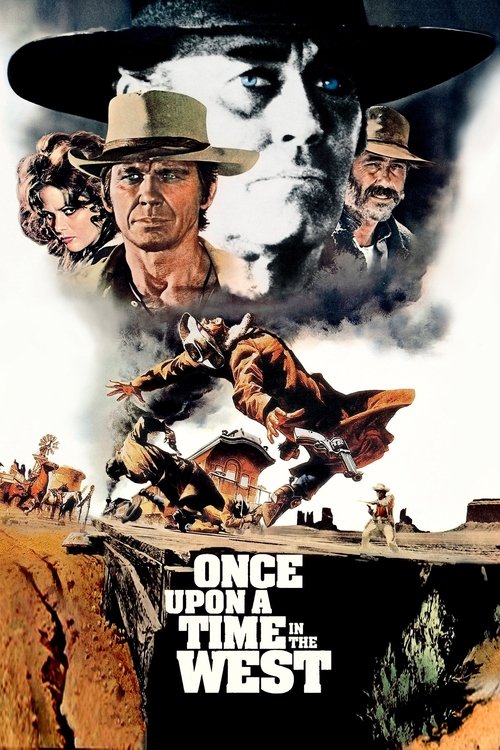
Once Upon a Time in the West
1968 · Directed by Sergio Leone
Woke Score
CriticCritic Score
Audience
Ultra Based
Critics rated this 78 points above its woke score. Among Ultra Based films, this critic score ranks #327 of 1469.
Representation Casting
Score: 5/100
Claudia Cardinale carries significant screen time and agency, but as a character type within a masculine narrative rather than as a conscious representation choice. Her casting reflects post-war European cinema conventions rather than deliberate diversity casting.
LGBTQ+ Themes
Score: 0/100
No LGBTQ+ themes, representation, or subtext present in the film. This is a heteronormative narrative structure taken entirely for granted.
Feminist Agenda
Score: 5/100
Jill is a capable protagonist who survives through her wits, but the film does not interrogate gender relations or offer feminist critique. Her strength is presented as individual character trait rather than systemic commentary.
Racial Consciousness
Score: 0/100
The film exhibits zero engagement with racial themes or indigenous perspectives. The colonization of the West proceeds as background narrative without moral or political interrogation.
Climate Crusade
Score: 0/100
No climate messaging or environmental consciousness present. The desert landscape exists as aesthetic and symbolic space, not as ecological system warranting care or protection.
Eat the Rich
Score: 20/100
The railroad represents faceless capital and corporate power crushing human values, but the critique remains tragic and mythic rather than systematic. No alternative economic vision is proposed or imagined.
Body Positivity
Score: 0/100
Body positivity as a concept is entirely absent. Characters are evaluated by their capacity for action and their visual iconography within the frame, not their embodied experience.
Neurodivergence
Score: 0/100
No representation of or engagement with neurodivergence. The film operates within a neurotypical framework without question or commentary.
Revisionist History
Score: 5/100
The film treats the frontier narrative as mythic rather than historical, but it does not actively revise or deconstruct historical narratives. It simply exists outside historical realism altogether.
Lecture Energy
Score: 0/100
Leone's aesthetic is fundamentally opposed to preachiness. The film teaches through image and rhythm, not through exposition or dialogue that explains moral positions to the audience.


Synopsis
As the railroad builders advance unstoppably through the Arizona desert on their way to the sea, Jill arrives in the small town of Flagstone with the intention of starting a new life.
Consciousness Assessment
Once Upon a Time in the West stands as a monument to pre-modern cinema sensibility, a film concerned primarily with operatic violence, landscape composition, and the elemental clash between civilization and frontier lawlessness. Sergio Leone constructed a narrative where Jill's agency derives not from her womanhood being celebrated or complicated, but from her position as a pawn in a larger game of property rights and masculine revenge. She is competent within the film's logic, yes, but her competence serves the plot rather than interrogating it. The film treats her neither as a symbol to be rescued nor as a vessel for progressive messaging. She simply exists as a character in a story about commerce and death. This is neither a mark against the film nor a sign of hidden progressivism. It is simply what the film is.
The iconography here belongs entirely to a pre-1970s understanding of the West, one that does not trouble itself with the moral weight of colonialism, indigenous displacement, or the racial composition of frontier society. The railroad builders are faceless instruments of capitalism, yes, but the film's critique operates at the level of aesthetics and human dignity rather than systemic analysis. Leone was interested in how power moves through space and across faces, not in the structures that legitimate or delegitimize that power. The violence is operatic, the editing is mathematical, and the score by Ennio Morricone functions as a character unto itself.
The film exists at a genuine distance from contemporary cultural preoccupations. It makes no attempt to address, acknowledge, or interrogate the social consciousness markers that define modern progressive cinema. This absence is not a failure. It is the condition of its making, a work that operates according to entirely different aesthetic and narrative principles. We approach it not expecting affirmation but rather expecting to be transported into a different register of storytelling altogether.
Analysis generated by our Consciousness Algorithm
Critic Reviews
“An additional treat is seeing Hollywood good guy Henry Fonda playing one of the nastiest curs in the West. Once Upon a Time in the West is one of the great films in cinema history. (8/30/2000 Review)”
“Leone brought back a masterpiece, a film that expands his baroque, cartoonish style into genuine grandeur, weaving dozens of thematic variations and narrative arabesques around a classical western foundation myth.(Review of Original Release)”
“Sergio Leone's masterpiece. In Once Upon a Time in the West, Leone pulls together all the themes, characterizations, visuals, humor, and musical experiments of the three "Dollars" films and comes up with a true epic western. It is a stunning, operatic film of breadth, detail, and stature that deserves to be considered among the greatest westerns ever made. (Review of Original Release)”
“Alas, the big screen also magnifies the problems with Once Upon a Time in the West. Specifically, Leone’s insistence on style trumped the need for substance. The film is basically a B-Western stretched an agonizing 165 minutes.”
Consciousness Markers
Claudia Cardinale carries significant screen time and agency, but as a character type within a masculine narrative rather than as a conscious representation choice. Her casting reflects post-war European cinema conventions rather than deliberate diversity casting.
No LGBTQ+ themes, representation, or subtext present in the film. This is a heteronormative narrative structure taken entirely for granted.
Jill is a capable protagonist who survives through her wits, but the film does not interrogate gender relations or offer feminist critique. Her strength is presented as individual character trait rather than systemic commentary.
The film exhibits zero engagement with racial themes or indigenous perspectives. The colonization of the West proceeds as background narrative without moral or political interrogation.
No climate messaging or environmental consciousness present. The desert landscape exists as aesthetic and symbolic space, not as ecological system warranting care or protection.
The railroad represents faceless capital and corporate power crushing human values, but the critique remains tragic and mythic rather than systematic. No alternative economic vision is proposed or imagined.
Body positivity as a concept is entirely absent. Characters are evaluated by their capacity for action and their visual iconography within the frame, not their embodied experience.
No representation of or engagement with neurodivergence. The film operates within a neurotypical framework without question or commentary.
The film treats the frontier narrative as mythic rather than historical, but it does not actively revise or deconstruct historical narratives. It simply exists outside historical realism altogether.
Leone's aesthetic is fundamentally opposed to preachiness. The film teaches through image and rhythm, not through exposition or dialogue that explains moral positions to the audience.