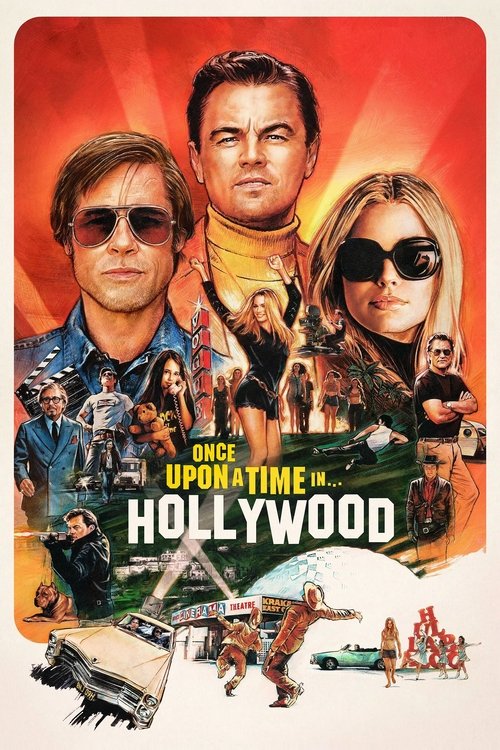
Once Upon a Time in Hollywood
2019 · Directed by Quentin Tarantino
Woke Score
CriticCritic Score
Audience
Ultra Based
Critics rated this 76 points above its woke score. Among Ultra Based films, this critic score ranks #261 of 1469.
Representation Casting
Score: 25/100
The cast includes actors of various backgrounds, but this reflects 1960s Hollywood demographics rather than intentional modern progressive casting. The diversity is incidental to the period setting.
LGBTQ+ Themes
Score: 0/100
No LGBTQ+ themes, characters, or subtext are present in the film.
Feminist Agenda
Score: 15/100
Sharon Tate is a central figure but remains largely passive and decorative. Female characters lack agency and interiority, serving primarily as supporting elements to male narrative arcs.
Racial Consciousness
Score: 0/100
The film contains no meaningful engagement with racial issues, consciousness, or commentary. Race is not addressed or examined.
Climate Crusade
Score: 0/100
There is no climate-related content or messaging in the film.
Eat the Rich
Score: 5/100
While the film depicts Hollywood as a competitive, sometimes cutthroat industry, it does not mount any systemic critique of capitalism or call for economic change.
Body Positivity
Score: 0/100
The film contains no body positivity messaging or representation. All characters conform to conventional Hollywood beauty standards.
Neurodivergence
Score: 0/100
No neurodivergent characters or representation are present in the film.
Revisionist History
Score: 20/100
The film rewrites the ending of the Manson murders to provide masculine catharsis and revenge fantasy, departing from historical fact in a way that serves the narrative's fantasy rather than examining history critically.
Lecture Energy
Score: 10/100
Tarantino's directorial voice is present but expressed through aesthetic choices and nostalgia rather than preachy messaging. The film does not lecture its audience about values or beliefs.


Synopsis
Los Angeles, 1969. TV star Rick Dalton, a struggling actor specializing in westerns, and stuntman Cliff Booth, his best friend, try to survive in a constantly changing movie industry. Dalton is the neighbor of the young and promising actress and model Sharon Tate, who has just married the prestigious Polish director Roman Polanski.
Consciousness Assessment
Tarantino's nostalgic reverie of 1960s Hollywood operates within a carefully constructed fantasy that flatters its own era while remaining studiously indifferent to any modern framework of cultural consciousness. The film employs a diverse cast, but this reflects the demographics of Hollywood itself rather than any deliberate statement about representation. Sharon Tate, the historical victim whose murder provides the film's darkest context, is portrayed primarily as a luminous presence to be admired from a distance. Margot Robbie's performance is ethereal and kind, yet the character lacks agency or interiority, existing largely as a symbol of innocence about to be violated.
The film's politics, to the extent they exist, are fundamentally conservative. Tarantino's ending rewrites history to provide catharsis and masculine revenge fantasy, undercutting any serious engagement with the Manson murders or the cultural anxieties of the era. The narrative celebrates masculine friendship and professional craft, while female characters remain peripheral or decorative. The hippies are portrayed as dangerous interlopers rather than as a genuine cultural movement deserving nuance. There is no interrogation of systemic inequality, environmental concerns, economic exploitation, or any other marker of contemporary progressive sensibility.
The film's considerable charm and technical mastery do not translate into progressive cultural commentary. It is a work of cinema made by and for those who wish to linger in a mythologized past, not to examine it or learn from it. In the lexicon of contemporary cultural awareness, this is a deeply neutral work, one that asks nothing of its audience except to enjoy the company of charismatic men in a beautiful, doomed moment.
Analysis generated by our Consciousness Algorithm
Critic Reviews
“Quite simply, I just defy anyone with red blood in their veins not to respond to the crazy bravura of Tarantino’s film-making, not to be bounced around the auditorium at the moment-by-moment enjoyment that this movie delivers.”
“There’s a gleeful toxicity here that will launch a thousand think-pieces – Pitt’s character is capital-P problematic, absolutely by design – but the transgressive thrill is undeniable, and the artistry mesmerisingly assured.”
“Once Upon a Time in Hollywood is bold, beautiful and brutal. It’s Tarantino’s best film since Kill Bill, perhaps even since Pulp Fiction.”
“Rancid, preposterous and hysterically over the top in ideas and execution, “once upon a time” perfectly describes writer-director Quentin Tarantino’s ninth film. Once Upon a Time…in Hollywood is indeed another hopped-up fairy tale like every other Tarantino epic.”
Consciousness Markers
The cast includes actors of various backgrounds, but this reflects 1960s Hollywood demographics rather than intentional modern progressive casting. The diversity is incidental to the period setting.
No LGBTQ+ themes, characters, or subtext are present in the film.
Sharon Tate is a central figure but remains largely passive and decorative. Female characters lack agency and interiority, serving primarily as supporting elements to male narrative arcs.
The film contains no meaningful engagement with racial issues, consciousness, or commentary. Race is not addressed or examined.
There is no climate-related content or messaging in the film.
While the film depicts Hollywood as a competitive, sometimes cutthroat industry, it does not mount any systemic critique of capitalism or call for economic change.
The film contains no body positivity messaging or representation. All characters conform to conventional Hollywood beauty standards.
No neurodivergent characters or representation are present in the film.
The film rewrites the ending of the Manson murders to provide masculine catharsis and revenge fantasy, departing from historical fact in a way that serves the narrative's fantasy rather than examining history critically.
Tarantino's directorial voice is present but expressed through aesthetic choices and nostalgia rather than preachy messaging. The film does not lecture its audience about values or beliefs.