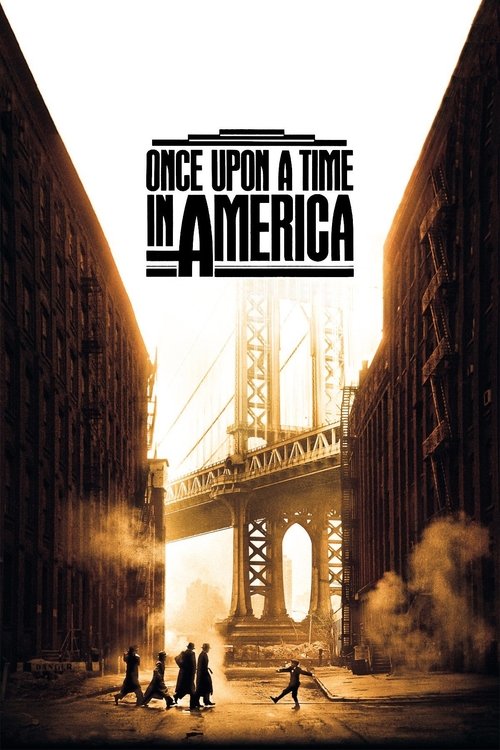
Once Upon a Time in America
1984 · Directed by Sergio Leone
Woke Score
CriticCritic Score
Audience
Ultra Based
Critics rated this 71 points above its woke score. Among Ultra Based films, this critic score ranks #488 of 1469.
Representation Casting
Score: 15/100
The film features Jewish characters in leading roles, which reflects the historical demographics of the Lower East Side. However, this is presented as historical fact rather than deliberate representation strategy. The casting serves the narrative, not progressive ideals.
LGBTQ+ Themes
Score: 0/100
No LGBTQ+ themes, characters, or representation appear in the film. Sexuality exists only in heterosexual contexts, often exploitative ones.
Feminist Agenda
Score: 2/100
The film contains brutal rape scenes and female characters who exist primarily as victims or romantic interests. There is no feminist consciousness evident. Women are depicted as objects of desire or suffering, never as agents with their own narrative weight.
Racial Consciousness
Score: 5/100
While the film depicts an ethnically specific community, it does not engage in racial consciousness in the modern sense. Jewish identity is presented as historical context rather than as a vehicle for discussing systemic racism or discrimination.
Climate Crusade
Score: 0/100
No climate themes whatsoever. The film is set in the early 20th century and concerns itself entirely with personal morality and criminality.
Eat the Rich
Score: 10/100
The film depicts capitalism and crime as intertwined systems of exploitation, though not with explicit ideological commentary. The wealthy are shown as corrupt, but this emerges from the narrative rather than from any pedagogical impulse.
Body Positivity
Score: 0/100
Body positivity is entirely absent. The film presents bodies as objects of violence, desire, and decay, without any affirmation of bodily diversity or acceptance.
Neurodivergence
Score: 0/100
No representation of neurodivergence. The film does not address mental health, disability, or neurodivergent experiences in any form.
Revisionist History
Score: 3/100
The film takes considerable liberty with historical narrative, but not in the service of progressive revisionism. It bends history to serve artistic vision rather than to correct the historical record from a social justice perspective.
Lecture Energy
Score: 0/100
Leone never lectures. The film trusts the viewer to draw conclusions from the moral emptiness on display. There is no voiceover explaining historical injustice or contemporary relevance.


Synopsis
A former Prohibition-era Jewish gangster returns to the Lower East Side of Manhattan over thirty years later, where he once again must confront the ghosts and regrets of his old life.
Consciousness Assessment
Sergio Leone's final film stands as a monument to a time when cinema had not yet discovered the therapeutic value of self-congratulation. This is a work of ruthless cynicism, where men betray one another with the casual cruelty of those who have never heard the word "accountability." The narrative spans four decades of American crime, charting the spiritual decline of David Noodles Aaronson as he navigates the Lower East Side's criminal underworld. Leone presents Jewish identity here not as a marker of representation but as circumstance, the historical fact of where these particular criminals happened to be born. There is no celebration, no affirmation, merely the cold documentation of their choices and their costs.
The film's treatment of women exists in a state of deliberate exploitation. Female characters appear primarily to be victimized, seduced, or abandoned. The two rape scenes function not as social commentary but as narrative punctuation, moments of violence that propel the male characters toward their predetermined fates. One might observe that this reflects the misogyny of the historical period being depicted, which is true, but Leone does not interrogate this misogyny so much as reproduce it with meticulous detail. The camera lingers on these moments with the same aesthetic precision it brings to everything else, which compounds rather than alleviates the brutality.
What we have is a film almost entirely devoid of the markers that would define progressive cultural consciousness in the contemporary sense. It contains no lectures about systemic injustice, no celebration of diversity as such, no suggestion that the world depicted here could or should be different. Leone made a masterpiece of moral corruption and spiritual entropy. He did not make a film about social consciousness. That is precisely what makes it so interesting to score.
Analysis generated by our Consciousness Algorithm
Critic Reviews
“A film of fatally flawed heroes, oversized passions, nation-building, and, inevitably, violence, America follows its characters from childhood to old age by way of the kind of grand-scale filmmaking that wouldn't be seen again until Martin Scorsese's Gangs Of New York. [2014 re-release]”
“This would-be epic schlep, dragging almost 50 years of chronology over a sluggish 140 minutes, is far too slight of text and ponderous of presentation to sustain more than nodding-off dramatic interest. [U.S. theatrical release]”
Consciousness Markers
The film features Jewish characters in leading roles, which reflects the historical demographics of the Lower East Side. However, this is presented as historical fact rather than deliberate representation strategy. The casting serves the narrative, not progressive ideals.
No LGBTQ+ themes, characters, or representation appear in the film. Sexuality exists only in heterosexual contexts, often exploitative ones.
The film contains brutal rape scenes and female characters who exist primarily as victims or romantic interests. There is no feminist consciousness evident. Women are depicted as objects of desire or suffering, never as agents with their own narrative weight.
While the film depicts an ethnically specific community, it does not engage in racial consciousness in the modern sense. Jewish identity is presented as historical context rather than as a vehicle for discussing systemic racism or discrimination.
No climate themes whatsoever. The film is set in the early 20th century and concerns itself entirely with personal morality and criminality.
The film depicts capitalism and crime as intertwined systems of exploitation, though not with explicit ideological commentary. The wealthy are shown as corrupt, but this emerges from the narrative rather than from any pedagogical impulse.
Body positivity is entirely absent. The film presents bodies as objects of violence, desire, and decay, without any affirmation of bodily diversity or acceptance.
No representation of neurodivergence. The film does not address mental health, disability, or neurodivergent experiences in any form.
The film takes considerable liberty with historical narrative, but not in the service of progressive revisionism. It bends history to serve artistic vision rather than to correct the historical record from a social justice perspective.
Leone never lectures. The film trusts the viewer to draw conclusions from the moral emptiness on display. There is no voiceover explaining historical injustice or contemporary relevance.