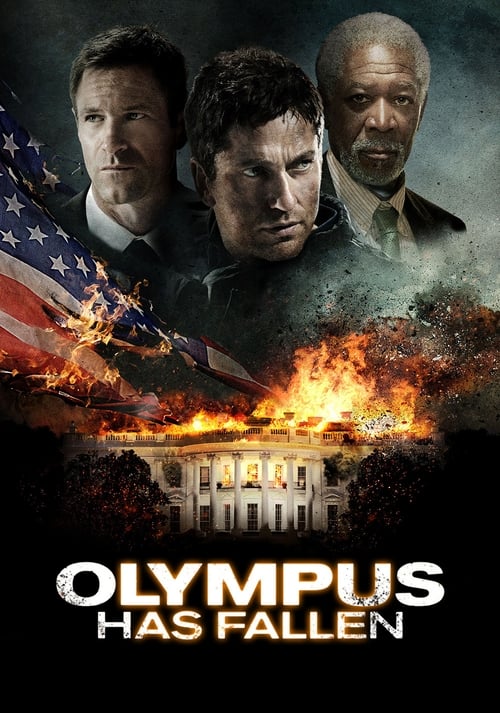
Olympus Has Fallen
2013 · Directed by Antoine Fuqua
Woke Score
CriticCritic Score
Audience
Ultra Based
Critics rated this 26 points above its woke score. Among Ultra Based films, this critic score ranks #1325 of 1469.
Representation Casting
Score: 25/100
The cast includes Morgan Freeman, Angela Bassett, and Radha Mitchell in substantive supporting roles, though their inclusion appears incidental to the narrative rather than reflective of intentional representational philosophy. These are competent professionals whose racial identity is not remarked upon.
LGBTQ+ Themes
Score: 0/100
No LGBTQ+ themes, representation, or content is present in the film. Sexual orientation and gender identity are not addressed.
Feminist Agenda
Score: 15/100
Female characters exist in positions of authority (Angela Bassett as Secret Service director, Melissa Leo as Speaker of the House) but serve primarily functional roles within the action narrative. No interrogation of gender dynamics or feminist themes is present.
Racial Consciousness
Score: 0/100
The film contains no explicit racial consciousness, thematic engagement with race, or commentary on systemic racial issues. Actors of color appear in the cast without racial themes informing their roles.
Climate Crusade
Score: 0/100
Climate change and environmental concerns are entirely absent from the film's thematic apparatus.
Eat the Rich
Score: 0/100
The film contains no critique of capitalism, corporate power, or wealth inequality. The narrative is fundamentally concerned with preserving state power, not questioning economic systems.
Body Positivity
Score: 0/100
Body positivity themes are not present. The film's action sequences celebrate conventional physical prowess and martial capability without commentary on body diversity or acceptance.
Neurodivergence
Score: 0/100
No representation of neurodivergence, disability, or neurological difference is evident in the film.
Revisionist History
Score: 0/100
The film presents no historical revisionism. It is set in a contemporary fictional scenario with no engagement with historical narratives or reinterpretations thereof.
Lecture Energy
Score: 10/100
The film is primarily concerned with plot momentum and action spectacle. There is minimal expository dialogue attempting to educate the viewer about social or political matters, though some procedural exposition is necessary to the narrative mechanics.


Synopsis
When the White House (Secret Service Code: "Olympus") is captured by a terrorist mastermind and the President is kidnapped, disgraced former Presidential guard Mike Banning finds himself trapped within the building. As the national security team scrambles to respond, they are forced to rely on Banning's inside knowledge to help retake the White House, save the President and avert an even bigger disaster.
Consciousness Assessment
Olympus Has Fallen is a 2013 action thriller that concerns itself with one matter above all others: the efficient elimination of terrorists from the White House. The film exhibits the sensibilities of post-9/11 security cinema, where patriotism functions as both plot engine and moral framework. Gerard Butler's disgraced Secret Service agent serves as the narrative's moral center not through any examination of systemic failure or institutional critique, but through his willingness to engage in increasingly graphic violence on behalf of national restoration. The supporting cast includes actors of various backgrounds, though their inclusion serves narrative function rather than any explicit commitment to representational equity.
The film's approach to its subject matter is aggressively straightforward. There is no interrogation of executive power, no meditation on the nature of security theater, no suggestion that the White House might be anything other than a repository of American virtue requiring protection. Morgan Freeman appears as the Vice President, Angela Bassett as a Secret Service director, and Radha Mitchell as a military analyst. These are competent professionals depicted with dignity, yet their presence functions as window dressing on a narrative fundamentally unconcerned with systemic questions or social consciousness. The film's villains are foreign terrorists motivated by vague geopolitical grievances, presented as obstacles to overcome rather than subjects for analysis.
What emerges is a film entirely innocent of the cultural preoccupations that would come to dominate Hollywood discourse in the subsequent decade. There is no lecture energy here, no pedagogical impulse, no sense that the viewer requires moral instruction. This is cinema in service of sensation and spectacle, comfortable in its assumptions and untroubled by self-examination. One might argue this constitutes a form of cultural innocence, though innocence and problematic essentialism are not mutually exclusive categories.
Analysis generated by our Consciousness Algorithm
Critic Reviews
“While Olympus Has Fallen breaks no major new ground in the political thriller genre, Fuqua has directed a sharp, very taut adventure that keeps you engrossed from start to finish.”
“It's that wonderful, totally unambitious yet satisfying thing, a really good movie. ”
“Although the film's real-world credibility is shaky, it works on its own terms.”
“Olympus Has Fallen is no fun at all. To the contrary, it soon grows tedious, odious and oppressive. ”
Consciousness Markers
The cast includes Morgan Freeman, Angela Bassett, and Radha Mitchell in substantive supporting roles, though their inclusion appears incidental to the narrative rather than reflective of intentional representational philosophy. These are competent professionals whose racial identity is not remarked upon.
No LGBTQ+ themes, representation, or content is present in the film. Sexual orientation and gender identity are not addressed.
Female characters exist in positions of authority (Angela Bassett as Secret Service director, Melissa Leo as Speaker of the House) but serve primarily functional roles within the action narrative. No interrogation of gender dynamics or feminist themes is present.
The film contains no explicit racial consciousness, thematic engagement with race, or commentary on systemic racial issues. Actors of color appear in the cast without racial themes informing their roles.
Climate change and environmental concerns are entirely absent from the film's thematic apparatus.
The film contains no critique of capitalism, corporate power, or wealth inequality. The narrative is fundamentally concerned with preserving state power, not questioning economic systems.
Body positivity themes are not present. The film's action sequences celebrate conventional physical prowess and martial capability without commentary on body diversity or acceptance.
No representation of neurodivergence, disability, or neurological difference is evident in the film.
The film presents no historical revisionism. It is set in a contemporary fictional scenario with no engagement with historical narratives or reinterpretations thereof.
The film is primarily concerned with plot momentum and action spectacle. There is minimal expository dialogue attempting to educate the viewer about social or political matters, though some procedural exposition is necessary to the narrative mechanics.