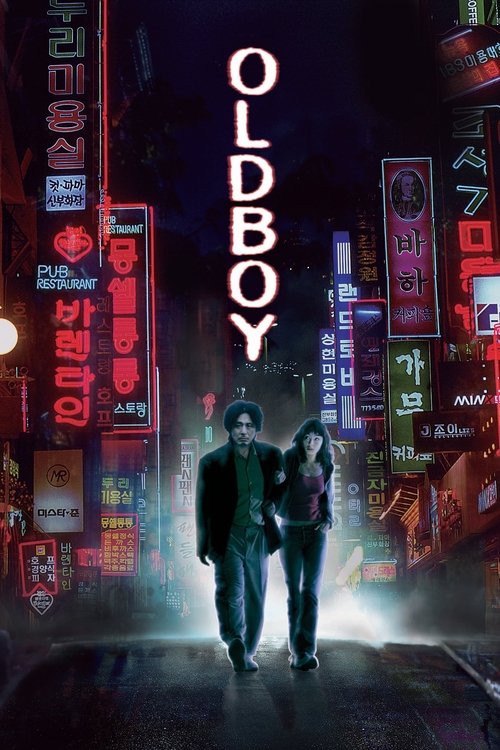
Oldboy
2003 · Directed by Park Chan-wook
Woke Score
CriticCritic Score
Audience
Ultra Based
Critics rated this 74 points above its woke score. Among Ultra Based films, this critic score ranks #414 of 1469.
Representation Casting
Score: 15/100
Cast reflects South Korean society of the era without deliberate diversity considerations. Female roles are minimal and objectified.
LGBTQ+ Themes
Score: 0/100
No LGBTQ+ themes or representation present in the film.
Feminist Agenda
Score: 5/100
Female characters serve primarily as narrative devices for male trauma. The younger woman's arc is subordinate to the protagonist's revenge and lacks meaningful agency.
Racial Consciousness
Score: 0/100
The film makes no explicit racial commentary. It exists within a homogeneous Korean context without interrogating or foregrounding racial dynamics.
Climate Crusade
Score: 0/100
Climate themes are entirely absent from this psychological revenge thriller.
Eat the Rich
Score: 5/100
While the narrative involves class tensions between captor and captive, the film does not systematically critique capitalist structures or present anti-capitalist ideology.
Body Positivity
Score: 0/100
Body positivity is not a concern in this film. Bodies exist primarily as sites of violence and torture.
Neurodivergence
Score: 0/100
No meaningful engagement with neurodivergence or disability representation.
Revisionist History
Score: 0/100
The film does not attempt to revise historical narratives or interrogate historical injustice from a contemporary perspective.
Lecture Energy
Score: 10/100
The film's final revelation carries a kind of moral lecture about the nature of violence and knowledge, though this emerges from the narrative rather than being imposed externally.


Synopsis
With no clue how he came to be imprisoned, drugged and tortured for 15 years, a desperate man seeks revenge on his captors.
Consciousness Assessment
Oldboy stands as a masterwork of formal cinema craft, a film so precisely constructed in its brutality that one might mistake it for ideological commitment. Park Chan-wook's 2003 revenge thriller concerns itself not with social consciousness but with the architecture of masculine trauma and retribution. The narrative unfolds with the kind of mechanical inevitability that treats female characters as narrative furniture, particularly in its treatment of the younger woman who becomes entangled in the protagonist's spiral. Her agency, her interiority, her existence beyond the male plot functions at minimal capacity. The film is a product of its time, which is to say it reflects the aesthetic and moral priorities of early 2000s Korean cinema without interrogation or distance. To score it highly on contemporary progressive sensibilities would be a fundamental category error. This is not a film that asks us to think about systems of power or representation. It asks us to contemplate the geometry of suffering and the price of knowledge. That it does this brilliantly does not make it conscious of the world we inhabit now.
Analysis generated by our Consciousness Algorithm
Critic Reviews
“It's a movie of such jaw-dropping violence, wild improbability and dazzling style it overpowers all resistance.”
“This hunt for revenge is really a quest for self-discovery. The story, acting and brilliant directing elevate Oldboy into a human struggle to know yourself and your place in the universe, and to live with that sometimes terrible knowledge.”
“Oldboy is a powerful film not because of what it depicts, but because of the depths of the human heart which it strips bare.”
Consciousness Markers
Cast reflects South Korean society of the era without deliberate diversity considerations. Female roles are minimal and objectified.
No LGBTQ+ themes or representation present in the film.
Female characters serve primarily as narrative devices for male trauma. The younger woman's arc is subordinate to the protagonist's revenge and lacks meaningful agency.
The film makes no explicit racial commentary. It exists within a homogeneous Korean context without interrogating or foregrounding racial dynamics.
Climate themes are entirely absent from this psychological revenge thriller.
While the narrative involves class tensions between captor and captive, the film does not systematically critique capitalist structures or present anti-capitalist ideology.
Body positivity is not a concern in this film. Bodies exist primarily as sites of violence and torture.
No meaningful engagement with neurodivergence or disability representation.
The film does not attempt to revise historical narratives or interrogate historical injustice from a contemporary perspective.
The film's final revelation carries a kind of moral lecture about the nature of violence and knowledge, though this emerges from the narrative rather than being imposed externally.