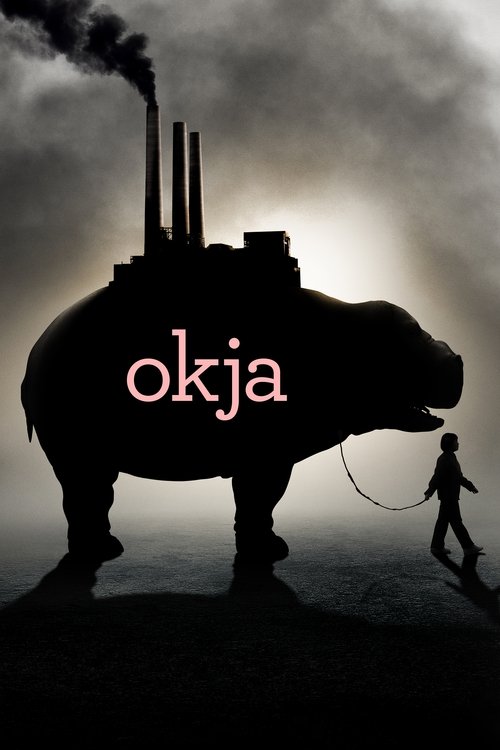
Okja
2017 · Directed by Bong Joon Ho
Woke Score
CriticCritic Score
Audience
Woke
Critics rated this 7 points above its woke score. Among Woke films, this critic score ranks #45 of 88.
Representation Casting
Score: 75/100
Lead role features Korean actress An Seo-hyun in a film directed by Bong Joon-ho. International and diverse supporting cast including Steven Yeun, Giancarlo Esposito, and others reflects deliberate casting choices, though representation appears organic to narrative rather than performative.
LGBTQ+ Themes
Score: 0/100
No LGBTQ+ representation or thematic content present in the film.
Feminist Agenda
Score: 30/100
Protagonist is a capable female character with agency, but the film does not center on feminist critique or gender politics as a primary social message.
Racial Consciousness
Score: 45/100
Scholarly analysis identifies racial themes and power dynamics in the film, though some critics note problematic stereotyping in character portrayals. Racial consciousness exists but is not the film's primary focus compared to class critique.
Climate Crusade
Score: 70/100
Environmental themes central to the narrative, particularly critique of industrial agriculture, genetic modification, and corporate food production systems. Environmental consciousness operates through animal ethics and anti-capitalist framework.
Eat the Rich
Score: 85/100
The film's strongest thematic element. Mirando Corporation and CEO Lucy Mirando are grotesque villains explicitly embodying corporate power and exploitation. The narrative fundamentally critiques capitalism, commodification, and corporate malfeasance.
Body Positivity
Score: 0/100
No meaningful engagement with body positivity, body image, or related themes present in the film.
Neurodivergence
Score: 0/100
No neurodivergence representation or thematic content in the film.
Revisionist History
Score: 0/100
Film does not engage with historical revision or reframing of past events as a primary concern.
Lecture Energy
Score: 65/100
Film employs preachy approach with explicit moral exposition. Tilda Swinton's cartoonishly evil CEO serves pedagogical purposes. The film makes its political messaging clear through expository dialogue about animal rights and corporate wrongdoing rather than subtle subtext.


Synopsis
A young girl named Mija risks everything to prevent a powerful, multi-national company from kidnapping her best friend - a massive animal named Okja.
Consciousness Assessment
Okja occupies a curious position in the landscape of politically conscious cinema. Bong Joon-ho has crafted a film that wears its anti-capitalist commitments with absolute transparency, treating the critique of corporate power and industrial agriculture with the gravity of a manifesto. The Mirando Corporation, led by Tilda Swinton's grotesquely cheerful CEO, functions less as a character than as a symbolic repository for every conceivable corporate sin: deception, animal cruelty, environmental destruction, and the commodification of life itself.
The film's social consciousness operates primarily through this anti-capitalist lens rather than through the more contemporary markers of progressive cultural critique. An Seo-hyun's Mija is a capable protagonist whose resourcefulness drives the narrative, but the film does not particularly center on gender politics or feminist theory. The diverse international cast reflects deliberate choices about representation, yet these choices feel integral to the story rather than performative. The environmental themes emerge through animal ethics and the horror of industrial meat production, positioning climate consciousness as secondary to broader economic critique.
What distinguishes Okja from more purely "woke" contemporary cinema is its refusal of subtlety. The film lectures, explains, and demonstrates its moral positions with almost aggressive clarity. Characters explicitly articulate the stakes of animal exploitation and corporate malfeasance. Swinton's character is painted in such unambiguous villainy that complexity dissolves into caricature. This directness, while politically earnest, sits somewhat apart from the more diffuse cultural signaling that characterizes the specific contemporary progressive sensibilities one would measure against contemporary standards. The film is socially conscious in the mode of earlier political cinema, not in the mode of 2020s cultural performance.
Analysis generated by our Consciousness Algorithm
Critic Reviews
“The pure energy and likability of this film make it such a pleasure.”
“This is a gorgeously realized popcorn movie of the most satisfying, comforting, restorative kind: full as its heart is, it has a lot on its mind, yet you’d also quite like to curl up on its belly and doze in the sun.”
“Not only is Mija’s mission genuinely involving, but Bong and his co-writer, the author Jon Ronson, also get great comic mileage out of satirizing the Mirando corporation, rendering it a hilarious amalgamation of all of capitalism’s evils, as well as the A.L.F. and their oxymoronic credo of non-violent terrorism.”
“Okja takes the worst impulses of Walt Disney, Wes Anderson, Tim Burton and Michael Moore and rolls them into one movie.”
Consciousness Markers
Lead role features Korean actress An Seo-hyun in a film directed by Bong Joon-ho. International and diverse supporting cast including Steven Yeun, Giancarlo Esposito, and others reflects deliberate casting choices, though representation appears organic to narrative rather than performative.
No LGBTQ+ representation or thematic content present in the film.
Protagonist is a capable female character with agency, but the film does not center on feminist critique or gender politics as a primary social message.
Scholarly analysis identifies racial themes and power dynamics in the film, though some critics note problematic stereotyping in character portrayals. Racial consciousness exists but is not the film's primary focus compared to class critique.
Environmental themes central to the narrative, particularly critique of industrial agriculture, genetic modification, and corporate food production systems. Environmental consciousness operates through animal ethics and anti-capitalist framework.
The film's strongest thematic element. Mirando Corporation and CEO Lucy Mirando are grotesque villains explicitly embodying corporate power and exploitation. The narrative fundamentally critiques capitalism, commodification, and corporate malfeasance.
No meaningful engagement with body positivity, body image, or related themes present in the film.
No neurodivergence representation or thematic content in the film.
Film does not engage with historical revision or reframing of past events as a primary concern.
Film employs preachy approach with explicit moral exposition. Tilda Swinton's cartoonishly evil CEO serves pedagogical purposes. The film makes its political messaging clear through expository dialogue about animal rights and corporate wrongdoing rather than subtle subtext.