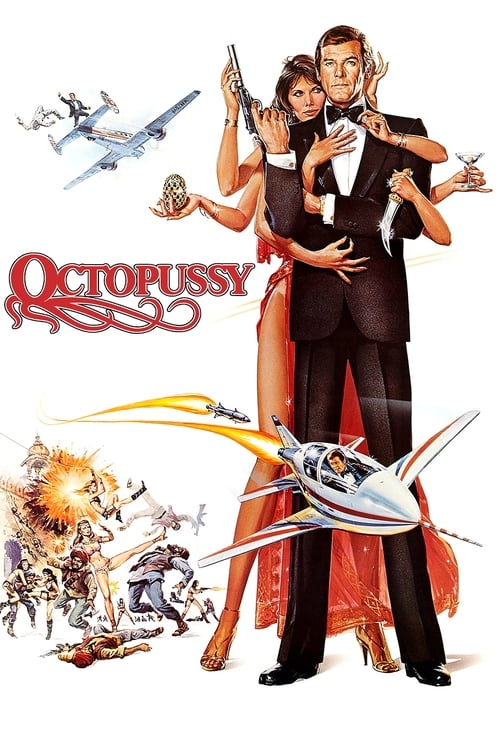
Octopussy
1983 · Directed by John Glen
Woke Score
CriticCritic Score
Audience
Ultra Based
Critics rated this 48 points above its woke score. Among Ultra Based films, this critic score ranks #830 of 1469.
Representation Casting
Score: 32/100
The cast includes Indian and other non-white actors in supporting roles, and Maud Adams provides a female lead character. However, representation reflects surface-level casting rather than substantive cultural integration or equitable storytelling.
LGBTQ+ Themes
Score: 0/100
No LGBTQ+ themes, characters, or representation are present in the film. The narrative is entirely heterosexual and conventional in its romantic structure.
Feminist Agenda
Score: 28/100
Octopussy is a capable female character who leads her own organization and participates in action sequences. However, her narrative arc ultimately culminates in romance with Bond, and she lacks the kind of autonomous agency that would constitute genuine feminist consciousness.
Racial Consciousness
Score: 15/100
While the film features Indian locations and Indian cast members, it treats India primarily as exotic backdrop without engaging with colonial history, cultural complexity, or the political reality of Indian contexts.
Climate Crusade
Score: 0/100
No climate themes, environmental consciousness, or ecological messaging appears in the film. The narrative concerns itself entirely with Cold War espionage and nuclear weapons as plot device rather than environmental crisis.
Eat the Rich
Score: 0/100
Despite involving international smuggling and criminal enterprises, the film presents no critique of capitalist systems or wealth accumulation. Octopussy's criminal operation is treated as a personal power base rather than a site of systemic critique.
Body Positivity
Score: 0/100
The film adheres to conventional 1980s action cinema standards for body representation. No engagement with body positivity, disability representation, or alternative body types appears in the narrative or visual presentation.
Neurodivergence
Score: 0/100
No representation of neurodivergent characters, conditions, or perspectives is present. The film contains no engagement with autism, ADHD, mental health conditions, or cognitive diversity.
Revisionist History
Score: 8/100
The film engages with Cold War history but presents it through entirely conventional Western perspectives. No revisionist reexamination of historical narratives or challenging of established historical frameworks occurs.
Lecture Energy
Score: 5/100
The film maintains the conventional entertainment mode of spy action cinema. No preachy messaging, explicit social commentary, or lecture-like exposition regarding social issues appears in the narrative.


Synopsis
James Bond is sent to investigate after a fellow "00" agent is found dead with a priceless Indian Fabergé egg. Bond follows the mystery and uncovers a smuggling scandal and a Russian General who wants to provoke a new World War.
Consciousness Assessment
Octopussy presents a curious case study in the evolution of gender representation within the spy thriller genre. The film's central female character, Octopussy, operates as a complex figure within the Bond universe: she is neither purely passive love interest nor fully autonomous agent of her own narrative. She commands a private army, manages international criminal enterprises, and participates in the film's action sequences with agency. Yet the film remains committed to heterosexual romance as its emotional core, and Octopussy ultimately functions within a narrative framework established by Bond's desires and objectives. By contemporary standards, this constitutes a modest step forward for the franchise, though it would be an error to mistake incremental progress for progressive consciousness.
The film's treatment of its Indian setting and cast reflects the orientalist conventions that have long characterized the Bond franchise. India functions primarily as exotic backdrop and location for spectacle rather than as a place with its own cultural significance or complexity. Indian characters, while present and occasionally capable, exist largely to facilitate Bond's investigation or to provide local color. The film contains no interrogation of this dynamic, no acknowledgment of colonial history, no engagement with the actual political circumstances of the Cold War as experienced outside Western contexts. The presence of Indian actors in the cast represents surface-level diversity without the deeper cultural consciousness that would elevate such representation beyond mere casting.
Octopussy is ultimately a product of its era, which is to say it operates according to the narrative and ideological conventions of 1980s mainstream cinema. It contains no climate consciousness, no anti-capitalist critique, no exploration of neurodivergence or body positivity, and no interrogation of capitalist structures despite its plot involving international smuggling operations. The film's political imagination extends only so far as Cold War anxieties about nuclear weapons and Soviet aggression. This is entertainment built to entertain, not to challenge or complicate our understanding of the world.
Analysis generated by our Consciousness Algorithm
Critic Reviews
“George MacDonald Fraser, Richard Maibaum and Michael G. Wilson are responsible for the story and screenplay, which was directed by John Glen, who does much better than he did with "For Your Eyes Only." However, the material is markedly better, and the budget seems noticeably larger. Peter Lamont's production design is both extravagant and funny. ”
“One of the snazziest, wittiest productions in the history of the serial.”
“This finds Bond on better form than he's been for some time. The action sequences are tighter, the visual gags more inventive, and if the plot is no great shakes, the whole thing is served up with a decent approximation to the old panache. ”
“When he had started playing this game of Save the Planet—when he was roguish Sean Connery and the world was so much younger—Bond had been a kind of role model for people of a certain class and ambition. Savoir-faire meant the aristocracy of style: which wine to decant, which brand of cigarette to smoke, which automatic weapon to carry under the armpit. Now that he was Roger Moore, 20 years later, Bond had degenerated into a male model, and something of a genial anachronism.”
Consciousness Markers
The cast includes Indian and other non-white actors in supporting roles, and Maud Adams provides a female lead character. However, representation reflects surface-level casting rather than substantive cultural integration or equitable storytelling.
No LGBTQ+ themes, characters, or representation are present in the film. The narrative is entirely heterosexual and conventional in its romantic structure.
Octopussy is a capable female character who leads her own organization and participates in action sequences. However, her narrative arc ultimately culminates in romance with Bond, and she lacks the kind of autonomous agency that would constitute genuine feminist consciousness.
While the film features Indian locations and Indian cast members, it treats India primarily as exotic backdrop without engaging with colonial history, cultural complexity, or the political reality of Indian contexts.
No climate themes, environmental consciousness, or ecological messaging appears in the film. The narrative concerns itself entirely with Cold War espionage and nuclear weapons as plot device rather than environmental crisis.
Despite involving international smuggling and criminal enterprises, the film presents no critique of capitalist systems or wealth accumulation. Octopussy's criminal operation is treated as a personal power base rather than a site of systemic critique.
The film adheres to conventional 1980s action cinema standards for body representation. No engagement with body positivity, disability representation, or alternative body types appears in the narrative or visual presentation.
No representation of neurodivergent characters, conditions, or perspectives is present. The film contains no engagement with autism, ADHD, mental health conditions, or cognitive diversity.
The film engages with Cold War history but presents it through entirely conventional Western perspectives. No revisionist reexamination of historical narratives or challenging of established historical frameworks occurs.
The film maintains the conventional entertainment mode of spy action cinema. No preachy messaging, explicit social commentary, or lecture-like exposition regarding social issues appears in the narrative.