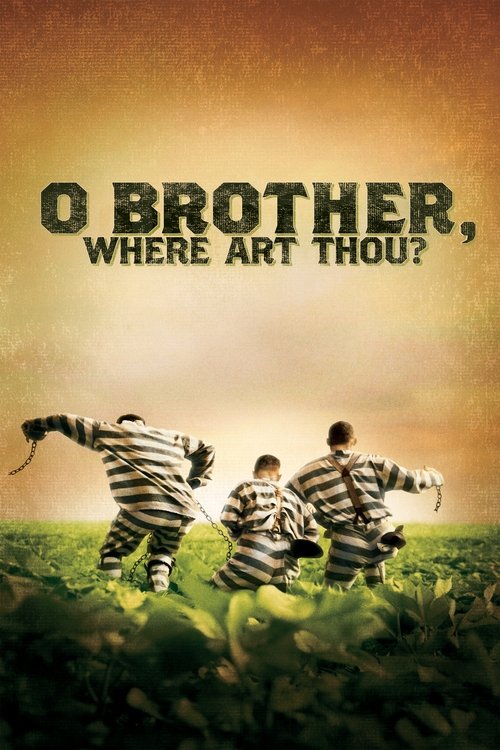
O Brother, Where Art Thou?
2000 · Directed by Joel Coen
Woke Score
CriticCritic Score
Audience
Ultra Based
Critics rated this 63 points above its woke score. Among Ultra Based films, this critic score ranks #650 of 1469.
Representation Casting
Score: 5/100
The cast is predominantly white, with minimal representation of Black characters despite the Deep South setting. Holly Hunter provides some gender diversity in a supporting role, but the three lead convicts are all white men.
LGBTQ+ Themes
Score: 0/100
No LGBTQ+ themes, characters, or representation present in the film.
Feminist Agenda
Score: 0/100
While Holly Hunter has a supporting role as Penny, the female character exists primarily as an object of pursuit rather than an agent with her own arc or agenda.
Racial Consciousness
Score: 15/100
The film depicts 1930s racial and political realities of the South, including segregation and Ku Klux Klan imagery, but presents these as historical backdrop rather than engaging with modern racial consciousness or commentary on systemic racism.
Climate Crusade
Score: 0/100
No climate or environmental themes present in the film.
Eat the Rich
Score: 0/100
While the characters are working-class Depression-era convicts, the film does not critique capitalism or present anti-capitalist messaging.
Body Positivity
Score: 0/100
No body positivity messaging or diverse body representation is evident in the film.
Neurodivergence
Score: 0/100
No representation of or engagement with neurodivergent characters or themes.
Revisionist History
Score: 10/100
The film uses a comedic, stylized lens on 1930s Southern history through the Odyssey framework, but this is more literary adaptation than revisionist history with modern sensibilities.
Lecture Energy
Score: 0/100
The Coen Brothers deliberately maintain an observational, comedic stance throughout, avoiding preachy moralizing or lecture-like messaging about historical or social issues.


Synopsis
In the deep south during the 1930s, three escaped convicts search for hidden treasure while a relentless lawman pursues them.
Consciousness Assessment
O Brother, Where Art Thou? arrives as a curiosity from a different era, a 2000 film that inhabits the 1930s with the aesthetic commitments of a Coen Brothers pastiche rather than the social consciousness frameworks that would later become standard. The film presents Depression-era Mississippi as a picaresque playground for three white male convicts, their misadventures scored to folk and blues music that blur racial traditions without interrogating them. George Clooney's Ulysses Everett McGill is the engine of the narrative, a man concerned primarily with pomade and self-invention, accompanied by John Turturro and Tim Blake Nelson in roles that demand little beyond comic relief and period authenticity.
The film's relationship to race and politics exists in a peculiar register. It depicts Klan imagery and segregation as historical fact, part of the landscape these characters traverse, but declines to comment upon these elements with the heavy-handed seriousness that contemporary audiences might expect. This restraint reads not as progressive sophistication but as a calculated distance from its subject matter, treating the 1930s South as a setting to be exploited for narrative color rather than a moment requiring moral reckoning. Holly Hunter's presence as Penny provides the only significant female character, though she remains primarily an object of pursuit within a narrative of male self-discovery and redemption.
What emerges is a work unconcerned with the social justice frameworks that define contemporary progressive cinema. It is a period comedy that mines American mythology and folk traditions without attempting to revise history through modern sensibilities or to foreground marginalized perspectives. The soundtrack's blurring of racial musical lines is treated as a sonic curiosity rather than a statement about cultural hybridity or reckoning. By the standards of modern cultural consciousness, it scores as a relic, entertaining precisely because it occupies a moment before such considerations became reflexive.
Analysis generated by our Consciousness Algorithm
Critic Reviews
“It's a wild, whacked-out wonder. Coenheads rejoice.”
“A wildly original movie with astonishingly varied moods and influences.”
“From moment to moment, O Brother, Where Art Thou? is a pleasure. But when the Coens are really cooking, when the acting and the conception and the music all come together, it's something more -- Dogpatch rapture.”
“Why would filmmakers with this much talent work this hard to thumb their noses at everything they put on screen?”
Consciousness Markers
The cast is predominantly white, with minimal representation of Black characters despite the Deep South setting. Holly Hunter provides some gender diversity in a supporting role, but the three lead convicts are all white men.
No LGBTQ+ themes, characters, or representation present in the film.
While Holly Hunter has a supporting role as Penny, the female character exists primarily as an object of pursuit rather than an agent with her own arc or agenda.
The film depicts 1930s racial and political realities of the South, including segregation and Ku Klux Klan imagery, but presents these as historical backdrop rather than engaging with modern racial consciousness or commentary on systemic racism.
No climate or environmental themes present in the film.
While the characters are working-class Depression-era convicts, the film does not critique capitalism or present anti-capitalist messaging.
No body positivity messaging or diverse body representation is evident in the film.
No representation of or engagement with neurodivergent characters or themes.
The film uses a comedic, stylized lens on 1930s Southern history through the Odyssey framework, but this is more literary adaptation than revisionist history with modern sensibilities.
The Coen Brothers deliberately maintain an observational, comedic stance throughout, avoiding preachy moralizing or lecture-like messaging about historical or social issues.