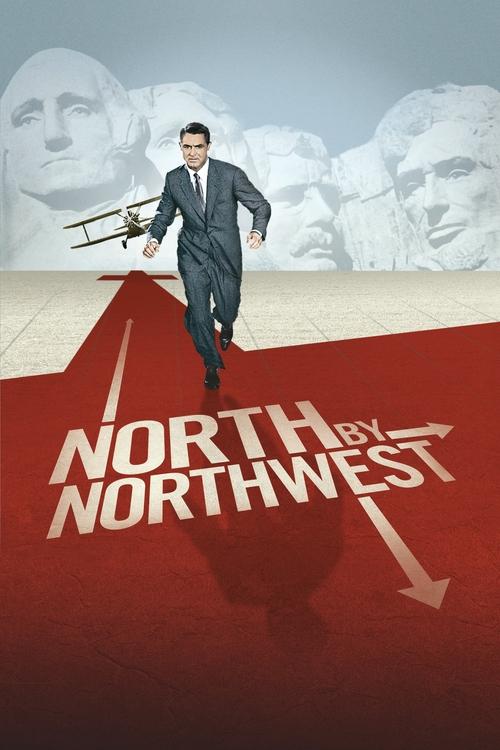
North by Northwest
1959 · Directed by Alfred Hitchcock
Woke Score
CriticCritic Score
Audience
Ultra Based
Critics rated this 94 points above its woke score. Among Ultra Based films, this critic score ranks #21 of 1469.
Representation Casting
Score: 2/100
The cast is entirely white and predominantly male in positions of agency. No deliberate effort toward diverse representation.
LGBTQ+ Themes
Score: 0/100
No LGBTQ+ themes or representation present. The narrative is entirely heterosexual in its romantic framework.
Feminist Agenda
Score: 5/100
Female characters exist within conventional 1950s gender roles. While Eva Marie Saint's character displays wit, she ultimately functions as a prize to be won within a male-centered narrative.
Racial Consciousness
Score: 0/100
No racial consciousness or awareness evident. The film presents an entirely white world without acknowledging this as a choice or limitation.
Climate Crusade
Score: 0/100
No environmental themes or climate consciousness present in this spy thriller.
Eat the Rich
Score: 3/100
The protagonist is an advertising executive, but the film does not critique capitalism or commercialism. His profession is simply his background.
Body Positivity
Score: 0/100
No body positivity themes present. The film does not engage with questions of body representation or acceptance.
Neurodivergence
Score: 0/100
No representation of neurodivergence or disability. This is a purely neurotypical narrative.
Revisionist History
Score: 0/100
The film does not engage in historical revisionism. It is a fictional spy thriller without historical pretensions.
Lecture Energy
Score: 2/100
The film contains Cold War ideology but presents it as entertainment rather than as preachy instruction. Minimal preachy tone.


Synopsis
Advertising man Roger Thornhill is mistaken for a spy, triggering a deadly cross-country chase.
Consciousness Assessment
North by Northwest emerges from an era when cinema had not yet developed the lexicon of contemporary progressive sensibilities. Hitchcock's 1959 thriller is a meticulously crafted machine designed to generate suspense through mistaken identity and cross-country pursuit. The film reflects the Cold War anxieties of its moment: paranoia about government, concern over nuclear proliferation, and the specter of communist infiltration. These are the preoccupations of 1959, not 2024.
The female characters present a study in the conventions of their era. Eva Marie Saint's Valerie Kendall is seductive and intelligent, though she functions primarily as a romantic interest within a narrative engine that belongs entirely to Cary Grant's Roger Thornhill. She exists to be pursued, saved, and ultimately won. Jessie Royce Landis plays Thornhill's mother as comic relief, a stock figure of emasculating domesticity. Neither character exhibits the agency or interiority that contemporary progressive cinema would demand. The film makes no apparent effort to subvert these dynamics, nor does it seem aware that such subversion might be desirable.
In matters of racial representation, the cast is uniformly white, reflecting both the production practices and audience demographics of Hollywood in 1959. The supporting players are entirely European-American. There is no attempt at diverse casting, no acknowledgment of non-white existence, no celebration of multicultural identity. The film simply does not see these categories as relevant. This is not an indictment of Hitchcock personally, but rather a straightforward observation about the film's cultural blindness. It was made in 1959. It shows it.
Analysis generated by our Consciousness Algorithm
Critic Reviews
“There’s a superabundance of sparkling, often marvellously terse one-liners (when asked what the “O” stands for, Thornhill’s resigned and emotionally relevant answer is, “Nothing”) – and, my, how wittily Grant delivers them.”
“This is Hitchcock's longest film and also his most self-referential. Little jokes abound about art and artifice, role play and reality, duty and duplicity and each viewing reveals something new to enhance the pleasure of watching the Master of Suspense at his most mischievous and assured.”
“Hitchcock breezes through a tongue-in-cheek, nightmarish plot with a lightness of touch that’s equalled by a charming performance from Grant (below), who copes effortlessly with the script’s dash between claustrophobia and intrigue on one hand and romance and comedy on the other.”
Consciousness Markers
The cast is entirely white and predominantly male in positions of agency. No deliberate effort toward diverse representation.
No LGBTQ+ themes or representation present. The narrative is entirely heterosexual in its romantic framework.
Female characters exist within conventional 1950s gender roles. While Eva Marie Saint's character displays wit, she ultimately functions as a prize to be won within a male-centered narrative.
No racial consciousness or awareness evident. The film presents an entirely white world without acknowledging this as a choice or limitation.
No environmental themes or climate consciousness present in this spy thriller.
The protagonist is an advertising executive, but the film does not critique capitalism or commercialism. His profession is simply his background.
No body positivity themes present. The film does not engage with questions of body representation or acceptance.
No representation of neurodivergence or disability. This is a purely neurotypical narrative.
The film does not engage in historical revisionism. It is a fictional spy thriller without historical pretensions.
The film contains Cold War ideology but presents it as entertainment rather than as preachy instruction. Minimal preachy tone.