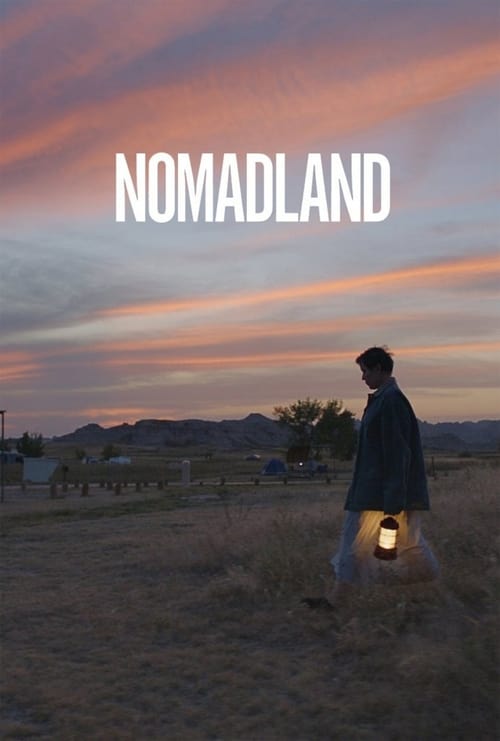
Nomadland
2021 · Directed by Chloé Zhao
Woke Score
CriticCritic Score
Audience
Woke-Adjacent
Critics rated this 45 points above its woke score. Among Woke-Adjacent films, this critic score ranks #15 of 151.
Representation Casting
Score: 72/100
The film centers a 60-something female protagonist, defying Hollywood ageism. Real nomads of various backgrounds, including women and people of color, appear in significant supporting roles, though their representation feels more documentary-driven than deliberately progressive.
LGBTQ+ Themes
Score: 0/100
No LGBTQ themes or characters are present in the film. Sexual orientation and gender identity are not addressed.
Feminist Agenda
Score: 65/100
The film centers female vulnerability, aging, and economic hardship. Director Chloé Zhao explicitly discusses her feminist sensibilities. However, the film does not mount explicit feminist arguments or engage with gender-specific systemic critique beyond representation.
Racial Consciousness
Score: 15/100
The film features nomads of color in supporting roles, and the cast includes diverse representation. However, no explicit racial consciousness or analysis of how race intersects with economic precarity is present in the narrative.
Climate Crusade
Score: 0/100
Climate change or environmental consciousness is not addressed in the film. The van-dwelling lifestyle is presented as economic necessity rather than environmental choice.
Eat the Rich
Score: 55/100
The film offers implicit critique of capitalism through its portrayal of gig economy exploitation, precarious labor, and the Great Recession's devastating effects on working-class life. However, this critique remains observational and humanistic rather than explicitly anti-capitalist or advocating systemic change.
Body Positivity
Score: 0/100
Body positivity or discussions of body image are not relevant to the film's themes or content.
Neurodivergence
Score: 0/100
Neurodivergence is not addressed or represented in the film.
Revisionist History
Score: 0/100
The film does not engage in revisionist historical narrative. It presents contemporary economic reality rather than reinterpreting historical events.
Lecture Energy
Score: 5/100
The film maintains a documentary-like observational approach with minimal preachiness. While some characters discuss their circumstances, the film generally avoids explicit moralizing or educational messaging.


Synopsis
A woman in her sixties embarks on a journey through the western United States after losing everything in the Great Recession, living as a van-dwelling modern-day nomad.
Consciousness Assessment
Nomadland represents a curious artifact of contemporary cinema: a film sufficiently earnest in its examination of economic precarity that it has become a vessel for progressive cultural capital, even as its actual engagement with systemic critique remains somewhat muted. The film's primary progressive credential lies in its defiant centering of an aging female protagonist at an age when Hollywood typically renders women invisible, coupled with the directorial presence of Chloé Zhao, whose status as the first female director of Asian descent to win Best Picture carried symbolic weight that perhaps exceeded the film's own thematic ambitions. The narrative itself operates as a humanistic portrait of working-class struggle in the post-Recession gig economy, complete with real nomads performing fictionalized versions of themselves, which lends a documentary authenticity that feels earnest rather than exploitative.
Yet the film's progressive sensibilities operate within a distinctly limited register. Its critique of capitalism remains observational rather than structural, presenting the harsh realities of precarious labor and economic displacement without mounting any argument about systemic change or collective resistance. The protagonist's adaptation to van life is framed as a form of freedom and community rather than as a devastating indictment of a society that has failed to provide housing security and dignified employment. The film's most contemporary progressive marker lies in its representation of aging femininity and its subtle feminist undertones, particularly in the director's deliberate choice to center female experience and vulnerability. However, the film engages little with intersectional racial analysis despite featuring nomads of color in supporting roles, and it contains no meaningful engagement with LGBTQ themes, climate consciousness, or neurodivergence. Its lecture energy remains minimal, preferring empathetic observation to preachiness.
The film's woke positioning is therefore best understood as accidental rather than intentional. It has become a progressive touchstone largely through the symbolic politics of its creation and recognition rather than through its content, which remains humanist in orientation. For those seeking a film that explicitly interrogates power structures and advocates for systemic transformation, Nomadland offers limited satisfaction. For those seeking a quiet, observant portrait of dignity maintained in the face of economic abandonment, it succeeds admirably. The distinction matters.
Analysis generated by our Consciousness Algorithm
Critic Reviews
“It's hard, too, to picture any actress other than McDormand (who also has a producer credit) in the part. She doesn't just become Fern, she creates her: melding Zhao's screenplay to her own fierce character in a way that feels almost uncannily real. Together, they've managed to make that rare thing: a film that feels both necessary and sublime.”
“A movie that finds poetry in the story of a seemingly average woman. It is a gorgeous film that’s alternately dreamlike in the way it captures the beauty of this country and grounded in its story about the kind of person we don’t usually see in movies. I love everything about it.”
“Chloé Zhao’s Nomadland is an utterly inspired docu-fictional hybrid, like her previous feature The Rider. It is a gentle, compassionate, questioning film about the American soul.”
“The two elements work against each other, each revealing the fault lines of the other: the fictional side remains bound to (and limited by) the most conventional and unquestioned observational mode of documentary filmmaking, while the documentary aspect strains against the simplifying framework of the drama in which it’s confined.”
Consciousness Markers
The film centers a 60-something female protagonist, defying Hollywood ageism. Real nomads of various backgrounds, including women and people of color, appear in significant supporting roles, though their representation feels more documentary-driven than deliberately progressive.
No LGBTQ themes or characters are present in the film. Sexual orientation and gender identity are not addressed.
The film centers female vulnerability, aging, and economic hardship. Director Chloé Zhao explicitly discusses her feminist sensibilities. However, the film does not mount explicit feminist arguments or engage with gender-specific systemic critique beyond representation.
The film features nomads of color in supporting roles, and the cast includes diverse representation. However, no explicit racial consciousness or analysis of how race intersects with economic precarity is present in the narrative.
Climate change or environmental consciousness is not addressed in the film. The van-dwelling lifestyle is presented as economic necessity rather than environmental choice.
The film offers implicit critique of capitalism through its portrayal of gig economy exploitation, precarious labor, and the Great Recession's devastating effects on working-class life. However, this critique remains observational and humanistic rather than explicitly anti-capitalist or advocating systemic change.
Body positivity or discussions of body image are not relevant to the film's themes or content.
Neurodivergence is not addressed or represented in the film.
The film does not engage in revisionist historical narrative. It presents contemporary economic reality rather than reinterpreting historical events.
The film maintains a documentary-like observational approach with minimal preachiness. While some characters discuss their circumstances, the film generally avoids explicit moralizing or educational messaging.