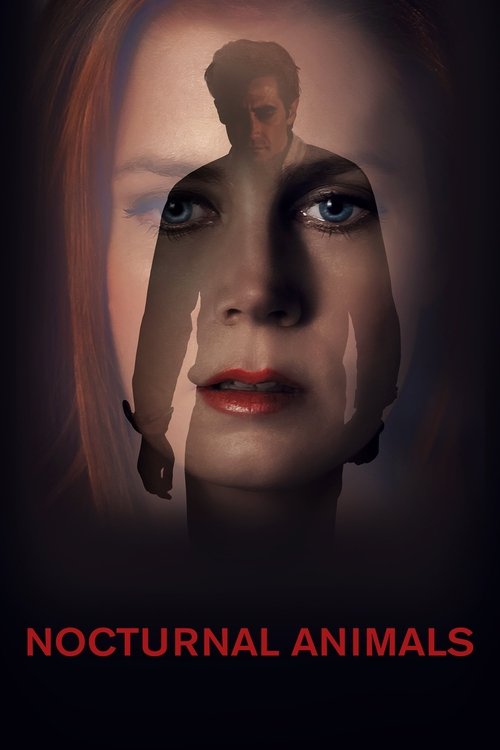
Nocturnal Animals
2016 · Directed by Tom Ford
Woke Score
CriticCritic Score
Audience
Ultra Based
Critics rated this 49 points above its woke score. Among Ultra Based films, this critic score ranks #706 of 1469.
Representation Casting
Score: 15/100
The cast is predominantly white and drawn from affluent professional classes. While Amy Adams is a strong female lead, the supporting cast offers minimal racial or ethnic diversity.
LGBTQ+ Themes
Score: 0/100
No LGBTQ+ themes, characters, or representation are present in the film.
Feminist Agenda
Score: 25/100
While the female protagonist is autonomous and intelligent, the narrative ultimately presents her as the object of masculine revenge and artistic domination. Her agency is undermined by the film's endorsement of her ex-husband's violent retribution.
Racial Consciousness
Score: 0/100
The film contains no racial consciousness, commentary on race, or engagement with racial themes. Race is not addressed in any meaningful way.
Climate Crusade
Score: 0/100
Climate change is not a concern of this film. No environmental themes or messaging are present.
Eat the Rich
Score: 10/100
The film depicts wealthy characters and their emotional dysfunction, but offers no critique of capitalism or economic systems. Affluence is presented as the backdrop for existential suffering rather than as a site of critique.
Body Positivity
Score: 0/100
The film does not engage with body positivity themes. Bodies are presented as objects of desire and violence without commentary on body image or acceptance.
Neurodivergence
Score: 0/100
No representation of neurodivergence or engagement with neurodivergent experiences is present in the film.
Revisionist History
Score: 0/100
The film contains no historical elements or revisionist historical narratives. It is set in a contemporary or ambiguous timeframe without engagement with history.
Lecture Energy
Score: 35/100
The film's narrative structure involves a woman reading a manuscript that comments on male victimization and artistic suffering. There is a preachy quality to the repeated emphasis on the author's right to artistic expression and emotional retribution.


Synopsis
Susan Morrow receives a book manuscript from her ex-husband – a man she left 20 years earlier – asking for her opinion of his writing. As she reads, she is drawn into the fictional life of Tony Hastings, a mathematics professor whose family vacation turns violent.
Consciousness Assessment
Nocturnal Animals presents itself as a meditation on power, vengeance, and artistic violence, concerns that predate contemporary social consciousness by several decades. Tom Ford's film employs a female protagonist who is materially successful, sexually autonomous, and morally complex, but this is accomplished through the lens of psychological manipulation and retribution rather than through any genuine engagement with progressive sensibilities. The narrative framework does allow Amy Adams' character to occupy the position of observer and judge, yet the film ultimately endorses the male rage that fuels the entire enterprise, suggesting that artistic expression through brutality represents a form of masculine reclamation worthy of aesthetic celebration.
The film's treatment of gender functions primarily as a vehicle for exploring existential ennui among the affluent rather than as a site of genuine social critique. Susan Morrow's marital dissolution and subsequent emotional numbness are presented as tragic consequences of her own ambitious nature, a framing that approaches the territory of cautionary tale without ever explicitly articulating such a warning. Her husband's violent manuscript becomes the mechanism through which he reasserts dominance in their relationship, and the film seems to regard this dynamic with something approaching admiration for its audacity. The supporting cast is almost entirely white, heterosexual, and drawn from the professional classes, offering no meaningful diversity in perspective or lived experience.
Where the film approaches contemporary cultural preoccupations is in its occasional acknowledgment of female desire and agency, yet these moments serve primarily to set up the machinery of masculine retribution. The violence depicted is neither interrogated for its gendered dimensions nor contextualized within any broader social framework. For a 2016 release, this represents a deliberate retreat from social engagement rather than an oversight.
Analysis generated by our Consciousness Algorithm
Critic Reviews
“Some of the scenes in the LA art world are a bit broad. But this is a terrifically absorbing thriller with that vodka-kick of pure malice.”
“Confidently dovetailing three strands that depict present and past reality, as well as a dark fictional detour that functions as a blunt real-life rebuke, the film once again demonstrates that Ford is both an intoxicating sensualist and an accomplished storyteller, with as fine an eye for character detail as he has for color and composition.”
“Nocturnal Animals is an impressively ambitious effort, one part mean Texas thriller, one part middle-age melodrama, and makes for a meta-textual riddle that is almost as pleasurable to reflect on as it to actually watch.”
“This is a soulless endeavor that would alarm if Ford devised it on his own. Instead, he shares blame with Austen Wright's novel Tony and Susan, adapted into parallel narratives; one empty, the other leaking blood.”
Consciousness Markers
The cast is predominantly white and drawn from affluent professional classes. While Amy Adams is a strong female lead, the supporting cast offers minimal racial or ethnic diversity.
No LGBTQ+ themes, characters, or representation are present in the film.
While the female protagonist is autonomous and intelligent, the narrative ultimately presents her as the object of masculine revenge and artistic domination. Her agency is undermined by the film's endorsement of her ex-husband's violent retribution.
The film contains no racial consciousness, commentary on race, or engagement with racial themes. Race is not addressed in any meaningful way.
Climate change is not a concern of this film. No environmental themes or messaging are present.
The film depicts wealthy characters and their emotional dysfunction, but offers no critique of capitalism or economic systems. Affluence is presented as the backdrop for existential suffering rather than as a site of critique.
The film does not engage with body positivity themes. Bodies are presented as objects of desire and violence without commentary on body image or acceptance.
No representation of neurodivergence or engagement with neurodivergent experiences is present in the film.
The film contains no historical elements or revisionist historical narratives. It is set in a contemporary or ambiguous timeframe without engagement with history.
The film's narrative structure involves a woman reading a manuscript that comments on male victimization and artistic suffering. There is a preachy quality to the repeated emphasis on the author's right to artistic expression and emotional retribution.