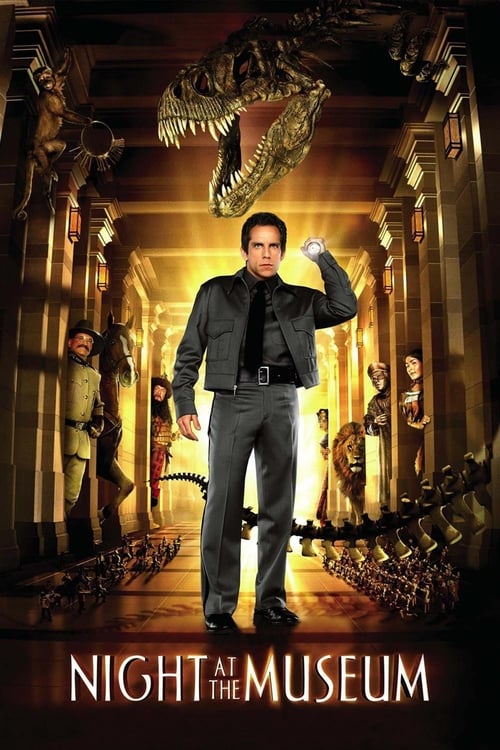
Night at the Museum
2006 · Directed by Shawn Levy
Woke Score
CriticCritic Score
Audience
Ultra Based
Critics rated this 44 points above its woke score. Among Ultra Based films, this critic score ranks #1206 of 1469.
Representation Casting
Score: 5/100
Casting is almost entirely white and male-centric, with minority actors relegated to minor roles. The film shows no intentional diversity strategy, reflecting typical 2006 studio practices.
LGBTQ+ Themes
Score: 0/100
No LGBTQ+ representation or themes present. The film contains no romantic subplots or queer characters of any kind.
Feminist Agenda
Score: 2/100
Carla Gugino appears as a museum employee but is primarily a supporting character without agency. The film contains no feminist themes or commentary.
Racial Consciousness
Score: 3/100
The film displays colonial attitudes toward historical figures and cultural artifacts, treating them as props for entertainment without any interrogation of power dynamics or representation.
Climate Crusade
Score: 0/100
Climate themes are entirely absent from the narrative. The film contains no environmental commentary whatsoever.
Eat the Rich
Score: 1/100
The protagonist's arc involves becoming a successful museum employee and embracing capitalist employment. There is no critique of economic systems or class structures.
Body Positivity
Score: 0/100
No body positivity messaging present. The film adheres to conventional Hollywood beauty standards without comment.
Neurodivergence
Score: 0/100
No neurodivergent characters or representation. The film contains no exploration of disability or neurodiversity.
Revisionist History
Score: 2/100
While the film does not explicitly rewrite history, it trivializes historical figures and colonized peoples by treating them as comedic entertainment, which reflects a particular historical narrative.
Lecture Energy
Score: 4/100
The film contains occasional educational moments about museum exhibits and historical facts, but these are light and never preachy. There is minimal lecture-like exposition.


Synopsis
Chaos reigns at the natural history museum when night watchman Larry Daley accidentally stirs up an ancient curse, awakening Attila the Hun, an army of gladiators, a Tyrannosaurus rex and other exhibits.
Consciousness Assessment
Night at the Museum represents a curious artifact of pre-woke Hollywood family entertainment, a film so thoroughly unconcerned with contemporary social consciousness that its very existence now reads as a historical document of benign obliviousness. The film deploys its historical and cultural figures as props and comedic foils, with Attila the Hun, Teddy Roosevelt, and various world leaders reduced to animated caricatures whose primary function is to create chaos and provide Ben Stiller with someone to react to. There is no attempt whatsoever to interrogate the colonial implications of a natural history museum, nor does the film pause to consider the problematic nature of displaying conquered peoples and their artifacts as entertainment for a night watchman's amusement.
The casting reflects the demographic assumptions of mid-2000s studio comedy: Ben Stiller as the everyman protagonist, Robin Williams and Dick Van Dyke as wise mentor figures, and a supporting cast that includes Bill Cobbs in what amounts to a peripheral role despite his experience. The film's treatment of its historical figures borders on the offensive in its casual disregard for cultural sensitivity. Attila is played for laughs, Native American characters are background decoration, and the entire enterprise rests on the premise that these figures exist primarily to entertain us. For a film released in 2006, before the cultural reckoning of the 2010s, this represents a kind of innocent thoughtlessness that would draw considerably more scrutiny today.
What remains striking is the film's complete absence of self-awareness about its own premises. It is not aggressively regressive, merely indifferent to the concepts that would later become central to mainstream cultural discourse. The comedy is gentle, the film is competently made, and there is no malice in its treatment of historical figures. Yet therein lies the problem: the film's assumptions that these figures exist as entertainment, that a museum's collection of human history can be plundered for laughs without consequence, reflects a worldview that subsequent cultural conversations have thoroughly interrogated.
Analysis generated by our Consciousness Algorithm
Critic Reviews
“For all its dazzling computer-generated sequences, "Museum'' wouldn't be nearly the delight it is without the talents of some of the best comedians in the business.”
“Stuffed with smart performers doing graciously silly work, and all Levy has to do is manage traffic.”
“A fantastic holiday toy that, amazingly enough, doesn't require batteries.”
“Watching Williams as Teddy Roosevelt ogle through binoculars Sacajawea (Mizuo Peck) while she stalks around a glassed-in display like some hippie chick in a buffalo-skin straitjacket after a bad trip at Woodstock ’94 makes me sad and uncomfortable.”
Consciousness Markers
Casting is almost entirely white and male-centric, with minority actors relegated to minor roles. The film shows no intentional diversity strategy, reflecting typical 2006 studio practices.
No LGBTQ+ representation or themes present. The film contains no romantic subplots or queer characters of any kind.
Carla Gugino appears as a museum employee but is primarily a supporting character without agency. The film contains no feminist themes or commentary.
The film displays colonial attitudes toward historical figures and cultural artifacts, treating them as props for entertainment without any interrogation of power dynamics or representation.
Climate themes are entirely absent from the narrative. The film contains no environmental commentary whatsoever.
The protagonist's arc involves becoming a successful museum employee and embracing capitalist employment. There is no critique of economic systems or class structures.
No body positivity messaging present. The film adheres to conventional Hollywood beauty standards without comment.
No neurodivergent characters or representation. The film contains no exploration of disability or neurodiversity.
While the film does not explicitly rewrite history, it trivializes historical figures and colonized peoples by treating them as comedic entertainment, which reflects a particular historical narrative.
The film contains occasional educational moments about museum exhibits and historical facts, but these are light and never preachy. There is minimal lecture-like exposition.