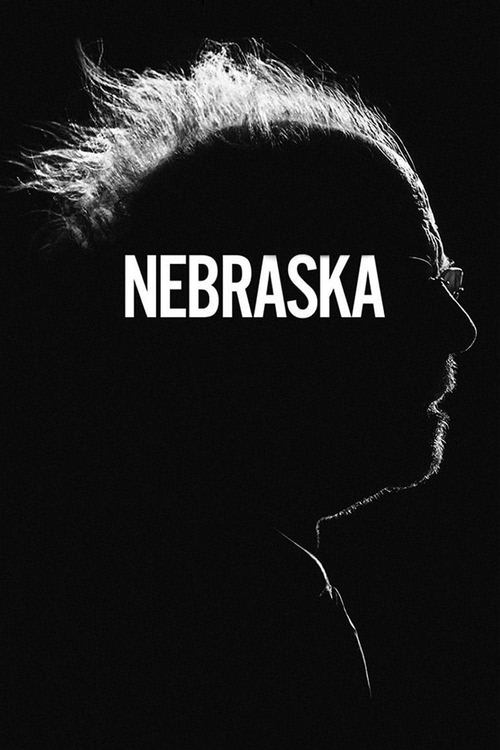
Nebraska
2013 · Directed by Alexander Payne
Woke Score
CriticCritic Score
Audience
Ultra Based
Critics rated this 83 points above its woke score. Among Ultra Based films, this critic score ranks #214 of 1469.
Representation Casting
Score: 0/100
The cast is predominantly white and reflects the actual rural Midwestern setting without any deliberate diversity casting choices or commentary on representation.
LGBTQ+ Themes
Score: 0/100
There are no LGBTQ+ themes, characters, or storylines present in the film.
Feminist Agenda
Score: 0/100
Female characters exist naturally in the narrative but there is no feminist agenda or commentary on gender dynamics.
Racial Consciousness
Score: 0/100
The film contains no racial consciousness or commentary on race and ethnicity beyond the absence of diversity in its casting.
Climate Crusade
Score: 0/100
There is no climate-related messaging or environmental consciousness present in the film.
Eat the Rich
Score: 8/100
The film critiques American materialism and the failure of the capitalist dream to deliver for ordinary working people, though this critique predates modern anti-capitalist sensibility and is presented as humanist observation rather than political polemic.
Body Positivity
Score: 0/100
There is no body positivity messaging or commentary on body image and acceptance.
Neurodivergence
Score: 0/100
The film contains no representation of or commentary on neurodivergence.
Revisionist History
Score: 0/100
There is no revisionist historical narrative or reframing of historical events present in the film.
Lecture Energy
Score: 0/100
The film does not contain preachy messaging or lecturing about social issues and contemporary progressive causes.


Synopsis
An aging, booze-addled father takes a trip from Montana to Nebraska with his estranged son in order to claim what he believes to be a million-dollar sweepstakes prize.
Consciousness Assessment
Alexander Payne's Nebraska presents itself as a meditation on American failure and familial estrangement, set against the grey flatlands of the Great Plains. Shot in black and white to emphasize its austerity, the film concerns itself with the quiet dissolution of an aging alcoholic and his son's belated attempt at connection. This is cinema of genuine empathy, though empathy and contemporary progressive sensibility are not synonymous. The film's humanism is rooted in a pre-2015 sensibility: it cares about its characters' dignity and suffering without the apparatus of modern identity discourse.
The cast is almost entirely white, reflecting the actual demographics of rural Nebraska rather than any deliberate commitment to representation. Female characters, played by June Squibb and Mary Louise Wilson, exist as fully realized presences in the narrative, but their inclusion does not constitute feminist agenda. They are not there to make a point about gender, but simply to inhabit the story's world. There is no commentary on climate, capitalism, neurodivergence, or historical revisionism. The film's social consciousness concerns itself with the dignity of working people and the failures of the American Dream to materialize for ordinary men in ordinary places.
This is a form of social awareness, but not the form we have come to recognize as culturally marked in the 2020s. Nebraska operates from a different moral universe entirely. It asks us to care about an old man and his son, not about the systems that produced their estrangement. This is its strength as cinema and its irrelevance to the project of measuring contemporary cultural consciousness.
Analysis generated by our Consciousness Algorithm
Critic Reviews
“Throughout, Payne gently infuses the film’s comic tone with strains of longing and regret, always careful to avoid the maudlin or cheaply sentimental.”
“And Dern, a great character actor who made his mark opposite everyone from Redford and John Wayne to Jane Fonda, embraces the roll of a lifetime. ”
“What's extraordinary is what happens at the intersection of Mr. Payne's impeccable direction and Mr. Nelson's brilliant script. The odyssey combines, quite effortlessly, prickly combat between father and son.”
“Payne, who never met pathos he didn’t feel inclined to puncture with slapstick humor, has somehow made his best drama and his worst comedy rolled into one. ”
Consciousness Markers
The cast is predominantly white and reflects the actual rural Midwestern setting without any deliberate diversity casting choices or commentary on representation.
There are no LGBTQ+ themes, characters, or storylines present in the film.
Female characters exist naturally in the narrative but there is no feminist agenda or commentary on gender dynamics.
The film contains no racial consciousness or commentary on race and ethnicity beyond the absence of diversity in its casting.
There is no climate-related messaging or environmental consciousness present in the film.
The film critiques American materialism and the failure of the capitalist dream to deliver for ordinary working people, though this critique predates modern anti-capitalist sensibility and is presented as humanist observation rather than political polemic.
There is no body positivity messaging or commentary on body image and acceptance.
The film contains no representation of or commentary on neurodivergence.
There is no revisionist historical narrative or reframing of historical events present in the film.
The film does not contain preachy messaging or lecturing about social issues and contemporary progressive causes.