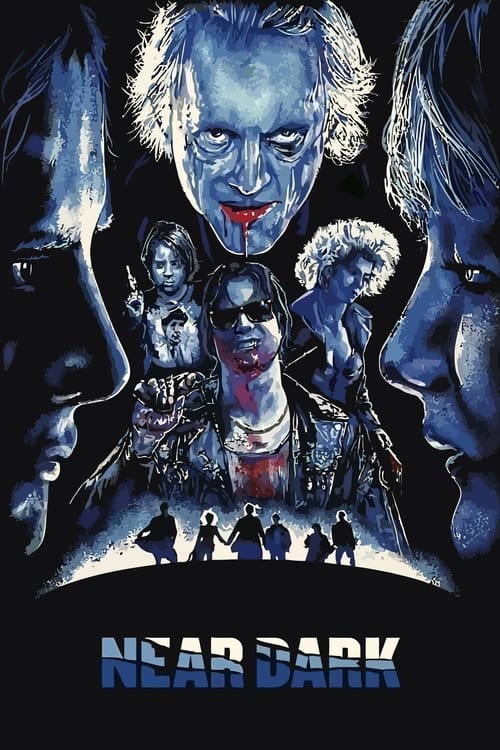
Near Dark
1987 · Directed by Kathryn Bigelow
Woke Score
CriticCritic Score
Audience
Ultra Based
Critics rated this 60 points above its woke score. Among Ultra Based films, this critic score ranks #425 of 1469.
Representation Casting
Score: 35/100
The cast includes women (Jenny Wright, Jenette Goldstein) and minorities in substantive roles within the vampire family, though this reflects 1980s casting norms rather than deliberate contemporary representation strategy. The diversity exists within the narrative without explicit commentary on identity.
LGBTQ+ Themes
Score: 15/100
Some critical analyses have identified queer subtext in the film's imagery and the vampire family's transgressive lifestyle, but this remains interpretive and not explicit within the narrative itself. No overt LGBTQ+ themes or representation.
Feminist Agenda
Score: 45/100
The film features a female director challenging genre conventions and opens with a reversal of typical gendered violence dynamics. However, the feminist consciousness is subtle and embedded in directorial technique rather than thematic messaging. Not a work explicitly centered on feminist ideology.
Racial Consciousness
Score: 0/100
The film contains no evidence of contemporary racial consciousness, racial commentary, or thematic engagement with racial identity. Race is not addressed in the narrative.
Climate Crusade
Score: 0/100
No climate-related themes, environmental consciousness, or ecological commentary present in the film.
Eat the Rich
Score: 10/100
The vampire family operates outside conventional society and steals cars, suggesting critique of consumer culture and property ownership, but this is incidental to the horror narrative rather than thematic commentary.
Body Positivity
Score: 0/100
No body positivity themes or commentary on body acceptance are present. The film treats the vampire body as monstrous and transgressive, in line with horror conventions.
Neurodivergence
Score: 0/100
No representation of or engagement with neurodivergence, neurodivergent characters, or neurodiversity themes.
Revisionist History
Score: 0/100
The film contains no historical revisionism or alternative interpretation of historical events. It is a vampire horror narrative, not historically engaged.
Lecture Energy
Score: 5/100
The film maintains a purely narrative focus without preachy exposition or moral lecturing. Any social commentary remains implicit in the imagery and directorial choices rather than explicit dialogue.

Synopsis
A farm boy reluctantly becomes a member of the undead when a girl he meets turns out to be part of a band of vampires who roam the highways in stolen cars.
Consciousness Assessment
Near Dark arrives as a peculiar artifact for our contemporary scoring apparatus, a 1987 horror film that predates modern progressive sensibilities by decades and yet bears the directorial imprint of Kathryn Bigelow, a woman working in a male-dominated genre. The film's cultural consciousness, such as it exists, emerges through form rather than message. Bigelow's visual language subverts genre expectations with quiet precision. The opening sequence reverses conventional gendered violence in a manner that feels almost accidental in its subversiveness, a technical choice rather than a manifesto.
The vampire family itself operates as a band of outsiders, stealing cars and rejecting sedentary existence, which could be read as a critique of capitalist conformity if one were inclined to such readings. Yet the film resists explicit ideological positioning. Its diverse cast exists within the narrative as characters rather than as representatives of demographic categories demanding acknowledgment. This is neither progressive nor regressive by contemporary standards; it simply is. The film treats its ensemble with the indifference of genre cinema, and there is something almost refreshing in that indifference.
What prevents a higher score is the film's lack of engagement with the specific cultural markers that define contemporary progressive consciousness. There is no racial awareness, no climate anxiety, no neurodivergent representation, no body positivity messaging. The film exists in a pre-woke universe, concerned primarily with atmosphere, violence, and the mechanics of vampire mythology. That Bigelow brings formal sophistication and a woman's perspective to the material does not transform it into something it was never designed to be. Near Dark remains a genre exercise, albeit one executed with visual intelligence and a directorial eye that would later define mainstream action cinema.
Analysis generated by our Consciousness Algorithm
Critic Reviews
“A romance, a western, and a totem to lost youth in an era ravaged by infection and addiction, it’s a high-water mark in a decade filled with exemplary genre fare. Borrowing from, and surpassing, the exceptional chemistry of Aliens’s tightly knit cast, the melancholic Near Dark is gorgeous even in its savagery, and one of pulp cinema’s greatest achievements.”
“A smart, creepy, violent, funny, and modern vampire movie that benefits from some wonderful performances, a stunning visual texture, and music by Tangerine Dream. ”
“Western iconography, noir-ish lighting, and visceral horror are fused with an affecting love story in this stylish 'Vampire Western', which (unlike Bigelow's rather static debut feature The Loveless) is driven forward at a scorching pace, a subtle study in the seductiveness of evil and a terrifying ride to the edge of darkness.”
“Directed by Kathryn Bigelow with lots of dull spots, a few effectively intense moments, and as much gore as the monster genre usually calls for nowadays.”
Consciousness Markers
The cast includes women (Jenny Wright, Jenette Goldstein) and minorities in substantive roles within the vampire family, though this reflects 1980s casting norms rather than deliberate contemporary representation strategy. The diversity exists within the narrative without explicit commentary on identity.
Some critical analyses have identified queer subtext in the film's imagery and the vampire family's transgressive lifestyle, but this remains interpretive and not explicit within the narrative itself. No overt LGBTQ+ themes or representation.
The film features a female director challenging genre conventions and opens with a reversal of typical gendered violence dynamics. However, the feminist consciousness is subtle and embedded in directorial technique rather than thematic messaging. Not a work explicitly centered on feminist ideology.
The film contains no evidence of contemporary racial consciousness, racial commentary, or thematic engagement with racial identity. Race is not addressed in the narrative.
No climate-related themes, environmental consciousness, or ecological commentary present in the film.
The vampire family operates outside conventional society and steals cars, suggesting critique of consumer culture and property ownership, but this is incidental to the horror narrative rather than thematic commentary.
No body positivity themes or commentary on body acceptance are present. The film treats the vampire body as monstrous and transgressive, in line with horror conventions.
No representation of or engagement with neurodivergence, neurodivergent characters, or neurodiversity themes.
The film contains no historical revisionism or alternative interpretation of historical events. It is a vampire horror narrative, not historically engaged.
The film maintains a purely narrative focus without preachy exposition or moral lecturing. Any social commentary remains implicit in the imagery and directorial choices rather than explicit dialogue.