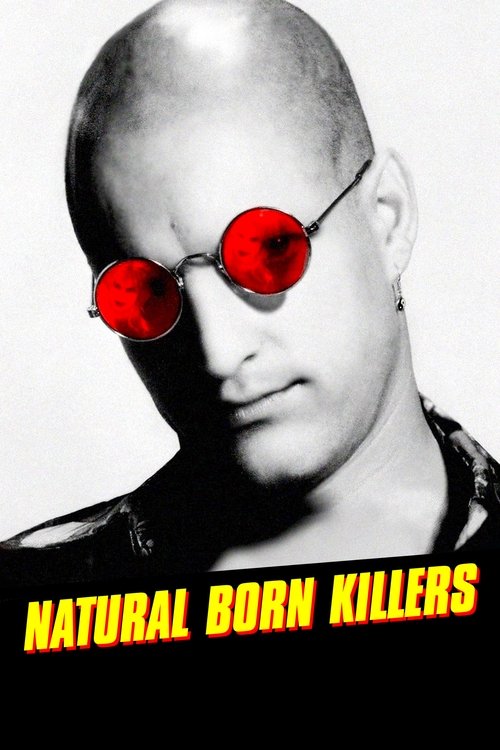
Natural Born Killers
1994 · Directed by Oliver Stone
Woke Score
CriticCritic Score
Audience
Based
Critics rated this 46 points above its woke score. Among Based films, this critic score ranks #128 of 345.
Representation Casting
Score: 0/100
The cast is predominantly white and the film makes no effort toward intentional diverse representation or casting consciousness.
LGBTQ+ Themes
Score: 0/100
No LGBTQ+ themes, characters, or representation are present in the film.
Feminist Agenda
Score: 25/100
Mallory is an active female protagonist with agency, but the film does not center feminist critique or commentary on gender dynamics.
Racial Consciousness
Score: 0/100
The film does not engage with racial themes, racial consciousness, or meaningful representation of non-white characters.
Climate Crusade
Score: 0/100
No climate themes or environmental consciousness are present in the film whatsoever.
Eat the Rich
Score: 40/100
The film satirizes media capitalism and corporate exploitation of violence for profit, critiquing how the entertainment industry commodifies crime and murder.
Body Positivity
Score: 0/100
No body positivity themes or commentary on body representation are present in the film.
Neurodivergence
Score: 0/100
While the characters are violent and potentially psychopathic, the film does not engage with neurodivergence as a thematic concern.
Revisionist History
Score: 0/100
This is a contemporary satire about current media practices, not a revisionist historical narrative.
Lecture Energy
Score: 35/100
Stone's direction is heavy-handed in its social messaging about media sensationalism and American violence, though delivered through chaotic visual style rather than explicit moralizing.


Synopsis
Two victims of traumatized childhoods become lovers and serial murderers irresponsibly glorified by the mass media.
Consciousness Assessment
Oliver Stone's 1994 satire of American media sensationalism arrives with all the subtlety of a cinematic brick through a television screen. The film tracks Mickey and Mallory Knox through their murder spree and subsequent transformation into tabloid celebrities, a trajectory Stone presents as inevitable given our culture's appetite for violent spectacle. The critique is real, if blunt: we consume violence as entertainment, and the machinery of mass media transforms criminals into stars.
The film's relationship to social consciousness is entirely of its historical moment, concerned with 1990s anxieties about television, tabloid culture, and the American fascination with crime. Its anti-capitalist impulses surface only in its mockery of media corporations profiting from tragedy and murder. These are legitimate concerns, but they are not the markers of contemporary progressive sensibility. Stone's female protagonist possesses agency and complexity, yet the film makes no particular statement about gender beyond her participation in the violence.
Stone's work remains provocative and formally audacious, but its social commentary operates in a register entirely foreign to modern progressive classification systems. It is interested in violence, celebrity, and the complicity of media institutions. It is not interested in representation, identity, or the specific constellation of values that have come to define contemporary cultural consciousness. The result is a film that remains transgressive in its content but thoroughly pre-woke in its concerns.
Analysis generated by our Consciousness Algorithm
Critic Reviews
“Like all good satirists, he knows that too much realism will weaken his effect. He lets you know he's making a comedy. There's an over-the-top exuberance to the intricate crosscut editing and to the hyperactive camera.”
“Stone takes his characters right over the top, rubbing our noses in our own lust for excess, and some viewers are bound to say that he's gone too far. Yet this may be one case where too far is just far enough-where a gifted filmmaker has transformed his own attraction to violence into an art of depraved catharsis.”
“Natural Born Killers is going to be a love-it or hate-it film. But it's an important film. Pumped up, jumped up, yet asking the right questions, [it] is more than an attention-grabber. It's a grenade pitched into the media tent. [26 Aug 1994, p.51]”
“Stone calls this bile satire. But satire takes careful aim; Killers is crushingly scattershot. By putting virtuoso technique at the service of lazy thinking, Stone turns his film into the demon he wants to mock: cruelty as entertainment.”
Consciousness Markers
The cast is predominantly white and the film makes no effort toward intentional diverse representation or casting consciousness.
No LGBTQ+ themes, characters, or representation are present in the film.
Mallory is an active female protagonist with agency, but the film does not center feminist critique or commentary on gender dynamics.
The film does not engage with racial themes, racial consciousness, or meaningful representation of non-white characters.
No climate themes or environmental consciousness are present in the film whatsoever.
The film satirizes media capitalism and corporate exploitation of violence for profit, critiquing how the entertainment industry commodifies crime and murder.
No body positivity themes or commentary on body representation are present in the film.
While the characters are violent and potentially psychopathic, the film does not engage with neurodivergence as a thematic concern.
This is a contemporary satire about current media practices, not a revisionist historical narrative.
Stone's direction is heavy-handed in its social messaging about media sensationalism and American violence, though delivered through chaotic visual style rather than explicit moralizing.