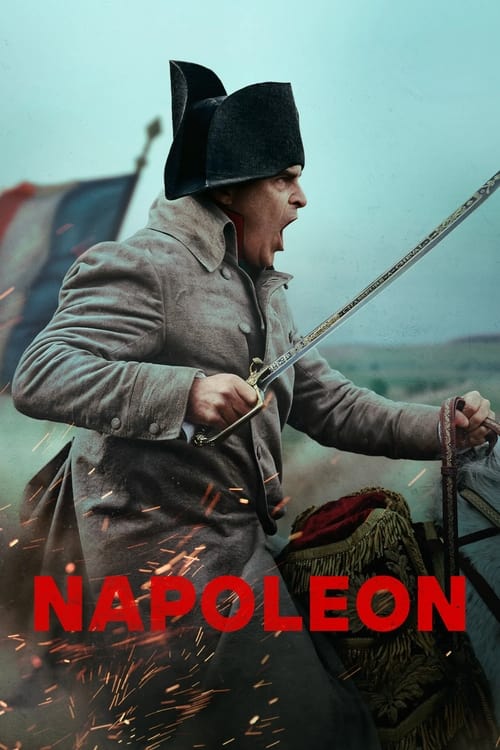
Napoleon
2023 · Directed by Ridley Scott
Woke Score
CriticCritic Score
Audience
Ultra Based
Critics rated this 49 points above its woke score. Among Ultra Based films, this critic score ranks #785 of 1469.
Representation Casting
Score: 35/100
The cast includes actors of color in military and political roles, but their presence is not thematized or examined as part of the film's social commentary. Diversity appears as historical window-dressing rather than deliberate representation.
LGBTQ+ Themes
Score: 0/100
No LGBTQ themes or characters are present in the film. The narrative centers exclusively on heterosexual romantic and military concerns.
Feminist Agenda
Score: 25/100
Vanessa Kirby's Josephine demonstrates agency and charisma, but she remains fundamentally peripheral to the narrative's core concerns. Women function as emotional anchors rather than agents of historical change or social critique.
Racial Consciousness
Score: 10/100
While the cast includes racial diversity, the film makes no thematic engagement with race, colonialism, or the historical racial dynamics of the Napoleonic era. Casting choices reflect contemporary Hollywood rather than historical examination.
Climate Crusade
Score: 0/100
There is no climate-related content or environmental consciousness in this historical military epic. The subject matter precludes any engagement with contemporary climate concerns.
Eat the Rich
Score: 0/100
The film shows no interest in critiquing capitalism, wealth inequality, or systems of economic exploitation. Military ambition and personal power drive the narrative.
Body Positivity
Score: 0/100
The film adheres to conventional standards of beauty and physical presentation for its era piece. There is no deliberate body positivity messaging or representation of diverse body types as valuable.
Neurodivergence
Score: 0/100
No neurodivergent characters or themes are present. The film makes no attempt to explore mental health, neurodiversity, or psychological difference.
Revisionist History
Score: 15/100
The film presents a relatively conventional historical narrative centered on Napoleon's rise and personal relationships. Any revisionism is minimal and concerns emotional interpretation rather than ideological reframing of historical events.
Lecture Energy
Score: 5/100
While the film occasionally pauses for exposition about historical events and military strategy, it prioritizes spectacle over preachiness. Minimal lecture energy compared to more overtly instructional historical dramas.


Synopsis
An epic that details the checkered rise and fall of French Emperor Napoleon Bonaparte and his relentless journey to power through the prism of his addictive, volatile relationship with his wife, Josephine.
Consciousness Assessment
Ridley Scott's Napoleon is a historical epic of considerable ambition, concerned primarily with military spectacle and the volatile emotional life of its titular protagonist. The film attempts to center Josephine as a counterbalance to its subject, with Vanessa Kirby delivering a compelling performance that suggests depths of political agency beneath layers of empire gown and powdered hair. Yet the film's progressive sensibilities amount to little more than granting its female lead a pulse and occasional moments of resistance, a bare minimum that hardly constitutes meaningful cultural commentary on gender in the Napoleonic era or beyond.
The supporting cast is ethnically diverse, though this diversity exists in the film as a historical curiosity instead of a thematic statement. Tahar Rahim and other actors of color populate the military and political spheres without the narrative drawing attention to their presence as anything unusual or worthy of examination. The film makes no attempt to grapple with the actual racial dynamics of its historical period, preferring instead to treat casting as a matter of contemporary convenience. There is no climate consciousness, no examination of class struggle beyond the basic contours of military ambition, no neurodivergent representation, and no LGBTQ presence of note.
A film content to be a traditional historical drama, one that happens to star a woman opposite its male lead but lacks any systematic interest in social consciousness as understood in contemporary terms, is simultaneously a monument to Scott's directorial prowess and a reminder that technical mastery and historical ambition do not automatically generate progressive cultural awareness.
Analysis generated by our Consciousness Algorithm
Critic Reviews
“Phoenix is the key to it all: a performance as robust as the glass of burgundy he knocks back: preening, brooding, seething and triumphing.”
“For Napoleon, Scott gives every last little slice of himself – the dramatist, the set-piece strategist, even, and especially, the comedian – to deliver what just might be his late-career masterpiece.”
“It’s a tall order to deliver a portrayal of such an auspicious historical character. Little effort is made to glorify him, and Scott makes sure that the audience renders their own judgement on his significance in history. ”
“We don't need another hero, but when it comes to the man at its center, Napoleon could have used a lot more oomph.”
Consciousness Markers
The cast includes actors of color in military and political roles, but their presence is not thematized or examined as part of the film's social commentary. Diversity appears as historical window-dressing rather than deliberate representation.
No LGBTQ themes or characters are present in the film. The narrative centers exclusively on heterosexual romantic and military concerns.
Vanessa Kirby's Josephine demonstrates agency and charisma, but she remains fundamentally peripheral to the narrative's core concerns. Women function as emotional anchors rather than agents of historical change or social critique.
While the cast includes racial diversity, the film makes no thematic engagement with race, colonialism, or the historical racial dynamics of the Napoleonic era. Casting choices reflect contemporary Hollywood rather than historical examination.
There is no climate-related content or environmental consciousness in this historical military epic. The subject matter precludes any engagement with contemporary climate concerns.
The film shows no interest in critiquing capitalism, wealth inequality, or systems of economic exploitation. Military ambition and personal power drive the narrative.
The film adheres to conventional standards of beauty and physical presentation for its era piece. There is no deliberate body positivity messaging or representation of diverse body types as valuable.
No neurodivergent characters or themes are present. The film makes no attempt to explore mental health, neurodiversity, or psychological difference.
The film presents a relatively conventional historical narrative centered on Napoleon's rise and personal relationships. Any revisionism is minimal and concerns emotional interpretation rather than ideological reframing of historical events.
While the film occasionally pauses for exposition about historical events and military strategy, it prioritizes spectacle over preachiness. Minimal lecture energy compared to more overtly instructional historical dramas.