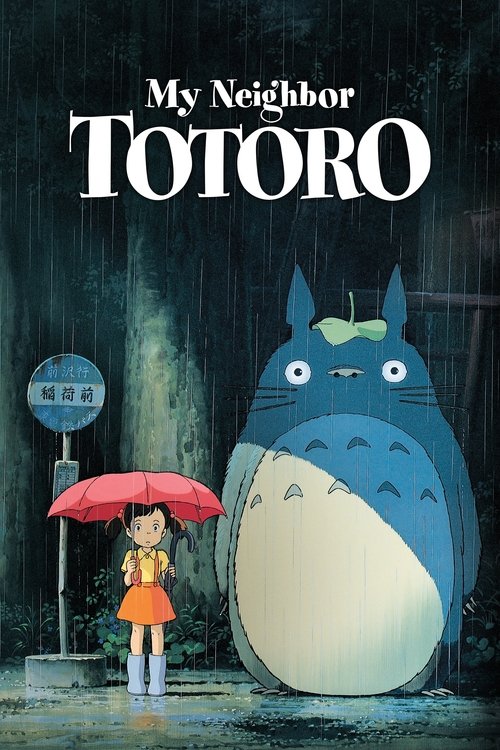
My Neighbor Totoro
1988 · Directed by Hayao Miyazaki
Woke Score
CriticCritic Score
Audience
Ultra Based
Critics rated this 79 points above its woke score. Among Ultra Based films, this critic score ranks #201 of 1469.
Representation Casting
Score: 28/100
Features female protagonists, but they are presented naturalistically rather than as commentary on gender representation. The older sister functions primarily as caretaker, which reads less as feminist statement and more as traditional role acceptance.
LGBTQ+ Themes
Score: 0/100
No LGBTQ+ themes, characters, or representation present in the narrative.
Feminist Agenda
Score: 15/100
Female characters are capable but their agency exists within domestic and family contexts. No explicit critique of gender roles or systemic gender issues. Satsuki's competence is presented as individual trait rather than political statement.
Racial Consciousness
Score: 0/100
Set in rural Japan with an ethnically homogeneous cast. No racial consciousness, no discussion of discrimination, no racial politics of any kind.
Climate Crusade
Score: 8/100
While the film celebrates nature and forest spirits, this reflects Shinto spirituality and pre-modern animism rather than contemporary environmental activism or climate consciousness.
Eat the Rich
Score: 0/100
No critique of capitalism, wealth inequality, or economic systems. The family's economic circumstances are simply background to the narrative.
Body Positivity
Score: 0/100
No body positivity themes, commentary on beauty standards, or discussion of body image present in the film.
Neurodivergence
Score: 0/100
No representation of neurodivergence, no discussion of mental health conditions, no disability representation beyond the mother's unnamed illness as plot device.
Revisionist History
Score: 0/100
The film is not historical in nature and contains no revisionist historical elements or reexamination of historical events.
Lecture Energy
Score: 10/100
The film is thematically gentle and avoids preachy messaging. It presents its world-view organically through imagery and narrative rather than explicit instruction or debate.


Synopsis
Two sisters move to the country with their father in order to be closer to their hospitalized mother, and discover the surrounding trees are inhabited by Totoros, magical spirits of the forest. When the youngest runs away from home, the older sister seeks help from the spirits to find her.
Consciousness Assessment
My Neighbor Totoro presents a curious case study in the distinction between artistic merit and cultural consciousness as defined by contemporary progressive sensibilities. The film features two female protagonists, a narrative choice that might seem progressive on its surface, yet the older sister Satsuki functions primarily as a caretaker and emotional support system for her family, a role that reads less as feminist reclamation and more as the naturalization of female domestic labor. The father is portrayed as distracted and ineffectual, a character type that has become familiar in films seeking to highlight female competence, but the film itself makes no apparent effort to comment upon or critique this dynamic. We are simply meant to observe it.
The environmental elements present in the film, while poetic and central to its narrative logic, do not constitute the kind of climate consciousness that would register on a contemporary woke scale. The spirits of the forest exist in a pre-industrial, spiritually harmonious relationship with nature that predates modern ecological discourse by centuries. There is no discussion of carbon emissions, industrial waste, or systemic environmental destruction. The forest is simply beautiful and inhabited by benevolent creatures. This is Shinto-inflected nature mysticism, not environmental activism. Similarly, the film contains no racial consciousness, no representation of neurodivergence, no body positivity commentary, and no anti-capitalist critique. The mother's illness is treated as personal tragedy rather than systemic healthcare failure.
What remains is a film of genuine artistic accomplishment, composed with meticulous attention to detail and emotional authenticity. It is also, by the metrics we have established, remarkably innocent of the social consciousness markers that define contemporary progressive filmmaking. This is not a criticism of the film, but rather an observation about the profound historical distance between 1988 and the present moment. My Neighbor Totoro is a work that exists outside the cultural framework we are tasked with evaluating, which may be precisely why it endures.
Analysis generated by our Consciousness Algorithm
Critic Reviews
“Miyazaki so effectively captures the feeling of a child’s life, inside as well as out, that little ones are often mesmerized by the movie, and adults are returned to a time when they could enjoy mystery for its own sake. ”
“Here is a children's film made for the world we should live in, rather than the one we occupy. A film with no villains. No fight scenes. No evil adults. No fighting between the two kids. No scary monsters. No darkness before the dawn. A world that is benign. A world where if you meet a strange towering creature in the forest, you curl up on its tummy and have a nap.”
“An otherworldly tale of childhood and a definitive work of imagination.”
“Writer-director Hayao Miyazaki has essentially padded a television half-hour into a sluggish theatrical feature. ”
Consciousness Markers
Features female protagonists, but they are presented naturalistically rather than as commentary on gender representation. The older sister functions primarily as caretaker, which reads less as feminist statement and more as traditional role acceptance.
No LGBTQ+ themes, characters, or representation present in the narrative.
Female characters are capable but their agency exists within domestic and family contexts. No explicit critique of gender roles or systemic gender issues. Satsuki's competence is presented as individual trait rather than political statement.
Set in rural Japan with an ethnically homogeneous cast. No racial consciousness, no discussion of discrimination, no racial politics of any kind.
While the film celebrates nature and forest spirits, this reflects Shinto spirituality and pre-modern animism rather than contemporary environmental activism or climate consciousness.
No critique of capitalism, wealth inequality, or economic systems. The family's economic circumstances are simply background to the narrative.
No body positivity themes, commentary on beauty standards, or discussion of body image present in the film.
No representation of neurodivergence, no discussion of mental health conditions, no disability representation beyond the mother's unnamed illness as plot device.
The film is not historical in nature and contains no revisionist historical elements or reexamination of historical events.
The film is thematically gentle and avoids preachy messaging. It presents its world-view organically through imagery and narrative rather than explicit instruction or debate.