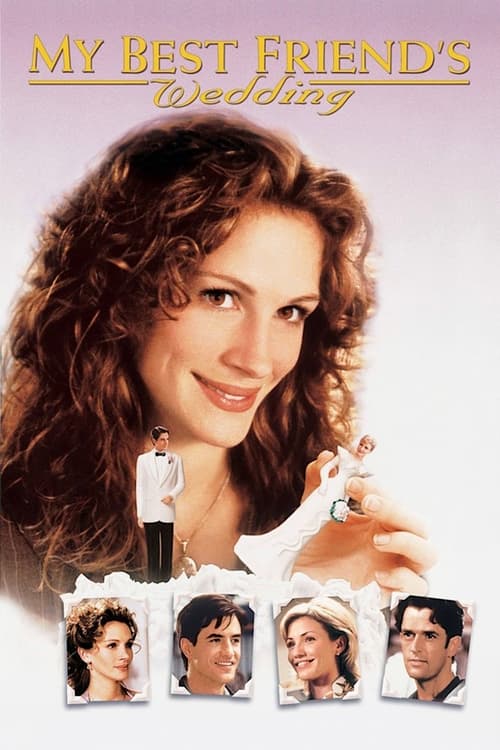
My Best Friend's Wedding
1997 · Directed by P.J. Hogan
Woke Score
CriticCritic Score
Audience
Based
Critics rated this 29 points above its woke score. Among Based films, this critic score ranks #296 of 345.
Representation Casting
Score: 35/100
The film includes a Black character and Rupert Everett as a gay character, but both exist primarily to serve the white female protagonist's narrative. Representation is present but superficial.
LGBTQ+ Themes
Score: 40/100
Rupert Everett's George is an openly gay character, notable for 1997, but he functions as the stereotypical gay best friend whose role is comic relief and emotional support for the heterosexual lead. He lacks independent agency or romantic subplot.
Feminist Agenda
Score: 15/100
The film's plot centers on female agency, but only in service of romantic acquisition. The protagonist lies and manipulates to win back a man, and other women are portrayed as obstacles or comedic foils. Female ambition exists only within romantic frameworks.
Racial Consciousness
Score: 8/100
The film features a diverse supporting cast but contains no meaningful exploration of race or racial identity. Characters of color exist in the background without comment or complexity.
Climate Crusade
Score: 0/100
No climate themes or environmental consciousness appear in this romantic comedy set in urban and wedding contexts.
Eat the Rich
Score: 5/100
The protagonist is a food critic and the film celebrates upper-class wedding culture and luxury consumption without irony or critique. There is no anti-capitalist sensibility present.
Body Positivity
Score: 12/100
The film features conventionally attractive leads and presents beauty as a primary asset. There is no meaningful body diversity or positive representation of different body types.
Neurodivergence
Score: 0/100
No neurodivergent characters or themes appear in the film. Disability and neurodiversity are absent from the narrative.
Revisionist History
Score: 0/100
This contemporary romantic comedy contains no historical elements or revisionist historical claims.
Lecture Energy
Score: 10/100
The film does not heavy-handedly lecture the audience about social issues. Its progressive elements, such as they are, remain implicit and unexamined within the narrative.


Synopsis
When she receives word that her longtime platonic pal Michael O'Neal is getting married to debutante Kimberly Wallace, food critic Julianne Potter realizes her true feelings for Michael -- and sets out to sabotage the wedding.
Consciousness Assessment
My Best Friend's Wedding occupies a peculiar niche in the romantic comedy canon, one where progressive sensibilities exist more in the margins than in the marrow of the narrative. The film's most progressive element is undeniably the presence of Rupert Everett as George, a gay best friend who serves as confidant and comic relief. For 1997, this representation was notable, though by contemporary standards it reads as the archetypal "magical gay friend" trope, a character whose primary function is to facilitate the heterosexual protagonist's emotional journey rather than possess interiority of his own. The premise itself treats female agency primarily as a vehicle for romantic acquisition. There is something almost gleefully regressive about it.
The supporting cast includes Cameron Diaz as the bride, positioned as vapid and shallow by narrative design, a characterization that invites us to root against her. Julia Roberts remains the film's moral center, even as she lies, manipulates, and deceives in service of her romantic goals. The film's view of female ambition is narrow and deeply concerned with relationship status as the primary measure of fulfillment. There are no substantive conversations about career, identity, or autonomy that exist outside the romantic plot machinery. The working world serves merely as backdrop, and the female characters occupy it without particular complexity or conviction.
What emerges from viewing this artifact is a document of mid-1990s attitudes toward gender, sexuality, and romance that now feel almost quaint in their obliviousness. The film means well, perhaps, in its inclusion of a gay character, yet that inclusion functions as decoration rather than integration. Between genuine progressive values and their hollow simulacra, between representation that costs something and representation that costs nothing, this film lands squarely in the latter category. It is a competent comedy that traffics in the currency of romantic fulfillment without questioning whether that currency has any real value.
Analysis generated by our Consciousness Algorithm
Critic Reviews
“Ultimately, My Best Friend's Wedding works for some very old-fashioned reasons: It skillfully engages us in the story and its characters. And, for no additional cost, it has something to say about how we live, act, commit and relate.”
“One of the pleasures of Ronald Bass' screenplay is the way it subverts the usual comic formulas that would fuel a plot like this.”
“The film makers understand that it's possible for a romantic comedy to appeal not only to the heart, but to the mind as well.”
“Poor Roberts, pretty and perky as the day is long, hasn't a hoot in hell of bringing Julianne off. She's simply not actress enough, she doesn't have that suppleness that would enable her to sell the complexity of emotion, the jealousy, the irrationality, the meanness and the intelligence.”
Consciousness Markers
The film includes a Black character and Rupert Everett as a gay character, but both exist primarily to serve the white female protagonist's narrative. Representation is present but superficial.
Rupert Everett's George is an openly gay character, notable for 1997, but he functions as the stereotypical gay best friend whose role is comic relief and emotional support for the heterosexual lead. He lacks independent agency or romantic subplot.
The film's plot centers on female agency, but only in service of romantic acquisition. The protagonist lies and manipulates to win back a man, and other women are portrayed as obstacles or comedic foils. Female ambition exists only within romantic frameworks.
The film features a diverse supporting cast but contains no meaningful exploration of race or racial identity. Characters of color exist in the background without comment or complexity.
No climate themes or environmental consciousness appear in this romantic comedy set in urban and wedding contexts.
The protagonist is a food critic and the film celebrates upper-class wedding culture and luxury consumption without irony or critique. There is no anti-capitalist sensibility present.
The film features conventionally attractive leads and presents beauty as a primary asset. There is no meaningful body diversity or positive representation of different body types.
No neurodivergent characters or themes appear in the film. Disability and neurodiversity are absent from the narrative.
This contemporary romantic comedy contains no historical elements or revisionist historical claims.
The film does not heavy-handedly lecture the audience about social issues. Its progressive elements, such as they are, remain implicit and unexamined within the narrative.