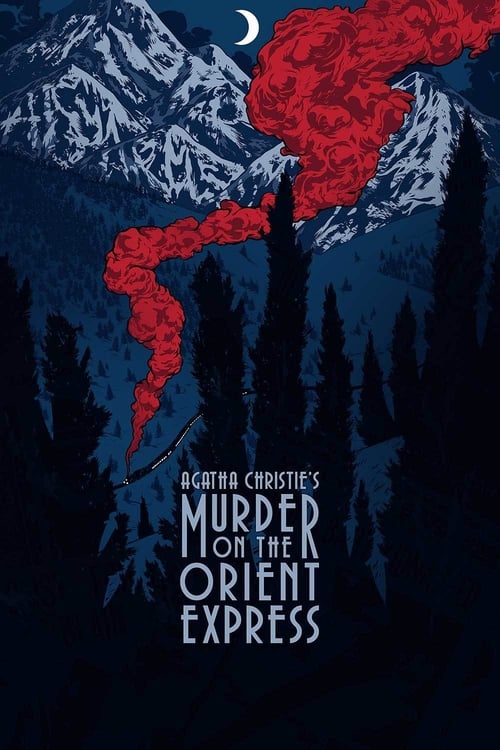
Murder on the Orient Express
1974 · Directed by Sidney Lumet
Woke Score
CriticCritic Score
Audience
Ultra Based
Critics rated this 48 points above its woke score. Among Ultra Based films, this critic score ranks #1122 of 1469.
Representation Casting
Score: 0/100
The international cast reflects the source material's geography, not contemporary casting consciousness. Diverse casting is incidental to the plot.
LGBTQ+ Themes
Score: 0/100
No LGBTQ+ themes, characters, or subtext present in the film.
Feminist Agenda
Score: 0/100
Female characters serve the mystery plot but contain no feminist messaging or agenda.
Racial Consciousness
Score: 0/100
The film contains no commentary on race, systemic racism, or racial identity.
Climate Crusade
Score: 0/100
No climate messaging or environmental themes present.
Eat the Rich
Score: 0/100
No critique of capitalism, wealth inequality, or systemic economic injustice.
Body Positivity
Score: 0/100
No body positivity themes or commentary on body image.
Neurodivergence
Score: 0/100
No representation of neurodivergence or related themes.
Revisionist History
Score: 0/100
The film presents its 1935 setting straightforwardly without revisionist historical commentary.
Lecture Energy
Score: 2/100
The film is nearly dialogue-free regarding themes, though Poirot's deductions carry a minor preachy quality inherent to the mystery genre.


Synopsis
In 1935, when his train is stopped by deep snow, detective Hercule Poirot is called on to solve a murder that occurred in his car the night before.
Consciousness Assessment
Sidney Lumet's "Murder on the Orient Express" is a meticulously crafted puzzle box from an era when filmmaking asked only that audiences follow the clues and marvel at the construction. The film contains multitudes, but none of them are progressive sensibilities. It is a 1974 adaptation of a 1934 novel, and it commits fully to being exactly that: a mystery thriller where an international cast boards a snowbound train and waits to be implicated. The female characters exist, as they do in the source material, but they exist in service of the plot rather than in service of any agenda.
The cast is diverse by accident of the source material's geography, not by design. Albert Finney's Poirot is the fulcrum around which everything rotates, and the supporting players, however distinguished, remain supporting. There is nothing here about representation, identity, or systemic anything. The film is concerned solely with murder, motive, and the mechanics of deduction. It is, in this sense, a film of almost aggressive indifference to cultural commentary.
The film treats its audience as intelligent enough to follow a complex narrative without instruction. There are no speeches about justice, no moments where the camera lingers to ensure we understand a character's significance, no subtext demanding interpretation. It is cinema as entertainment, operating in an entirely different register from the social consciousness that defines contemporary progressive filmmaking. One might argue this is the film's greatest strength, though that would be a separate review entirely.
Analysis generated by our Consciousness Algorithm
Critic Reviews
“It’s a classy, riveting remake, and it will make you want to see even more adventures featuring this particular Poirot.”
“Branagh executes his double duties with a gratifyingly light touch, tweaking the story’s more mothballed elements without burying it all in winky wham-bam modernity.”
“Kenneth Branagh finds interesting ways to grease the wheels of this new take on the oft-filmed novel.”
“The current cast is cursed with the director’s lust for gravitas. Searching for emotional truth in Agatha Christie, Mr. Branagh succeeds only in killing her playfulness.”
Consciousness Markers
The international cast reflects the source material's geography, not contemporary casting consciousness. Diverse casting is incidental to the plot.
No LGBTQ+ themes, characters, or subtext present in the film.
Female characters serve the mystery plot but contain no feminist messaging or agenda.
The film contains no commentary on race, systemic racism, or racial identity.
No climate messaging or environmental themes present.
No critique of capitalism, wealth inequality, or systemic economic injustice.
No body positivity themes or commentary on body image.
No representation of neurodivergence or related themes.
The film presents its 1935 setting straightforwardly without revisionist historical commentary.
The film is nearly dialogue-free regarding themes, though Poirot's deductions carry a minor preachy quality inherent to the mystery genre.