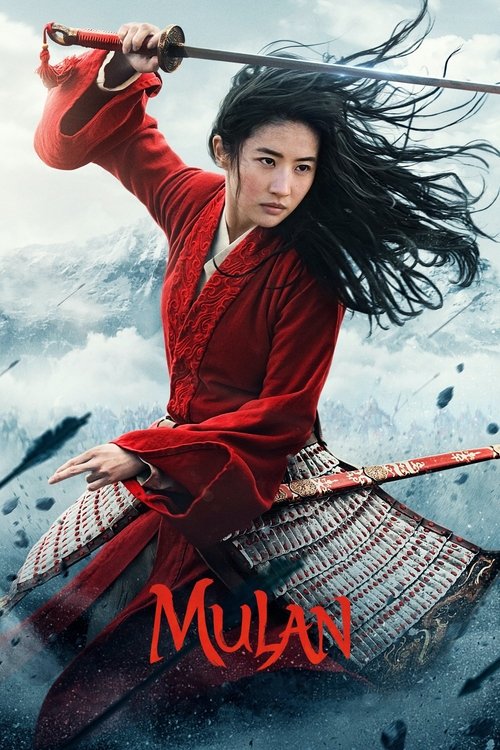
Mulan
2020 · Directed by Niki Caro
Woke Score
CriticCritic Score
Audience
Woke
Critics rated this 2 points below its woke score. Among Woke films, this critic score ranks #53 of 88.
Representation Casting
Score: 85/100
All-Asian cast with major roles held by renowned Asian actors. The film centers Asian performers in positions of power, heroism, and moral complexity rather than supporting roles.
LGBTQ+ Themes
Score: 0/100
No LGBTQ+ themes, characters, or representation present in the film. Gender disguise is treated as practical necessity, not as exploration of gender identity or sexuality.
Feminist Agenda
Score: 82/100
The narrative centers on a woman rejecting prescribed gender roles and societal expectations. Mulan's journey is explicitly framed as self-actualization through rejecting femininity and embracing her authentic power.
Racial Consciousness
Score: 65/100
The film engages with Chinese cultural specificity and positions Chinese civilization as sophisticated and worthy of respect. However, racial consciousness functions more through positive representation than through explicit thematic exploration.
Climate Crusade
Score: 0/100
No climate-related themes, messaging, or environmental consciousness present in the film. The narrative focuses entirely on military conflict and personal identity.
Eat the Rich
Score: 0/100
No critique of capitalism, class structures, or economic systems. The film operates within a feudal military framework without interrogating economic exploitation or inequality.
Body Positivity
Score: 5/100
The film does not engage with body positivity messaging. Mulan's physicality is presented as an asset to her warrior capability rather than as a statement about diverse body representation.
Neurodivergence
Score: 0/100
No representation of neurodivergence, disability, or mental health conditions. The film contains no characters or themes addressing these dimensions of human experience.
Revisionist History
Score: 45/100
The film takes significant liberties with the historical record, presenting Mulan's story as one of gender liberation within a feudal Chinese military structure. This represents a contemporary reframing of historical events through modern values.
Lecture Energy
Score: 60/100
The film carries considerable preachy weight regarding female empowerment and self-actualization. Characters frequently articulate themes about breaking free from societal constraints, creating a somewhat explicit messaging approach.


Synopsis
When the Emperor of China issues a decree that one man per family must serve in the Imperial Chinese Army to defend the country from Huns, Hua Mulan, the eldest daughter of an honored warrior, steps in to take the place of her ailing father. She is spirited, determined and quick on her feet. Disguised as a man by the name of Hua Jun, she is tested every step of the way and must harness her innermost strength and embrace her true potential.
Consciousness Assessment
Disney's 2020 live-action Mulan represents a deliberate recalibration of its animated predecessor toward contemporary sensibilities regarding gender expression and identity. The film strips away the comedic musical elements of 1998 in favor of a more earnest exploration of a woman navigating rigid social structures and discovering her authentic self beyond prescribed gender roles. Director Niki Caro has constructed a narrative where Mulan's central conflict is not merely about being a soldier, but about the tension between societal expectations and individual destiny. The repeated emphasis on her "chi," her special power, functions as a metaphor for self-actualization and the rejection of conformity.
The casting decisions merit particular scrutiny. Liu Yifei carries the lead with competence, surrounded by a predominantly Asian cast including Donnie Yen, Gong Li, and Jet Li, which represents a significant commitment to authentic representation. The film does not tokenize these performers but rather constructs a world where Asian actors occupy all positions of authority and heroism. However, the representation operates in service of a distinctly modern feminist framework that may feel somewhat imposed upon the historical material. The film's messaging about female empowerment and self-discovery carries considerable cultural weight, delivered with the earnestness of a manifesto rather than emerging organically from the narrative.
The environmental and anti-capitalist dimensions remain largely absent, as the film concerns itself primarily with interpersonal conflict and questions of identity rather than systemic critique. Neurodivergence receives no attention. The film functions as a cultural statement as much as entertainment, which may be precisely the point.
Analysis generated by our Consciousness Algorithm
Critic Reviews
“The payoff is a consistently rich piece with impressive visual vitality.”
“It's the characterization of Mulan, both in voice and visuals, that makes the film a keeper.”
“Gorgeously animated and stirringly told, Disney's Mulan is a timeless story that will delight kids and divert adults with its sweeping scope, emotional intimacy and screwball humor.”
“A film that not only breaks the cross-dressing barrier but also ratchets up the violence level for children's animation. ”
Consciousness Markers
All-Asian cast with major roles held by renowned Asian actors. The film centers Asian performers in positions of power, heroism, and moral complexity rather than supporting roles.
No LGBTQ+ themes, characters, or representation present in the film. Gender disguise is treated as practical necessity, not as exploration of gender identity or sexuality.
The narrative centers on a woman rejecting prescribed gender roles and societal expectations. Mulan's journey is explicitly framed as self-actualization through rejecting femininity and embracing her authentic power.
The film engages with Chinese cultural specificity and positions Chinese civilization as sophisticated and worthy of respect. However, racial consciousness functions more through positive representation than through explicit thematic exploration.
No climate-related themes, messaging, or environmental consciousness present in the film. The narrative focuses entirely on military conflict and personal identity.
No critique of capitalism, class structures, or economic systems. The film operates within a feudal military framework without interrogating economic exploitation or inequality.
The film does not engage with body positivity messaging. Mulan's physicality is presented as an asset to her warrior capability rather than as a statement about diverse body representation.
No representation of neurodivergence, disability, or mental health conditions. The film contains no characters or themes addressing these dimensions of human experience.
The film takes significant liberties with the historical record, presenting Mulan's story as one of gender liberation within a feudal Chinese military structure. This represents a contemporary reframing of historical events through modern values.
The film carries considerable preachy weight regarding female empowerment and self-actualization. Characters frequently articulate themes about breaking free from societal constraints, creating a somewhat explicit messaging approach.