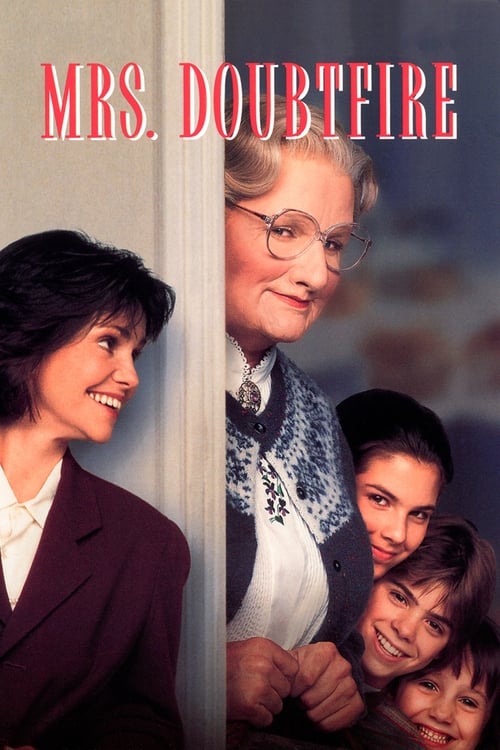
Mrs. Doubtfire
1993 · Directed by Chris Columbus
Woke Score
CriticCritic Score
Audience
Ultra Based
Critics rated this 50 points above its woke score. Among Ultra Based films, this critic score ranks #1073 of 1469.
Representation Casting
Score: 8/100
The cast is predominantly white with no apparent structural commitment to diversity. Harvey Fierstein provides LGBTQ+ representation, but this appears incidental rather than intentional.
LGBTQ+ Themes
Score: 15/100
Harvey Fierstein's presence as a gay character represents rare LGBTQ+ visibility in mainstream 1990s comedy, though the character is largely comedic relief without deeper thematic engagement.
Feminist Agenda
Score: 5/100
The film reinforces traditional gender roles with the mother as primary caregiver. The father's growth is presented as learning to nurture, not challenging patriarchal structures.
Racial Consciousness
Score: 0/100
No engagement with racial themes, consciousness, or representation as a structural concern. The film is racially unremarkable for 1993.
Climate Crusade
Score: 0/100
Climate concerns are entirely absent from this family comedy about divorce and parental responsibility.
Eat the Rich
Score: 0/100
No critique of capitalism, wealth, or economic systems. The narrative assumes conventional middle-class family structures.
Body Positivity
Score: 2/100
The film's humor derives partly from the sight gag of Williams in a fat suit and prosthetics, which does not align with modern body positivity sensibilities.
Neurodivergence
Score: 0/100
No representation of or engagement with neurodivergent experiences or perspectives.
Revisionist History
Score: 0/100
A contemporary domestic comedy with no historical dimensions to revise or reframe.
Lecture Energy
Score: 5/100
The film contains mild moralizing about fatherhood and parental responsibility, but this is presented through narrative rather than preachy exposition.


Synopsis
Loving but irresponsible dad Daniel Hillard, estranged from his exasperated spouse, is crushed by a court order allowing only weekly visits with his kids. When Daniel learns his ex needs a housekeeper, he gets the job -- disguised as a British nanny. Soon he becomes not only his children's best pal but the kind of parent he should have been from the start.
Consciousness Assessment
Mrs. Doubtfire occupies a curious position in the cultural landscape, a film from 1993 that predates the modern social consciousness markers we now use to evaluate cinema. The film's central premise, a man in drag as broad physical comedy, would likely be treated with considerably more sensitivity in contemporary filmmaking, yet the film itself contains no self-conscious progressive framing around this conceit. Robin Williams plays the role as pure farce, and the audience is invited to laugh at the costume and the deception, not to contemplate questions of gender authenticity or expression.
The supporting cast includes Harvey Fierstein as Daniel's friend, which provides a rare moment of LGBTQ+ visibility in mainstream 1990s family comedy, though Fierstein's character exists largely to provide comic relief. The film's actual thematic concerns are domestic and relational: divorce, custody, parental responsibility. These are presented through a traditional lens in which the mother is positioned as the primary caregiver and the father must learn to be more nurturing. The message is humanist rather than progressive in the modern sense.
The cast is predominantly white, with no apparent effort toward representation as a structural principle. The film reflects the San Francisco setting without commentary on diversity or systemic inequality. This is simply a film from 1993, neither offensive by contemporary standards nor meaningfully engaged with the progressive social markers that would come to define cultural discourse in the 2020s.
Analysis generated by our Consciousness Algorithm
Critic Reviews
“Director Chris Columbus shrewdly brings together many of the same selling points as in his "Home Alone" movies, mixing broad comedic strokes with heavy-handed messages about the magical power of family.”
“Although the broad comedy of the first half soon gives way to a tidal wave of entirely uncalled for sentimentality, this is still a laugh riot - the sight of our hero setting fire to his falsies never fails to amuse.”
“And you will laugh till your ribs ache -- not because director Chris Columbus of the "Home Alone" movies has a gift for farce, which he does, but because Williams is to funny what the Energizer Bunny is to batteries. He keeps going and going and going.”
“Mrs. Doubtfire is overlong, barely funny, and a surprisingly bitter movie especially for a film aimed at children.”
Consciousness Markers
The cast is predominantly white with no apparent structural commitment to diversity. Harvey Fierstein provides LGBTQ+ representation, but this appears incidental rather than intentional.
Harvey Fierstein's presence as a gay character represents rare LGBTQ+ visibility in mainstream 1990s comedy, though the character is largely comedic relief without deeper thematic engagement.
The film reinforces traditional gender roles with the mother as primary caregiver. The father's growth is presented as learning to nurture, not challenging patriarchal structures.
No engagement with racial themes, consciousness, or representation as a structural concern. The film is racially unremarkable for 1993.
Climate concerns are entirely absent from this family comedy about divorce and parental responsibility.
No critique of capitalism, wealth, or economic systems. The narrative assumes conventional middle-class family structures.
The film's humor derives partly from the sight gag of Williams in a fat suit and prosthetics, which does not align with modern body positivity sensibilities.
No representation of or engagement with neurodivergent experiences or perspectives.
A contemporary domestic comedy with no historical dimensions to revise or reframe.
The film contains mild moralizing about fatherhood and parental responsibility, but this is presented through narrative rather than preachy exposition.