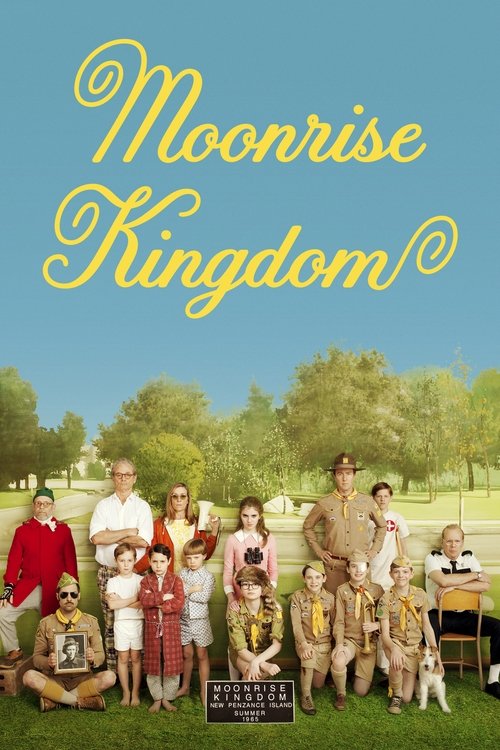
Moonrise Kingdom
2012 · Directed by Wes Anderson
Woke Score
CriticCritic Score
Audience
Ultra Based
Critics rated this 76 points above its woke score. Among Ultra Based films, this critic score ranks #266 of 1469.
Representation Casting
Score: 20/100
The film features two young protagonists of equal narrative weight, with the female lead (Suzy) as intelligent and active. However, the broader cast is predominantly white, and the film makes no apparent effort toward diverse representation.
LGBTQ+ Themes
Score: 0/100
No LGBTQ+ themes, representation, or subtext are present in the film. The narrative focuses entirely on heterosexual romance between the two young leads.
Feminist Agenda
Score: 15/100
Suzy is portrayed as an intelligent, independent thinker who defies her family's expectations. This reflects general humanist values rather than explicit contemporary feminist discourse or agenda.
Racial Consciousness
Score: 0/100
The film contains no engagement with racial themes, consciousness, or commentary. The setting and narrative are racially unmarked and feature no relevant representation.
Climate Crusade
Score: 0/100
Climate change, environmental activism, or ecological consciousness are entirely absent from the film. The storm is a narrative device, not a climate statement.
Eat the Rich
Score: 10/100
While the film critiques mid-century social institutions and conformity, this represents general anti-authoritarian sentiment rather than specific anti-capitalist messaging. No class consciousness or economic critique is evident.
Body Positivity
Score: 0/100
Body positivity themes are absent. The film makes no commentary on body standards, disability representation, or related concerns.
Neurodivergence
Score: 5/100
Sam is portrayed as an orphan with behavioral difficulties and social alienation, though the film does not explicitly frame this through a neurodivergence lens. His difference is treated sympathetically but not diagnostically.
Revisionist History
Score: 0/100
The film does not revisit or reframe historical events or narratives. It is set in 1965 but makes no attempt to recontextualize or reinterpret that era's history.
Lecture Energy
Score: 0/100
The film maintains a light, whimsical tone and shows rather than tells its themes. There is no preachy or preachy quality; no monologues deliver moral lessons.


Synopsis
Set on an island off the coast of New England in the summer of 1965, Moonrise Kingdom tells the story of two twelve-year-olds who fall in love, make a secret pact, and run away together into the wilderness. As various authorities try to hunt them down, a violent storm is brewing off-shore – and the peaceful island community is turned upside down in more ways than anyone can handle.
Consciousness Assessment
Wes Anderson's "Moonrise Kingdom" arrives in 2012 as a meticulously crafted fable about adolescent autonomy and the suffocation of conformity, yet it remains a work of artistic nostalgia rather than contemporary cultural commentary. The film's two young protagonists defy their families and their island community with equal agency, and Suzy Bishop emerges as a complex, literate figure who thinks for herself. Yet this is simply good character work, not progressive intervention. The film critiques mid-century institutions, from the dubious science of psychology to the cruelty of hospitalization, but this represents a timeless skepticism toward authority rather than the specific concerns that would come to define modern progressive sensibilities.
What strikes most forcefully is what the film refuses to do. There is no acknowledgment of racial dimensions to its 1965 setting, no LGBTQ+ subtext, no climate consciousness, no body-positive messaging. The visual world is meticulously composed, populated almost entirely by white characters, and the narrative orbits around two young people whose love story unfolds without complication or interrogation. Anderson's particular genius lies in his ability to render childhood with genuine sympathy and formal elegance, but sympathy and elegance are not the same as cultural awareness.
The film's low score reflects not any failure of artistic merit but rather its temporal distance from the specific cultural inflections that characterize the 2020s progressive moment. "Moonrise Kingdom" was made before that constellation of concerns crystallized in popular discourse, and it betrays no retroactive anxiety about alignment with those values. It remains what it was intended to be: a beautiful, self-contained world that answers to its own internal logic rather than to external cultural demands.
Analysis generated by our Consciousness Algorithm
Critic Reviews
“Moonrise Kingdom is Anderson's most completely satisfying film since the one-two of "Rushmore" and "The Royal Tenenbaums," in part because it's the perfect distillation of both.”
“Moonrise Kingdom is Anderson's seventh movie, and it's the first since "Rushmore" that works from the opening shot to the final image.”
“The result, in the case of Moonrise Kingdom, is what I call transcendentally brainless - an after school special aimed at asinine adolescents over the age of 40.”
Consciousness Markers
The film features two young protagonists of equal narrative weight, with the female lead (Suzy) as intelligent and active. However, the broader cast is predominantly white, and the film makes no apparent effort toward diverse representation.
No LGBTQ+ themes, representation, or subtext are present in the film. The narrative focuses entirely on heterosexual romance between the two young leads.
Suzy is portrayed as an intelligent, independent thinker who defies her family's expectations. This reflects general humanist values rather than explicit contemporary feminist discourse or agenda.
The film contains no engagement with racial themes, consciousness, or commentary. The setting and narrative are racially unmarked and feature no relevant representation.
Climate change, environmental activism, or ecological consciousness are entirely absent from the film. The storm is a narrative device, not a climate statement.
While the film critiques mid-century social institutions and conformity, this represents general anti-authoritarian sentiment rather than specific anti-capitalist messaging. No class consciousness or economic critique is evident.
Body positivity themes are absent. The film makes no commentary on body standards, disability representation, or related concerns.
Sam is portrayed as an orphan with behavioral difficulties and social alienation, though the film does not explicitly frame this through a neurodivergence lens. His difference is treated sympathetically but not diagnostically.
The film does not revisit or reframe historical events or narratives. It is set in 1965 but makes no attempt to recontextualize or reinterpret that era's history.
The film maintains a light, whimsical tone and shows rather than tells its themes. There is no preachy or preachy quality; no monologues deliver moral lessons.