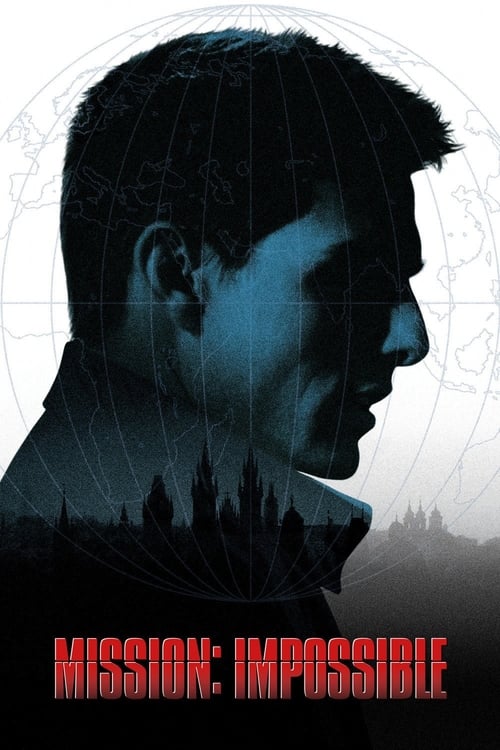
Mission: Impossible
1996 · Directed by Brian De Palma
Woke Score
CriticCritic Score
Audience
Ultra Based
Critics rated this 51 points above its woke score. Among Ultra Based films, this critic score ranks #940 of 1469.
Representation Casting
Score: 25/100
The ensemble includes some diversity with Ving Rhames and international actors, but the narrative remains centered on Tom Cruise with supporting female characters who lack agency or complexity.
LGBTQ+ Themes
Score: 0/100
No LGBTQ+ representation or themes present in the film.
Feminist Agenda
Score: 15/100
Female characters exist in secondary roles but lack agency. Kristin Scott Thomas and Vanessa Redgrave are competent but not central to the narrative or moral questions.
Racial Consciousness
Score: 10/100
While Ving Rhames appears in the ensemble, the film demonstrates no particular awareness of race or racial dynamics in its storytelling.
Climate Crusade
Score: 0/100
No environmental themes or climate-related messaging present.
Eat the Rich
Score: 0/100
The film is a straightforward CIA thriller with no critique of capitalism or institutional power structures.
Body Positivity
Score: 0/100
Standard action film with conventionally attractive leads, no body diversity or positivity messaging.
Neurodivergence
Score: 0/100
No representation of neurodivergent characters or conditions.
Revisionist History
Score: 0/100
While set against a CIA backdrop, the film does not attempt to reframe or revisit historical events.
Lecture Energy
Score: 5/100
The film is plot-driven rather than message-driven, with minimal moralizing or preachy intent.


Synopsis
When Ethan Hunt, the leader of a crack espionage team whose perilous operation has gone awry with no explanation, discovers that a mole has penetrated the CIA, he's surprised to learn that he's the prime suspect. To clear his name, Hunt now must ferret out the real double agent and, in the process, even the score.
Consciousness Assessment
Mission: Impossible stands as a monument to the pre-social consciousness action thriller, a film so thoroughly committed to plot mechanics and star power that it barely acknowledges the existence of any world beyond the immediate narrative. Brian De Palma's 1996 exercise in espionage paranoia is a machine designed to deliver set pieces: impossible masks, Prague rooftops, that aquarium sequence. The film contains women, certainly, but they exist primarily to be recruited, betrayed, or rescued rather than to complicate the moral landscape.
The ensemble cast includes Jean Reno and Ving Rhames, yet the film demonstrates no particular consciousness about what these actors represent or might bring to questions of representation. They are simply competent operatives in a competent machine. Kristin Scott Thomas and Vanessa Redgrave appear in roles that would not be substantially altered if male actors inhabited them. This is not malice so much as indifference, a 1996 sensibility that viewed the action thriller as a space for pure entertainment divorced from any awareness of who filled which roles or what that filling might signify.
The film registers as almost comically innocent of progressive sensibilities. There is no environmental messaging, no anti-capitalist rhetoric, no examination of institutional power beyond the immediate plot. Even the CIA functions as a neutral institutional backdrop rather than an object of critique. Mission: Impossible exists in a sealed bubble, asking only that we follow Ethan Hunt through increasingly elaborate scenarios. In the vocabulary of contemporary cultural assessment, it registers as essentially neutral, a period artifact that makes no claim upon our social consciousness whatsoever.
Analysis generated by our Consciousness Algorithm
Critic Reviews
“Stealth is a key element of tension and, even though DePalma tosses his share of fireballs around, Mission: Impossible gets edgier when it gets quieter. The audience's rapt, empathetic silence while Hunt hangs there in peril proves how well the director does it. [24 May 1996, p.5]”
“Director Brian De Palma is having too much fun zipping around curves and hitting the accelerator to slow down. He's a supremely confident engineer, and if you're game enough to make a jump for it and hold on, he offers the giddy excitement of watching the ground rush by beneath your dangling feet.”
“It's the worst kind of convoluted thriller -- it can never unravel satisfactorily because there's nothing simple at its center, just more confusion.”
Consciousness Markers
The ensemble includes some diversity with Ving Rhames and international actors, but the narrative remains centered on Tom Cruise with supporting female characters who lack agency or complexity.
No LGBTQ+ representation or themes present in the film.
Female characters exist in secondary roles but lack agency. Kristin Scott Thomas and Vanessa Redgrave are competent but not central to the narrative or moral questions.
While Ving Rhames appears in the ensemble, the film demonstrates no particular awareness of race or racial dynamics in its storytelling.
No environmental themes or climate-related messaging present.
The film is a straightforward CIA thriller with no critique of capitalism or institutional power structures.
Standard action film with conventionally attractive leads, no body diversity or positivity messaging.
No representation of neurodivergent characters or conditions.
While set against a CIA backdrop, the film does not attempt to reframe or revisit historical events.
The film is plot-driven rather than message-driven, with minimal moralizing or preachy intent.