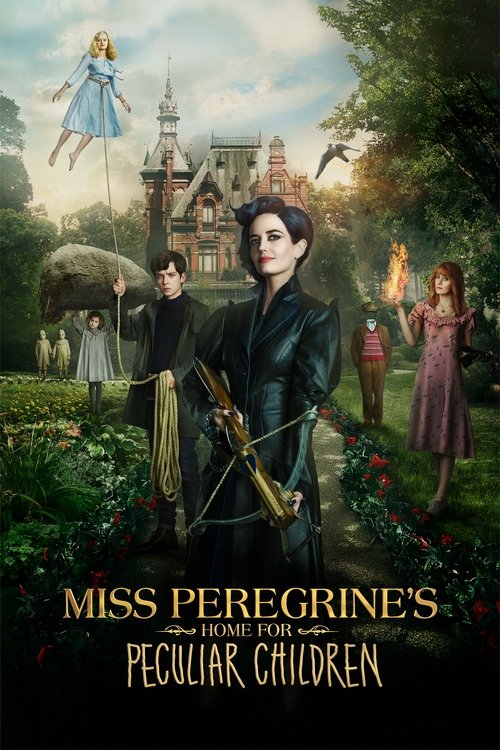
Miss Peregrine's Home for Peculiar Children
2016 · Directed by Tim Burton
Woke Score
CriticCritic Score
Audience
Ultra Based
Critics rated this 39 points above its woke score. Among Ultra Based films, this critic score ranks #981 of 1469.
Representation Casting
Score: 35/100
The cast includes racial and ethnic diversity with actors like Samuel L. Jackson, but these casting choices do not translate into meaningful narrative representation of different perspectives or experiences.
LGBTQ+ Themes
Score: 0/100
There are no explicit LGBTQ+ themes or characters in the film. The narrative contains no representation of sexual orientation or gender identity.
Feminist Agenda
Score: 25/100
Eva Green's character is a strong female authority figure, but the film does not explore feminist themes or critique gender dynamics. Her role remains within conventional fantasy tropes.
Racial Consciousness
Score: 15/100
While the film features racial diversity in casting, it demonstrates no consciousness of racial issues, systemic racism, or racial identity within its narrative.
Climate Crusade
Score: 0/100
There are no climate-related themes, environmental consciousness, or messaging about ecological crisis in the film.
Eat the Rich
Score: 0/100
The film contains no critique of capitalism, class systems, or economic structures. It is fundamentally apolitical regarding material conditions.
Body Positivity
Score: 20/100
The film celebrates children with different abilities and powers, presenting them as valuable and special, though this operates more as fantasy wish-fulfillment than genuine body positivity advocacy.
Neurodivergence
Score: 25/100
The children's supernatural abilities metaphorically represent neurodivergence and disability, treating difference as wondrous rather than pathological, but without explicit engagement with neurodiversity.
Revisionist History
Score: 0/100
The film makes no attempt to revise or recontextualize historical narratives. It operates entirely within a fantastical timeline.
Lecture Energy
Score: 5/100
The film avoids explicit moralizing, though its underlying message about acceptance of difference is implicit throughout and occasionally surfaces in dialogue.


Synopsis
A teenager finds himself transported to an island where he must help protect a group of orphans with special powers from creatures intent on destroying them.
Consciousness Assessment
Tim Burton's adaptation of Ransom Riggs' novel presents itself as a film about acceptance and the celebration of difference, yet this celebration remains stubbornly apolitical. The orphans with their various supernatural abilities function as a metaphorical stand-in for disabled youth, and the film's central message prizes tolerance and found family above all else. However, the film makes no effort to interrogate systemic oppression or to place these themes within any recognizable contemporary context. Instead, it retreats into the comfortable realm of fantasy, where difference is exciting and wondrous rather than something that generates material struggle or social friction.
The casting demonstrates a baseline commitment to diversity without extending that commitment into the narrative itself. Samuel L. Jackson appears as the villain, but the film does not engage with any racial dimensions of his antagonism or the power dynamics at play. The predominantly white creative team behind the camera and the source material itself present an outsider's vision of queerness and disability rather than one emerging from lived experience. Eva Green's Miss Peregrine is a fascinating character, yet the film's treatment of her authority over the children, while meant to be protective and nurturing, carries an unsettling paternalism that the script never quite acknowledges.
What the film does offer is a straightforward narrative about misfits finding belonging, which is a sincere and valuable theme. The problem is not that it fails to be overtly political, but rather that it mistakes visual representation for substantive engagement with marginalization. A film need not lecture to have something to say, but this one has very little to say about anything beyond the immediate adventure at hand. It is a handsomely crafted entertainment that mistakes inclusion for consciousness.
Analysis generated by our Consciousness Algorithm
Critic Reviews
“Burton delivers his most ambitious and engaging film since “Sweeney Todd” (2007). Although the story becomes increasingly complex as it goes along, the emotional payoff is more than worth it.”
“This is pretty much Burton doing an "X-Men" movie, with a plucky yesteryear vibe and evil Samuel L. Jackson thrown in for extra fun.”
“Burton scales his finale down to the size of a tourist boardwalk for an unexpectedly gripping crowd-pleaser of an action scene.”
“This adventure should have been spooky and witty and exciting, but instead it’s just dreary and dull. Peculiarity has rarely been this tedious.”
Consciousness Markers
The cast includes racial and ethnic diversity with actors like Samuel L. Jackson, but these casting choices do not translate into meaningful narrative representation of different perspectives or experiences.
There are no explicit LGBTQ+ themes or characters in the film. The narrative contains no representation of sexual orientation or gender identity.
Eva Green's character is a strong female authority figure, but the film does not explore feminist themes or critique gender dynamics. Her role remains within conventional fantasy tropes.
While the film features racial diversity in casting, it demonstrates no consciousness of racial issues, systemic racism, or racial identity within its narrative.
There are no climate-related themes, environmental consciousness, or messaging about ecological crisis in the film.
The film contains no critique of capitalism, class systems, or economic structures. It is fundamentally apolitical regarding material conditions.
The film celebrates children with different abilities and powers, presenting them as valuable and special, though this operates more as fantasy wish-fulfillment than genuine body positivity advocacy.
The children's supernatural abilities metaphorically represent neurodivergence and disability, treating difference as wondrous rather than pathological, but without explicit engagement with neurodiversity.
The film makes no attempt to revise or recontextualize historical narratives. It operates entirely within a fantastical timeline.
The film avoids explicit moralizing, though its underlying message about acceptance of difference is implicit throughout and occasionally surfaces in dialogue.