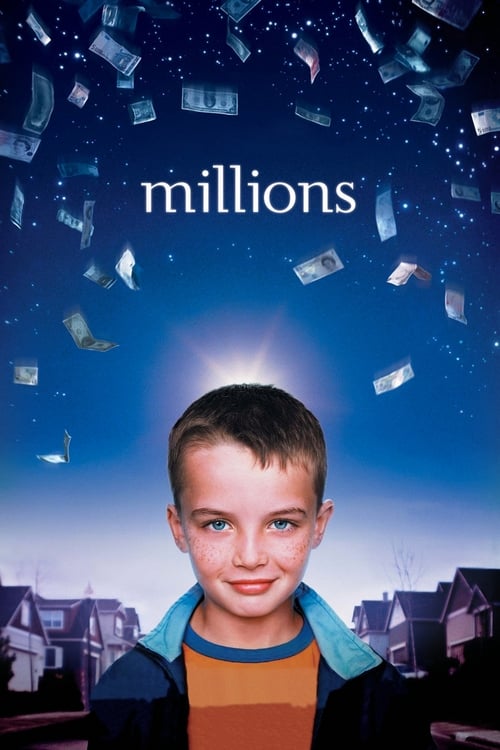
Millions
2005 · Directed by Danny Boyle
Woke Score
CriticCritic Score
Audience
Ultra Based
Critics rated this 70 points above its woke score. Among Ultra Based films, this critic score ranks #505 of 1469.
Representation Casting
Score: 5/100
The cast is predominantly white British with minimal intentional diversity representation. Nasser Memarzia appears in a minor role, but there is no meaningful engagement with diverse perspectives or experiences in the narrative.
LGBTQ+ Themes
Score: 0/100
No LGBTQ+ themes, characters, or representation present in the film. Sexuality is entirely absent from the narrative.
Feminist Agenda
Score: 0/100
No feminist consciousness evident. Female characters exist primarily in supporting family roles. The mother is represented only through absence and grief, reinforcing conventional family structures.
Racial Consciousness
Score: 0/100
No engagement with racial themes, racial consciousness, or structural racism. Race is not meaningfully addressed in the narrative or visual language.
Climate Crusade
Score: 0/100
No climate-related themes, messaging, or environmental consciousness present in the film.
Eat the Rich
Score: 18/100
The plot involves redistribution of ill-gotten wealth and charitable giving, suggesting some critique of money and greed. However, this remains individualistic moral philosophy rather than systemic critique of capitalism.
Body Positivity
Score: 0/100
No body positivity themes or messaging. Bodies and physical appearance are treated conventionally without commentary.
Neurodivergence
Score: 0/100
No representation of neurodivergence, disability, or neurodiverse perspectives in the film.
Revisionist History
Score: 0/100
The film does not engage in revisionist history or reframing of historical narratives. Its setting is contemporary rather than historical.
Lecture Energy
Score: 10/100
The film occasionally lapses into preachy messaging about charity and moral virtue, particularly through Damian's religious visions, though this remains relatively restrained for a family film.

Synopsis
Two boys, still grieving the death of their mother, find themselves the unwitting benefactors of a bag of bank robbery loot in the week before the United Kingdom switches its official currency to the Euro. What's a kid to do?
Consciousness Assessment
Danny Boyle's "Millions" arrives as a curious artifact from the mid-2000s, a family film that mistakes earnest religious sentiment for progressive cultural awareness. The narrative concerns itself with charity and wealth redistribution through the lens of Catholic mysticism rather than any coherent political consciousness. The younger protagonist, Damian, receives visions of saints and channels his found fortune toward the poor, a framework that speaks to individual moral awakening rather than systemic critique. This is charity as moral virtue, not justice as structural reform.
The film's cultural palette is notably homogeneous. The cast consists almost entirely of white British actors inhabiting a working-class Manchester neighborhood undergoing gentrification. The sparse diversity present appears incidental to the narrative rather than intentional representation. The single notable exception, Nasser Memarzia, appears in a minor role. There is no evident engagement with race, gender dynamics, or sexuality beyond the basic inclusion of female characters in conventional family roles. The film's single mother, represented through grief and absence rather than agency, adheres to early-2000s family drama conventions.
What minimal progressive sensibility exists emerges through the anti-capitalist throughline of the plot itself: the boys must decide what to do with ill-gotten money, and the film suggests charitable giving as the ethical path. Yet this critique remains shallow and individualistic, focused on personal virtue rather than questioning systems of wealth accumulation. The film's worldview is fundamentally conservative, rooted in religious faith and traditional family values. It is, in essence, a thoroughly conventional work dressed in the language of moral seriousness.
Analysis generated by our Consciousness Algorithm
Critic Reviews
“A family film of limitless imagination and surprising joy.”
“This sincere, delicate, and intrinsically religious comedy may also become that most unexpected of blessings - Danny Boyle's first family classic.”
“And the movie, likable for short stretches, ends up seeming worn and frayed, like Christmas decorations left hanging until spring.”
Consciousness Markers
The cast is predominantly white British with minimal intentional diversity representation. Nasser Memarzia appears in a minor role, but there is no meaningful engagement with diverse perspectives or experiences in the narrative.
No LGBTQ+ themes, characters, or representation present in the film. Sexuality is entirely absent from the narrative.
No feminist consciousness evident. Female characters exist primarily in supporting family roles. The mother is represented only through absence and grief, reinforcing conventional family structures.
No engagement with racial themes, racial consciousness, or structural racism. Race is not meaningfully addressed in the narrative or visual language.
No climate-related themes, messaging, or environmental consciousness present in the film.
The plot involves redistribution of ill-gotten wealth and charitable giving, suggesting some critique of money and greed. However, this remains individualistic moral philosophy rather than systemic critique of capitalism.
No body positivity themes or messaging. Bodies and physical appearance are treated conventionally without commentary.
No representation of neurodivergence, disability, or neurodiverse perspectives in the film.
The film does not engage in revisionist history or reframing of historical narratives. Its setting is contemporary rather than historical.
The film occasionally lapses into preachy messaging about charity and moral virtue, particularly through Damian's religious visions, though this remains relatively restrained for a family film.