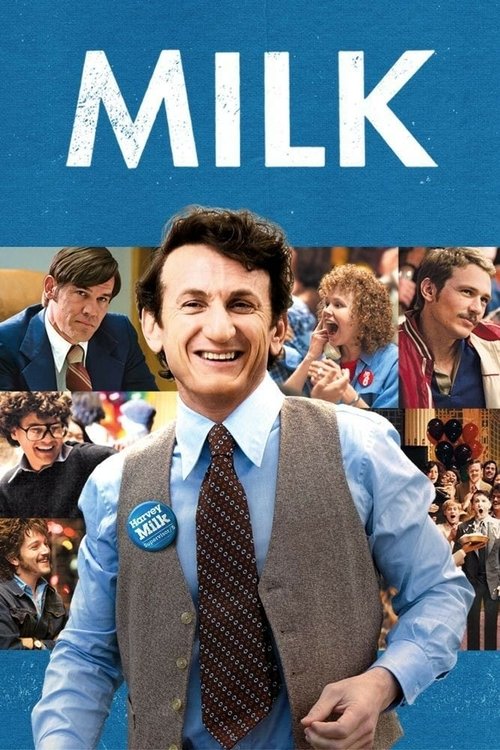
Milk
2008 · Directed by Gus Van Sant
Woke Score
CriticCritic Score
Audience
Woke
Critics rated this 15 points above its woke score. Among Woke films, this critic score ranks #23 of 88.
Representation Casting
Score: 78/100
The film centers an openly gay protagonist in a major studio drama and casts several LGBTQ+ and allied actors in key roles, making queer identity visibly central to the narrative.
LGBTQ+ Themes
Score: 85/100
LGBTQ+ themes form the entire foundation of the film's narrative, focusing on gay rights activism, political representation, and queer community organizing in the 1970s.
Feminist Agenda
Score: 35/100
While the film depicts women activists and allies, the gender analysis is limited and secondary to the male-centered political narrative, with women primarily supporting Harvey's vision rather than leading.
Racial Consciousness
Score: 42/100
The film includes actors of color in supporting roles and acknowledges racial dimensions of San Francisco politics, but does not deeply interrogate intersectionality or racial justice frameworks.
Climate Crusade
Score: 0/100
No climate-related themes or environmental consciousness present in the film.
Eat the Rich
Score: 28/100
While the film depicts community organizing and grassroots activism, it largely avoids engaging with systemic critique of capitalism or class analysis inherent in radical 1970s queer liberation movements.
Body Positivity
Score: 0/100
No explicit body positivity themes or body diversity representation in the film.
Neurodivergence
Score: 0/100
No representation of neurodivergent characters or exploration of neurodivergence in the film.
Revisionist History
Score: 35/100
The film generally adheres to documented historical events but presents a somewhat sanitized version of 1970s queer activism, emphasizing Milk's mainstream political appeal over more radical liberation frameworks.
Lecture Energy
Score: 48/100
The film contains moments of explicit political messaging and historical exposition, though it balances this with dramatic scenes and personal narrative rather than sustained preachy tone.


Synopsis
The true story of Harvey Milk, the first openly gay man ever elected to public office. In San Francisco in the late 1970s, Harvey Milk becomes an activist for gay rights and inspires others to join him in his fight for equal rights that should be available to all Americans.
Consciousness Assessment
Milk operates as a straightforward hagiography of Harvey Milk's political ascension in late 1970s San Francisco, and its cultural work reflects the considerable gravity with which it treats LGBTQ+ representation and historical activism. Sean Penn's performance anchors the film, but the work extends beyond mere acting showcase to function as a pedagogical document about gay liberation during a pivotal moment in American history. The film presents Milk's political consciousness as emerging from lived experience rather than abstract principle, though it occasionally tips toward the inspirational rather than the complex.
The film's primary cultural achievement involves centering queer identity as central to American political narrative, a counter-hegemonic move for mainstream cinema in 2008. Its release in November 2008, mere days before California voters passed Proposition 8, transformed it into an inadvertent cultural artifact documenting what was being lost even as audiences watched it celebrated. The casting privileges queer and allied actors, and the supporting ensemble includes several actors from marginalized communities, though the film's focus remains laser-trained on Milk's personal journey rather than systemic analysis.
Where Milk reveals its limitations is in its reluctance to engage with the anti-capitalist dimensions of Milk's actual political vision or the radical queer liberation frameworks that animated 1970s activism. The film depicts Milk's organizing but often sanitizes it for mainstream consumption, trading revolutionary fervor for emotional accessibility. Its treatment of historical events remains generally faithful, yet the film's investment in making Milk sympathetic to straight audiences somewhat constrains its ability to interrogate the systems that necessitated his activism in the first place. It is a respectful, well-crafted film that knows exactly what it is doing, even if what it is doing involves some strategic softening.
Analysis generated by our Consciousness Algorithm
Critic Reviews
“Sean Penn never tries to show Harvey Milk as a hero, and never needs to. He shows him as an ordinary man, kind, funny, flawed, shrewd, idealistic, yearning for a better world.”
“With Milk, a great San Francisco story becomes a great American story.”
“It's a total triumph, brimming with humor, heart, sexual heat, political provocation and a crying need to stir things up, just like Harvey did. If there's a better movie around this year, with more bristling purpose, I sure as hell haven't seen it.”
“I can admire the professional flexibility that leads Van Sant from slow-motion, half-experimental works like "Paranoid Park" or "Last Days" to an inspirational, Oscar-season package like Milk, but I wish he could split the difference between his two modes more effectively.”
Consciousness Markers
The film centers an openly gay protagonist in a major studio drama and casts several LGBTQ+ and allied actors in key roles, making queer identity visibly central to the narrative.
LGBTQ+ themes form the entire foundation of the film's narrative, focusing on gay rights activism, political representation, and queer community organizing in the 1970s.
While the film depicts women activists and allies, the gender analysis is limited and secondary to the male-centered political narrative, with women primarily supporting Harvey's vision rather than leading.
The film includes actors of color in supporting roles and acknowledges racial dimensions of San Francisco politics, but does not deeply interrogate intersectionality or racial justice frameworks.
No climate-related themes or environmental consciousness present in the film.
While the film depicts community organizing and grassroots activism, it largely avoids engaging with systemic critique of capitalism or class analysis inherent in radical 1970s queer liberation movements.
No explicit body positivity themes or body diversity representation in the film.
No representation of neurodivergent characters or exploration of neurodivergence in the film.
The film generally adheres to documented historical events but presents a somewhat sanitized version of 1970s queer activism, emphasizing Milk's mainstream political appeal over more radical liberation frameworks.
The film contains moments of explicit political messaging and historical exposition, though it balances this with dramatic scenes and personal narrative rather than sustained preachy tone.