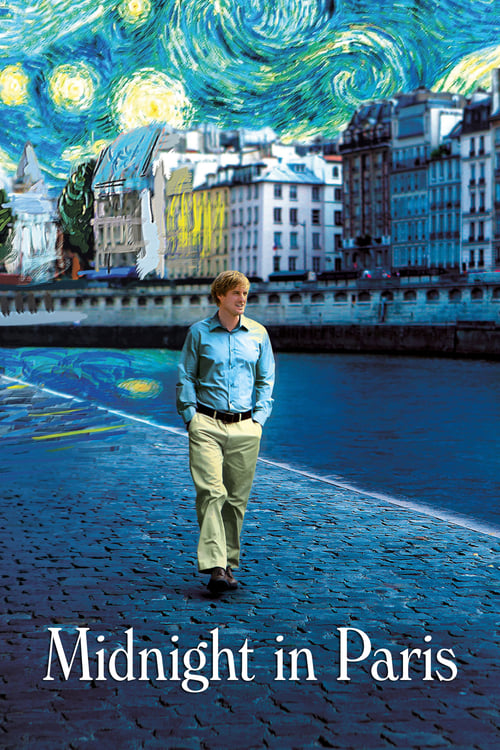
Midnight in Paris
2011 · Directed by Woody Allen
Woke Score
CriticCritic Score
Audience
Ultra Based
Critics rated this 77 points above its woke score. Among Ultra Based films, this critic score ranks #336 of 1469.
Representation Casting
Score: 5/100
The cast includes several women and international actors, but they are not cast with attention to meaningful representation. Female characters exist primarily as romantic interests or obstacles to the male protagonist's arc.
LGBTQ+ Themes
Score: 0/100
No LGBTQ+ themes, characters, or representation are present in the film.
Feminist Agenda
Score: 8/100
The film depicts women as obstacles or romantic prizes rather than as autonomous agents. The fiancée is dismissed as materialistic, and Gertrude Stein is romanticized but not deeply explored. A romantic interest in the past is depicted, but this follows traditional gender dynamics.
Racial Consciousness
Score: 0/100
The film contains no examination of race, racial dynamics, or racial history. The 1920s setting is presented without acknowledgment of racial segregation, exclusion, or the experiences of Black artists of the era.
Climate Crusade
Score: 0/100
No climate themes or environmental consciousness appears in the film.
Eat the Rich
Score: 0/100
The film does not critique capitalism or wealth. The protagonist's dissatisfactions stem from personal and romantic concerns, not economic or systemic critique.
Body Positivity
Score: 0/100
No body positivity themes or representation of diverse body types appear in the film.
Neurodivergence
Score: 0/100
No neurodivergent characters or themes are present in the film.
Revisionist History
Score: 0/100
While the film romanticizes the 1920s, it does not attempt to revise or reframe historical narratives. It simply presents an idealized fantasy version of the past.
Lecture Energy
Score: 2/100
The film occasionally gestures toward cultural or philosophical commentary about nostalgia and artistic aspiration, but it does not lecture or preach to the audience in the manner characteristic of self-consciously progressive filmmaking.


Synopsis
While on a trip to Paris with his fiancée's family, a nostalgic screenwriter finds himself mysteriously going back to the 1920s every day at midnight.
Consciousness Assessment
Midnight in Paris stands as a curious artifact of pre-woke cinema, arriving at a moment when cultural awareness had not yet crystallized into the specific sensibilities we now recognize. The film concerns itself with nostalgia, artistic aspiration, and the romantic idealization of the past, none of which inherently generate progressive cultural markers. Owen Wilson's protagonist remains the narrative center throughout, a white male screenwriter whose dissatisfactions and romantic entanglements drive the plot forward. Rachel McAdams appears as his fiancée, though her character exists primarily to be dismissed as shallow and materialistic, a foil rather than a fully realized presence. The 1920s Paris sequences introduce a parade of historical figures, most notably a romanticized Gertrude Stein and various male luminaries, but these function as set dressing in a fantasy rather than as vehicles for examining systemic inequalities or challenging historical narratives.
The film's intellectual posture, while sincere, remains apolitical. It mourns the lost golden age of art and literature without interrogating the structures of gender, race, or class that shaped that era. Women appear in the narrative primarily in relation to the male protagonist's romantic and creative needs. The 1920s setting, rather than prompting reflection on historical injustices, becomes a gilded backdrop for artistic reverie. There is no moment where the film suggests awareness of how its romanticized period excluded, exploited, or marginalized anyone beyond the white creative class it celebrates.
The work reflects Allen's characteristic sensibility: urbane, self-absorbed, and uninterested in the social machinery operating around its characters. For a film released in 2011, it demonstrates almost no engagement with the progressive cultural conversations already underway. This absence is not accidental. It is the film's actual substance, a deliberate retreat into aestheticism and personal feeling as sufficient responses to the world. By contemporary standards, the film reads as remarkably retrograde, though it seems never to have registered as such to its original audience.
Analysis generated by our Consciousness Algorithm
Critic Reviews
“In a film so ripe with temptations for posturing, exaggeration and satirical overacting, nobody is anything less than natural, unpretentious and funny as hell.”
“A movie that's loving and wistful and often hysterically funny. ”
“Allen eventually gets to the heart of this matter: the allure and danger of nostalgia.”
“A hymn to that beautiful city, is among his least consequential efforts. It's attractive and easy to slip into, but he didn't put enough thought into the design, and it soon falls apart. ”
Consciousness Markers
The cast includes several women and international actors, but they are not cast with attention to meaningful representation. Female characters exist primarily as romantic interests or obstacles to the male protagonist's arc.
No LGBTQ+ themes, characters, or representation are present in the film.
The film depicts women as obstacles or romantic prizes rather than as autonomous agents. The fiancée is dismissed as materialistic, and Gertrude Stein is romanticized but not deeply explored. A romantic interest in the past is depicted, but this follows traditional gender dynamics.
The film contains no examination of race, racial dynamics, or racial history. The 1920s setting is presented without acknowledgment of racial segregation, exclusion, or the experiences of Black artists of the era.
No climate themes or environmental consciousness appears in the film.
The film does not critique capitalism or wealth. The protagonist's dissatisfactions stem from personal and romantic concerns, not economic or systemic critique.
No body positivity themes or representation of diverse body types appear in the film.
No neurodivergent characters or themes are present in the film.
While the film romanticizes the 1920s, it does not attempt to revise or reframe historical narratives. It simply presents an idealized fantasy version of the past.
The film occasionally gestures toward cultural or philosophical commentary about nostalgia and artistic aspiration, but it does not lecture or preach to the audience in the manner characteristic of self-consciously progressive filmmaking.