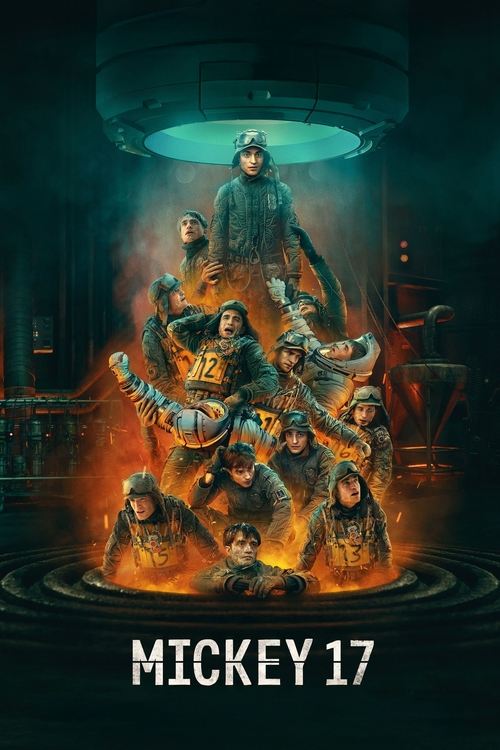
Mickey 17
2025 · Directed by Bong Joon Ho
Woke Score
Critic Score
Audience
Woke-Adjacent
Critics rated this 51 points above its woke score. Among Woke-Adjacent films, this critic score ranks #24 of 94.
Representation Casting
Score: 45/100
The cast includes Steven Yeun and Naomi Ackie in significant roles, providing racial diversity. However, this diversity is presented naturally within the story without explicit thematic engagement.
LGBTQ+ Themes
Score: 0/100
No LGBTQ+ representation, themes, or commentary are evident in the film based on available information.
Feminist Agenda
Score: 25/100
Naomi Ackie holds a notable role in the ensemble, but the film does not engage with feminist themes or gender politics specifically.
Racial Consciousness
Score: 20/100
While the cast is racially diverse, the film's primary thematic focus is class exploitation rather than racial justice or consciousness.
Climate Crusade
Score: 0/100
Despite the space colonization setting, there is no evidence of climate activism or environmental messaging in the film's narrative.
Eat the Rich
Score: 75/100
The film's central narrative concerns worker disposability and labor exploitation within a capitalist system. This is the film's primary and most explicit thematic concern.
Body Positivity
Score: 0/100
No evidence of body positivity themes, body diversity representation, or commentary on bodily acceptance in the film.
Neurodivergence
Score: 0/100
No indication of neurodivergent representation or engagement with neurodiversity themes in the available information.
Revisionist History
Score: 15/100
The film uses colonial parallels metaphorically in its speculative setting, but this is not a rewriting of actual historical events.
Lecture Energy
Score: 60/100
Multiple critical sources note the film's social commentary is not subtle and more direct than Bong's previous work, indicating explicit didactic messaging about class and ethics.


Synopsis
Unlikely hero Mickey Barnes finds himself in the extraordinary circumstance of working for an employer who demands the ultimate commitment to the job… to die, for a living.
Consciousness Assessment
Bong Joon-ho's Mickey 17 arrives as a work of class consciousness wrapped in the garb of science fiction comedy. The film's central premise, in which a disposable worker is repeatedly cloned and sent to die for corporate profit, serves as the director's most direct indictment of labor exploitation and worker expendability. The film makes no attempt at subtlety; its commentary on class structures and capitalist ethics sits prominently at the surface, delivered with the deadpan absurdism that has become Bong's trademark. This approach is relentlessly pedagogical, though not in the manner of contemporary progressive cultural critique.
The cast includes meaningful representation in Steven Yeun and Naomi Ackie, but the film treats this diversity as incidental rather than thematic. Its colonial parallels exist in metaphor rather than historical examination. There is no engagement with gender politics, sexuality, bodily diversity, or neurodivergence. Mickey 17 speaks the language of leftist critique without adopting the vocabulary of 2020s social consciousness. The film remains deeply invested in Marxist themes of labor and value extraction, yet largely indifferent to the intersectional concerns that dominate modern progressive discourse.
This is a film that would have been perfectly at home in the political cinema of previous decades, updated only in its technological trappings and production values. Bong remains a formidable satirist of capitalism, yet he appears content to fight yesterday's ideological battles while the cultural moment has moved elsewhere. The woke score reflects not a lack of artistic merit or moral seriousness, but rather a fundamental orientation toward class analysis over identity politics.
Analysis generated by our Consciousness Algorithm
Critic Reviews
“For all the cruelty and buffoonery that might surround his hero, Bong lets us in on a revelation: what we're really watching is a man learning that it's OK for him to be happy.”
“Mickey 17 is funny and charming from the get-go, building out a fascinating sci-fi world from its central conceit that ends up speaking to powerful and timely concerns through humour, satire and exhilarating genre elements. Bong Joon-ho's best English movie to date and arguably Robert Pattinson's best movie ever.”
“Bong keeps things zipping along, and with such nimbleness that the movie's heavier ideas never weigh it down. He jabs rather than pounds as he takes on targets — authoritarianism, comic-book heroics, the vanity of power — while playfully mixing moods and acting styles.”
“This isn't just another great Bong Joon Ho movie about how much he hates capitalism (though it definitely is that too), it's the first Bong Joon Ho movie about how much he loves people.”
“The entire spectacle is so unabashedly outrageous that you cannot help but side with its many excesses.”
“Mickey 17 is a long ride with a running time of about two hours and twenty minutes, with unexpected twists and turns. It's a lot of fun, and as previously noted, is stuffed with ideas.”
Consciousness Markers
The cast includes Steven Yeun and Naomi Ackie in significant roles, providing racial diversity. However, this diversity is presented naturally within the story without explicit thematic engagement.
No LGBTQ+ representation, themes, or commentary are evident in the film based on available information.
Naomi Ackie holds a notable role in the ensemble, but the film does not engage with feminist themes or gender politics specifically.
While the cast is racially diverse, the film's primary thematic focus is class exploitation rather than racial justice or consciousness.
Despite the space colonization setting, there is no evidence of climate activism or environmental messaging in the film's narrative.
The film's central narrative concerns worker disposability and labor exploitation within a capitalist system. This is the film's primary and most explicit thematic concern.
No evidence of body positivity themes, body diversity representation, or commentary on bodily acceptance in the film.
No indication of neurodivergent representation or engagement with neurodiversity themes in the available information.
The film uses colonial parallels metaphorically in its speculative setting, but this is not a rewriting of actual historical events.
Multiple critical sources note the film's social commentary is not subtle and more direct than Bong's previous work, indicating explicit didactic messaging about class and ethics.