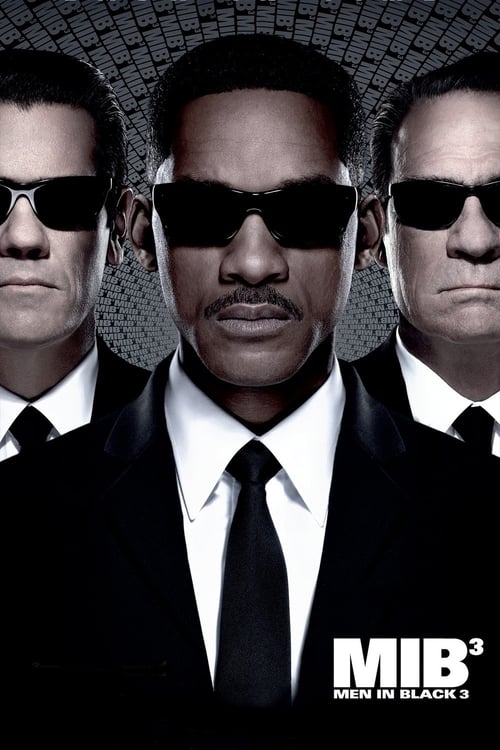
Men in Black 3
2012 · Directed by Barry Sonnenfeld
Woke Score
CriticCritic Score
Ultra Based
Critics rated this 55 points above its woke score. Among Ultra Based films, this critic score ranks #813 of 1469.
Representation Casting
Score: 25/100
The cast includes Will Smith as a Black lead, Mike Colter as a MIB agent, and Emma Thompson in a position of authority. However, these represent casting decisions already normalized in mainstream blockbusters rather than bold representation, and minority characters lack substantive development.
LGBTQ+ Themes
Score: 5/100
While the cast includes actors like Jemaine Clement and Michael Chernus who are known to be LGBTQ+ in real life, their characters' identities are not depicted or acknowledged within the film itself.
Feminist Agenda
Score: 15/100
Emma Thompson appears as a senior MIB official, providing minimal gender diversity in a traditionally male-dominated action framework. Her character receives little development and serves primarily as a plot device.
Racial Consciousness
Score: 10/100
Despite being set in 1969, a pivotal year for American racial history, the film shows no interest in engaging with or acknowledging the racial dynamics of that era. Race is treated as invisible and irrelevant to the narrative.
Climate Crusade
Score: 0/100
The film contains no environmental themes, climate messaging, or ecological consciousness whatsoever.
Eat the Rich
Score: 0/100
There is no anti-capitalist messaging or critique of wealth and economic systems in this straightforward entertainment vehicle.
Body Positivity
Score: 0/100
The film contains no body positivity messaging or representation of diverse body types in meaningful ways.
Neurodivergence
Score: 0/100
There is no engagement with neurodivergence, disability representation, or related themes.
Revisionist History
Score: 0/100
The film uses the 1969 setting as aesthetic backdrop only, with no attempt to reframe or reinterpret historical events or social dynamics.
Lecture Energy
Score: 5/100
Minimal expository dialogue exists primarily to explain alien technology rather than to deliver social commentary or educational messaging about any progressive cause.


Synopsis
Agents J and K are back...in time. J has seen some inexplicable things in his 15 years with the Men in Black, but nothing, not even aliens, perplexes him as much as his wry, reticent partner. But when K's life and the fate of the planet are put at stake, Agent J will have to travel back in time to put things right. J discovers that there are secrets to the universe that K never told him - secrets that will reveal themselves as he teams up with the young Agent K to save his partner, the agency, and the future of humankind.
Consciousness Assessment
Men in Black 3 is a 2012 science fiction comedy that travels back to 1969, a choice that offers historical resonance that the film studiously ignores. While the time-travel premise places it in a period of significant social upheaval in American history, the movie itself is fundamentally a popcorn entertainment vehicle focused on aliens and action sequences. The 1969 setting provides occasional visual callbacks to the era, but the film shows little genuine interest in engaging with the actual racial and social tensions of that moment. Will Smith's presence as a Black lead was notable for the original franchise entry, but this was already well established by the third installment.
The supporting cast includes some demographic diversity, but these characters exist primarily as comedic window dressing rather than as part of any larger cultural commentary. There are no environmental themes, no anti-capitalist messaging, no meaningful engagement with neurodivergence or disability representation, and no body positivity elements. The revisionist historical perspective is nonexistent, as is any substantial lecture energy. While the cast includes LGBTQ+ actors in supporting roles like Jemaine Clement and Michael Chernus, their characters' identities remain unforegrounded. Emma Thompson's role as a senior MIB official represents some gender diversity in a traditionally male-dominated action framework, though her character lacks meaningful development or arc.
Men in Black 3 is a competent, entertaining sequel that happens to be set in a historically significant year, but it treats that setting as pure aesthetic backdrop rather than as an opportunity for cultural engagement. The film exists to deliver aliens, jokes, and time-travel mechanics, not genuine social consciousness. This is a movie manufactured to generate box office revenue on a holiday weekend, and there is nothing morally wrong with that. But it also means any scoring for progressive sensibility would constitute pure invention on the critic's part.
Analysis generated by our Consciousness Algorithm
Critic Reviews
“Although not entirely successful in terms of restoring interest in the franchise, it's a diverting experience and better than the 2002 sequel.”
“The third film, while unnecessary in the grand scheme of things, still succeeds in being effective summer entertainment.”
“Let's give Smith, Jones and Sonnefeld a pass for going back to the well one too many times.”
“While it's a little thrown together, Men in Black 3 seems focused on recapturing not just the style but also the soul of the original.”
Consciousness Markers
The cast includes Will Smith as a Black lead, Mike Colter as a MIB agent, and Emma Thompson in a position of authority. However, these represent casting decisions already normalized in mainstream blockbusters rather than bold representation, and minority characters lack substantive development.
While the cast includes actors like Jemaine Clement and Michael Chernus who are known to be LGBTQ+ in real life, their characters' identities are not depicted or acknowledged within the film itself.
Emma Thompson appears as a senior MIB official, providing minimal gender diversity in a traditionally male-dominated action framework. Her character receives little development and serves primarily as a plot device.
Despite being set in 1969, a pivotal year for American racial history, the film shows no interest in engaging with or acknowledging the racial dynamics of that era. Race is treated as invisible and irrelevant to the narrative.
The film contains no environmental themes, climate messaging, or ecological consciousness whatsoever.
There is no anti-capitalist messaging or critique of wealth and economic systems in this straightforward entertainment vehicle.
The film contains no body positivity messaging or representation of diverse body types in meaningful ways.
There is no engagement with neurodivergence, disability representation, or related themes.
The film uses the 1969 setting as aesthetic backdrop only, with no attempt to reframe or reinterpret historical events or social dynamics.
Minimal expository dialogue exists primarily to explain alien technology rather than to deliver social commentary or educational messaging about any progressive cause.