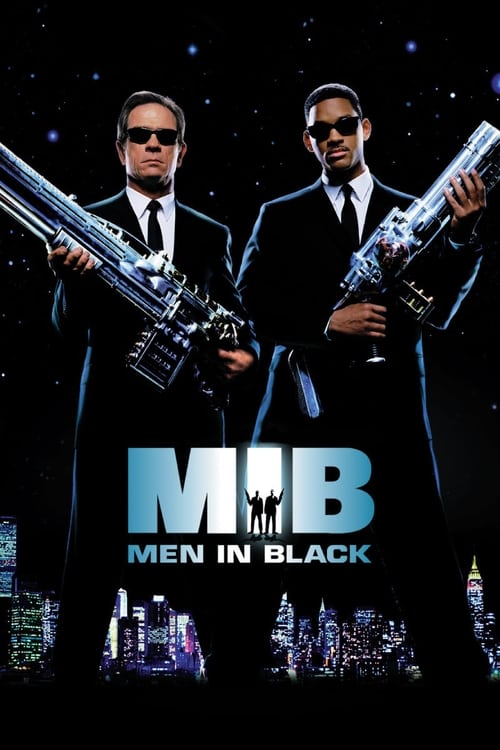
Men in Black
1997 · Directed by Barry Sonnenfeld
Woke Score
CriticCritic Score
Audience
Ultra Based
Critics rated this 54 points above its woke score. Among Ultra Based films, this critic score ranks #570 of 1469.
Representation Casting
Score: 50/100
Will Smith as a prominent lead is notable for 1997, though the film treats this as unremarkable rather than celebrating it. The supporting cast includes various ethnicities represented naturally without comment.
LGBTQ+ Themes
Score: 0/100
No LGBTQ+ representation or themes of any kind appear in the film.
Feminist Agenda
Score: 15/100
Linda Fiorentino's Agent L is a competent female agent, but she is largely sidelined and exists primarily as a supporting character in an otherwise male-dominated narrative.
Racial Consciousness
Score: 20/100
While the film features a Black lead, it makes no effort to explore or comment on racial themes. Any racial consciousness is entirely absent from the narrative.
Climate Crusade
Score: 0/100
No environmental or climate-related themes appear in the film whatsoever.
Eat the Rich
Score: 5/100
The Men in Black organization operates as a government agency, but the film contains no critique of capitalism or wealth disparity.
Body Positivity
Score: 0/100
No body positivity themes are present. The film focuses on conventional aesthetics and physical comedy.
Neurodivergence
Score: 0/100
No representation of or themes related to neurodivergence appear in the film.
Revisionist History
Score: 0/100
The film contains no historical revisionism or attempts to reframe historical events through a contemporary lens.
Lecture Energy
Score: 10/100
The film is primarily concerned with entertainment and comedy rather than delivering messages or lectures to the audience.


Synopsis
After a police chase with an otherworldly being, a New York City cop is recruited as an agent in a top-secret organization established to monitor and police alien activity on Earth: the Men in Black. Agent K and new recruit Agent J find themselves in the middle of a deadly plot by an intergalactic terrorist who has arrived on Earth to assassinate two ambassadors from opposing galaxies.
Consciousness Assessment
Men in Black arrives at a curious historical juncture, the moment when Hollywood blockbusters began to feature Black leads in prominent roles without turning the entire film into a referendum on that fact. Will Smith's Agent J is a wisecracking New York cop who gets recruited into an alien-fighting outfit, and his race is treated as fundamentally incidental to the plot. This is, in the context of 1997, almost refreshing in its refusal to comment on itself. The film concerns itself with aliens and jokes and the deadpan chemistry between Smith and Tommy Lee Jones, not with anything resembling cultural consciousness. The supporting cast includes a woman agent (Linda Fiorentino) who is present and competent without the film making any particular virtue of her presence.
Where the film does venture into territory that might be charitably called progressive, it does so almost accidentally. The organization itself is portrayed as meritocratic and colorblind in its recruitment, and several supporting characters represent various ethnicities. Vincent D'Onofrio plays a cartoonishly monstrous villain who is, notably, a white man, though this is clearly not meant as social commentary but merely as casting. The film's one moment of something approaching feminist awareness appears in Fiorentino's character being taken seriously as an agent, though she exists primarily as window dressing in what is ultimately a buddy comedy.
The overwhelming reality of Men in Black is its complete indifference to the social consciousness that would come to define certain quarters of cinema. It is a film about aliens and comedy and spectacle, made in 1997 when such indifference was not yet controversial. By contemporary standards, this reads as a film of almost stunning apolitical innocence, which is to say it barely qualifies as anything more than a mainstream entertainment product. One might argue that the lack of performative progressivism is itself a kind of authenticity, but this would be confusing the absence of something with the presence of its opposite.
Analysis generated by our Consciousness Algorithm
Critic Reviews
“The snappy sci-fi hoot Men in Black...is a kind of "Independence Day" for smart people.”
“The smartest, funniest, and best-looking sci-fi comedy since the movies learned to morph.”
“The script by Ed Solomon is tight, well-paced and lighthearted. If this were a musical, Fred Astaire could have played the Jones role, although somewhat more dashingly.”
“Summer fluff that admits to being summer fluff, but it's no better off for admitting it...Intended as lightweight comedy, but if you think about it too much, it's not so funny.”
Consciousness Markers
Will Smith as a prominent lead is notable for 1997, though the film treats this as unremarkable rather than celebrating it. The supporting cast includes various ethnicities represented naturally without comment.
No LGBTQ+ representation or themes of any kind appear in the film.
Linda Fiorentino's Agent L is a competent female agent, but she is largely sidelined and exists primarily as a supporting character in an otherwise male-dominated narrative.
While the film features a Black lead, it makes no effort to explore or comment on racial themes. Any racial consciousness is entirely absent from the narrative.
No environmental or climate-related themes appear in the film whatsoever.
The Men in Black organization operates as a government agency, but the film contains no critique of capitalism or wealth disparity.
No body positivity themes are present. The film focuses on conventional aesthetics and physical comedy.
No representation of or themes related to neurodivergence appear in the film.
The film contains no historical revisionism or attempts to reframe historical events through a contemporary lens.
The film is primarily concerned with entertainment and comedy rather than delivering messages or lectures to the audience.