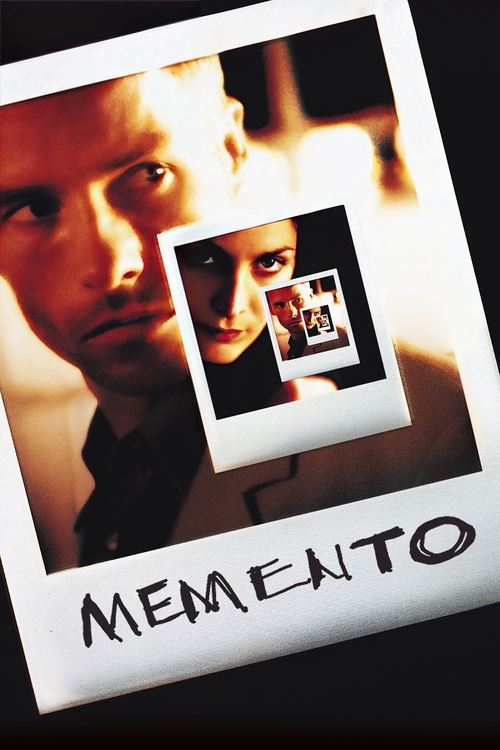
Memento
2000 · Directed by Christopher Nolan
Woke Score
CriticCritic Score
Audience
Ultra Based
Critics rated this 79 points above its woke score. Among Ultra Based films, this critic score ranks #293 of 1469.
Representation Casting
Score: 15/100
The cast includes Carrie-Anne Moss in a supporting role, but female characters exist primarily as plot devices rather than fully realized people with agency and interiority.
LGBTQ+ Themes
Score: 0/100
No LGBTQ+ themes, characters, or representation appear in the film. Sexual orientation and gender identity are entirely absent from the narrative.
Feminist Agenda
Score: 5/100
The film's female characters are instrumentalized within the plot. Natalie is manipulative but ultimately a tool for Leonard's narrative, and his wife exists only as a memory and justification for violence.
Racial Consciousness
Score: 0/100
The film shows no awareness of racial dynamics or inclusion. Race is not addressed, and the cast composition reflects no deliberate consideration of representation.
Climate Crusade
Score: 0/100
Climate change and environmental concerns play no role whatsoever in the narrative or thematic structure of the film.
Eat the Rich
Score: 0/100
There is no critique of capitalism, wealth inequality, or economic systems. The film is indifferent to class dynamics and material conditions.
Body Positivity
Score: 0/100
Body positivity and acceptance of diverse body types are not part of the film's concerns. Physical appearance is treated as neutral backdrop.
Neurodivergence
Score: 10/100
While the film centers on a protagonist with anterograde amnesia, it treats the condition as a narrative mechanism rather than a genuine exploration of neurodivergent experience. The disability is a plot device, not a representation.
Revisionist History
Score: 0/100
The film contains no historical revisionism or reinterpretation of historical events. It is a contemporary thriller with no historical setting.
Lecture Energy
Score: 5/100
The film's complex narrative structure requires the audience to work, but it stops short of preachy preaching. There is minimal explicit moralizing or lecturing about social issues.


Synopsis
Leonard Shelby is tracking down the man who raped and murdered his wife. The difficulty of locating his wife's killer, however, is compounded by the fact that he suffers from a rare, untreatable form of short-term memory loss. Although he can recall details of life before his accident, Leonard cannot remember what happened fifteen minutes ago, where he's going, or why.
Consciousness Assessment
Memento stands as a curious artifact of early 2000s cinema, a film so preoccupied with the mechanics of narrative structure that it scarcely bothers with the social consciousness that would later become de rigueur in prestige filmmaking. Christopher Nolan's debut is a puzzle box where the puzzle is the point, and the box contains a man seeking vengeance for his murdered wife. The film treats its protagonist's anterograde amnesia as a formal device rather than a genuine exploration of neurodivergent experience. Leonard Shelby is not presented as a person living with disability but as a narrative constraint, a reason to tell the story backwards. This is not engagement with disability representation in any meaningful sense. It is mere aesthetic deployment.
The female characters in Memento exist primarily as objects of Leonard's obsession or targets of manipulation. His wife exists only as a photograph and a memory that may not even be real. Natalie, the one living woman in the narrative, is revealed to be using Leonard for her own purposes, and her characterization amounts to little more than a plot twist. The film shows no interest in her interior life, her motivations beyond how they serve the larger mystery, or anything resembling her agency as a person. She is a character, not a person, and the distinction matters.
Across the full runtime, the work emerges as fundamentally unconcerned with the progressive sensibilities that were only beginning to coalesce in 2000. Memento belongs to an earlier era of cinema, one where a movie could be deemed successful by its technical audacity alone. It is a film about a man, made by men, for audiences who expected nothing more from cinema than to be cleverly confused. The work has aged into irrelevance on social dimensions because it never engaged with them in the first place.
Analysis generated by our Consciousness Algorithm
Critic Reviews
“A gripping, utterly unexpected noir, glinting with bits of poetry and a hard, deadpan humor.”
“The dramatic content in Memento is as blank as Leonard's post-traumatic mental state.”
Consciousness Markers
The cast includes Carrie-Anne Moss in a supporting role, but female characters exist primarily as plot devices rather than fully realized people with agency and interiority.
No LGBTQ+ themes, characters, or representation appear in the film. Sexual orientation and gender identity are entirely absent from the narrative.
The film's female characters are instrumentalized within the plot. Natalie is manipulative but ultimately a tool for Leonard's narrative, and his wife exists only as a memory and justification for violence.
The film shows no awareness of racial dynamics or inclusion. Race is not addressed, and the cast composition reflects no deliberate consideration of representation.
Climate change and environmental concerns play no role whatsoever in the narrative or thematic structure of the film.
There is no critique of capitalism, wealth inequality, or economic systems. The film is indifferent to class dynamics and material conditions.
Body positivity and acceptance of diverse body types are not part of the film's concerns. Physical appearance is treated as neutral backdrop.
While the film centers on a protagonist with anterograde amnesia, it treats the condition as a narrative mechanism rather than a genuine exploration of neurodivergent experience. The disability is a plot device, not a representation.
The film contains no historical revisionism or reinterpretation of historical events. It is a contemporary thriller with no historical setting.
The film's complex narrative structure requires the audience to work, but it stops short of preachy preaching. There is minimal explicit moralizing or lecturing about social issues.