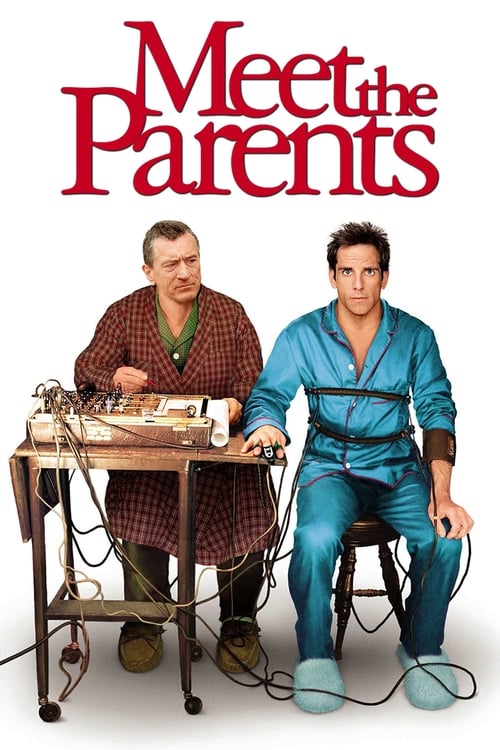
Meet the Parents
2000 · Directed by Jay Roach
Woke Score
CriticCritic Score
Audience
Ultra Based
Critics rated this 71 points above its woke score. Among Ultra Based films, this critic score ranks #537 of 1469.
Representation Casting
Score: 5/100
The cast is predominantly white, with no meaningful representation of non-white characters. This reflects standard mainstream comedy casting of 2000, not deliberate exclusion but rather the baseline of the era.
LGBTQ+ Themes
Score: 0/100
No LGBTQ+ themes, characters, or subtext appear in the film. Sexuality is entirely heterosexual and unexamined.
Feminist Agenda
Score: 2/100
Women exist in supportive roles with minimal agency. The narrative centers entirely on male anxiety and male approval, with female characters functioning as objects of male concern rather than subjects with their own arcs.
Racial Consciousness
Score: 0/100
Race is not addressed, examined, or acknowledged in any meaningful way. The film operates as though racial dynamics do not exist.
Climate Crusade
Score: 0/100
No climate-related themes, messaging, or environmental consciousness appears in the film.
Eat the Rich
Score: 0/100
The film contains no critique of capitalism, class systems, or wealth. The setting and characters reflect upper-middle-class comfort without irony or criticism.
Body Positivity
Score: 0/100
No body positivity themes or diverse body representation. Characters fit conventional Hollywood physical standards.
Neurodivergence
Score: 0/100
No neurodivergent characters or themes. Disability and neurodivergence are not addressed.
Revisionist History
Score: 0/100
The film makes no historical claims or revisions. It exists entirely in a contemporary domestic comedy space with no historical content.
Lecture Energy
Score: 0/100
The film contains no preachy messaging, moral lectures, or attempts to educate the audience about social issues.


Synopsis
Greg Focker is ready to marry his girlfriend, Pam, but before he pops the question, he must win over her formidable father, humorless former CIA agent Jack Byrnes, at the wedding of Pam's sister. As Greg bends over backward to make a good impression, his visit to the Byrnes home turns into a hilarious series of disasters, and everything that can go wrong does, all under Jack's critical, hawklike gaze.
Consciousness Assessment
Meet the Parents arrives as a pristine artifact of pre-consciousness comedy, a film so thoroughly committed to traditional family structures and gender dynamics that it practically radiates historical innocence. The humor operates entirely within the framework of masculine inadequacy and paternal authority, with Greg Focker's bumbling attempts to impress a father figure serving as the engine of nearly every comedic beat. No amount of good intentions on the part of the writers could have produced even incidental progressive content in 2000, and none appears here.
The film's universe contains only the most conventional relationship dynamics: the nervous boyfriend must perform masculinity correctly to earn the right to marry, the father holds ultimate judgment over this transaction, and the women exist primarily as facilitators of male anxiety. Pam and her mother are sympathetic but ultimately passive, their characterizations extending no further than supportive girlfriend and dutiful wife. The cast reflects the demographic composition of mainstream American comedy at the turn of the millennium, which is to say it does not reflect much of anything beyond a narrow commercial calculation.
What we have is a comedy that would be utterly unrecognizable to anyone measuring contemporary social consciousness. It is not conservative in any active sense, merely pre-political, operating in the era before such categories became relevant to entertainment. This is not a failing of the film itself, merely an observation about historical distance. Meet the Parents exists in a space before we learned to measure things this way.
Analysis generated by our Consciousness Algorithm
Critic Reviews
“This buoyant, giddy comedy of catastrophe is the funniest film of the year so far, possibly the most amusing mainstream live-action comedy since "There's Something About Mary."”
“De Niro and Stiller combine to bring on laughs you don't have to feel guilty about.”
“Never before have two such skilled actors been so monstrously squandered in a movie so replete with failed gags and pathetic gaffs.”
Consciousness Markers
The cast is predominantly white, with no meaningful representation of non-white characters. This reflects standard mainstream comedy casting of 2000, not deliberate exclusion but rather the baseline of the era.
No LGBTQ+ themes, characters, or subtext appear in the film. Sexuality is entirely heterosexual and unexamined.
Women exist in supportive roles with minimal agency. The narrative centers entirely on male anxiety and male approval, with female characters functioning as objects of male concern rather than subjects with their own arcs.
Race is not addressed, examined, or acknowledged in any meaningful way. The film operates as though racial dynamics do not exist.
No climate-related themes, messaging, or environmental consciousness appears in the film.
The film contains no critique of capitalism, class systems, or wealth. The setting and characters reflect upper-middle-class comfort without irony or criticism.
No body positivity themes or diverse body representation. Characters fit conventional Hollywood physical standards.
No neurodivergent characters or themes. Disability and neurodivergence are not addressed.
The film makes no historical claims or revisions. It exists entirely in a contemporary domestic comedy space with no historical content.
The film contains no preachy messaging, moral lectures, or attempts to educate the audience about social issues.