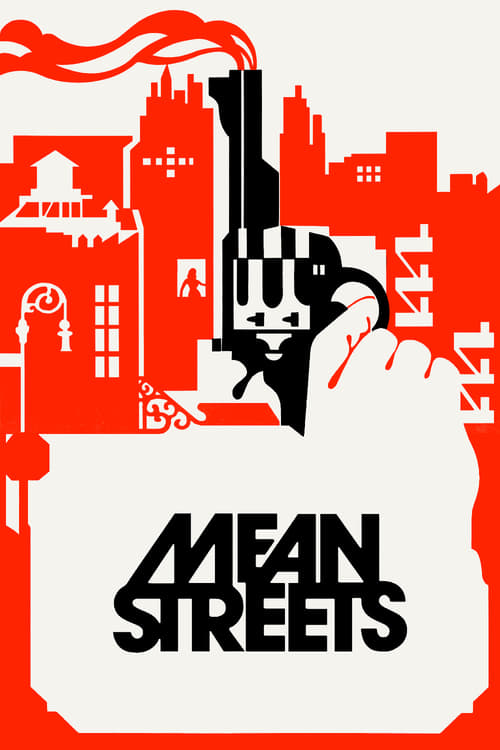
Mean Streets
1973 · Directed by Martin Scorsese
Woke Score
CriticCritic Score
Audience
Ultra Based
Critics rated this 94 points above its woke score. Among Ultra Based films, this critic score ranks #45 of 1469.
Representation Casting
Score: 5/100
The cast includes some ethnic diversity reflecting the Little Italy setting, and Amy Robinson as a female character, but representation is incidental to the narrative rather than intentional or celebratory.
LGBTQ+ Themes
Score: 0/100
No LGBTQ+ themes, representation, or subtext evident in the film.
Feminist Agenda
Score: 0/100
Women are peripheral to the narrative and their experiences are not explored through a feminist lens. The film is entirely organized around male perspectives and male violence.
Racial Consciousness
Score: 0/100
While the film depicts Italian-American and other ethnic characters, it does so observationally without commentary on systemic racism or racial justice.
Climate Crusade
Score: 0/100
No climate-related themes or messaging present in the film.
Eat the Rich
Score: 5/100
The film portrays capitalism and criminal enterprise as corrupt and spiritually hollow, but this critique is incidental to character study rather than a deliberate ideological statement.
Body Positivity
Score: 0/100
No body positivity messaging or themes related to body acceptance are present.
Neurodivergence
Score: 0/100
No representation of or engagement with neurodivergence.
Revisionist History
Score: 0/100
The film makes no attempt to reinterpret historical events or narratives through a contemporary progressive lens.
Lecture Energy
Score: 0/100
The film is entirely dramatized. Characters do not deliver speeches or lessons about social issues. The narrative is shown, not told through preachiness.


Synopsis
A small-time hood must choose from among love, friendship and the chance to rise within the mob.
Consciousness Assessment
Mean Streets exists in a curious position relative to modern sensibilities. This 1973 Scorsese portrait of small-time mobsters in Little Italy is a work of considerable craft and moral seriousness, yet it remains uninterested in the categorical frameworks that animate contemporary progressive discourse. The film presents its Italian-American characters and their community with documentary-like specificity, neither celebrating nor condemning their ethnicity. Women appear as supporting figures, particularly Amy Robinson as Charlie's troubled friend, but they are not the focus of narrative attention or thematic concern. The film's moral universe is organized around questions of personal honor, loyalty, and faith rather than systemic critique or identity representation.
What emerges from the film's texture is a world almost entirely devoted to masculine concerns and masculine violence. Charlie's struggle is fundamentally spiritual and personal, not social or political. There is no evidence that Scorsese is engaging with questions of gender equity, racial justice, climate impact, or any other marker of contemporary social consciousness. The film is indifferent to these categories. Its portrayal of racial and ethnic diversity in lower Manhattan is observational rather than ideological. This is not reactionary so much as it is simply anterior to the entire conceptual apparatus of modern progressive critique.
One might argue that the film's gritty realism and refusal of sentimentality constitute a kind of honesty that transcends the need for explicit social messaging. This would be a fair point. Yet such artistic integrity does not retroactively imbue the work with markers of contemporary social consciousness. Mean Streets is what it is: a masterful exploration of masculine anxiety and moral failure in a specific time and place, utterly unconcerned with the metrics by which we now measure cultural awareness.
Analysis generated by our Consciousness Algorithm
Critic Reviews
“Martin Scorsese’s Mean Streets isn’t so much a gangster movie as a perceptive, sympathetic, finally tragic story about how it is to grow up in a gangster environment.”
“Mean Streets is a brilliantly made film--terrifically acted, sharply photographed and crisply edited. ”
“The movie's blazing energy is still astounding; the vérité street-scenes are terrific and Scorsese's pioneering use of popular music is genuinely thrilling.”
“Scorsese is exceptionally good at guiding his largely unknown cast to near-flawless recreations of types. Outstanding in this regard is De Niro.”
Consciousness Markers
The cast includes some ethnic diversity reflecting the Little Italy setting, and Amy Robinson as a female character, but representation is incidental to the narrative rather than intentional or celebratory.
No LGBTQ+ themes, representation, or subtext evident in the film.
Women are peripheral to the narrative and their experiences are not explored through a feminist lens. The film is entirely organized around male perspectives and male violence.
While the film depicts Italian-American and other ethnic characters, it does so observationally without commentary on systemic racism or racial justice.
No climate-related themes or messaging present in the film.
The film portrays capitalism and criminal enterprise as corrupt and spiritually hollow, but this critique is incidental to character study rather than a deliberate ideological statement.
No body positivity messaging or themes related to body acceptance are present.
No representation of or engagement with neurodivergence.
The film makes no attempt to reinterpret historical events or narratives through a contemporary progressive lens.
The film is entirely dramatized. Characters do not deliver speeches or lessons about social issues. The narrative is shown, not told through preachiness.