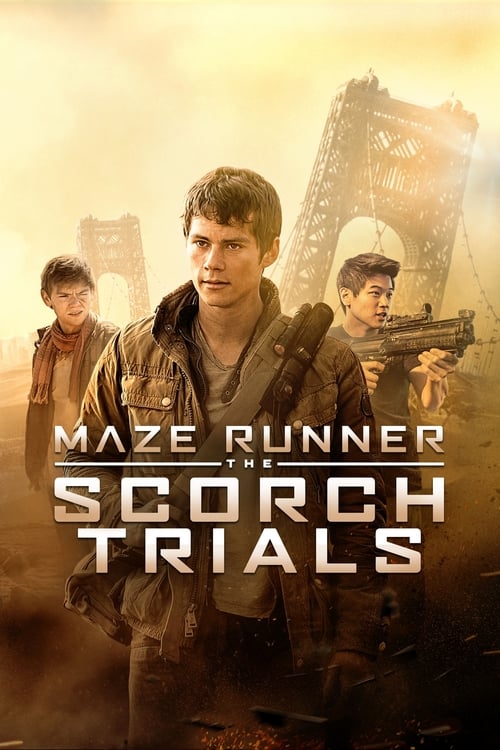
Maze Runner: The Scorch Trials
2015 · Directed by Wes Ball
Woke Score
CriticCritic Score
Audience
Ultra Based
Critics rated this 28 points above its woke score. Among Ultra Based films, this critic score ranks #1295 of 1469.
Representation Casting
Score: 45/100
The ensemble cast includes actors of various racial and ethnic backgrounds in substantive roles, with Ki Hong Lee, Kaya Scodelario, Rosa Salazar, and Dexter Darden featured prominently. This diversity is presented naturally without self-conscious commentary.
LGBTQ+ Themes
Score: 0/100
No LGBTQ+ characters, relationships, or themes are present in the film. Sexual orientation is not addressed.
Feminist Agenda
Score: 15/100
Kaya Scodelario and Rosa Salazar are present as action participants, but the narrative does not emphasize feminist themes or critique patriarchal structures. Female characters function as ensemble members rather than subjects of thematic focus.
Racial Consciousness
Score: 10/100
While the cast is racially diverse, the film does not engage with racial themes, systemic racism, or racial identity. Diversity exists without thematic interrogation.
Climate Crusade
Score: 0/100
There is no climate consciousness or environmental messaging in the film. The desolate landscape serves as a setting rather than a commentary on climate catastrophe.
Eat the Rich
Score: 10/100
The film features a resistance against a powerful authoritarian organization, but treats this as straightforward good-versus-evil conflict rather than a critique of economic systems or institutional power structures.
Body Positivity
Score: 0/100
No body positivity messaging or representation of diverse body types is present. The film does not address body image or physical diversity.
Neurodivergence
Score: 0/100
No neurodivergent characters or themes related to neurodiversity are present in the film.
Revisionist History
Score: 0/100
The film does not engage with historical events or attempt to recontextualize past narratives. It is set in a fictional dystopian future without historical revisionism.
Lecture Energy
Score: 0/100
The film does not feature characters delivering speeches or lectures about social issues. It maintains an action-adventure tone without preachy messaging about progressive causes.


Synopsis
Thomas and his fellow Gladers face their greatest challenge yet: searching for clues about the mysterious and powerful organization known as WCKD. Their journey takes them to the Scorch, a desolate landscape filled with unimaginable obstacles. Teaming up with resistance fighters, the Gladers take on WCKD's vastly superior forces and uncover its shocking plans for them all.
Consciousness Assessment
Maze Runner: The Scorch Trials is a 2015 sci-fi action sequel that features a diverse ensemble cast but operates primarily as a straightforward adventure narrative without deliberate engagement with contemporary social consciousness markers. The film presents racial and gender diversity in its casting as a natural function of its ensemble, with Ki Hong Lee, Kaya Scodelario, Rosa Salazar, and Dexter Darden occupying roles of significance alongside white leads. However, this representation exists without commentary or thematic emphasis. The film is fundamentally concerned with plot mechanics, action sequences, and spectacle rather than interrogating systemic structures or marginalization.
The narrative follows a resistance movement against a powerful authoritarian organization (WCKD), which could theoretically engage with anti-capitalist or political themes, but the film treats this conflict as a simple good-versus-evil scenario rather than a meaningful exploration of institutional power or economic systems. There is no climate consciousness, no LGBTQ+ representation or themes, no feminist agenda, and no examination of neurodivergence or disability. The film does not revisit history or attempt to recontextualize past events. While it contains action and some dystopian elements, these serve genre conventions rather than progressive cultural commentary.
The film's tone is earnest and propulsive, befitting a young adult adaptation designed for theatrical consumption. It represents competent mainstream commercial filmmaking with inclusive casting choices that reflect demographic realities rather than deliberate progressive positioning. This is a film that exists in the post-diversity era of Hollywood without being consciously progressive in the 2020s sense.
Analysis generated by our Consciousness Algorithm
Critic Reviews
“Actually an entertaining action-adventure that not only stands on its own, but surpasses the more limited rewards offered by "The Maze Runner."”
“Katniss and Tris might still be queen bees of the genre, but Thomas (Dylan O’Brien) and his fellow Gladers find a satisfying, teen-friendly way to combine rebellion, politics, science and a lot of jogging for a broad audience.”
“Ball and his cast overcome clichés with gusto.”
“This film is making a wheezing, spluttering sound: the sound of a profitable YA franchise running out of steam.”
Consciousness Markers
The ensemble cast includes actors of various racial and ethnic backgrounds in substantive roles, with Ki Hong Lee, Kaya Scodelario, Rosa Salazar, and Dexter Darden featured prominently. This diversity is presented naturally without self-conscious commentary.
No LGBTQ+ characters, relationships, or themes are present in the film. Sexual orientation is not addressed.
Kaya Scodelario and Rosa Salazar are present as action participants, but the narrative does not emphasize feminist themes or critique patriarchal structures. Female characters function as ensemble members rather than subjects of thematic focus.
While the cast is racially diverse, the film does not engage with racial themes, systemic racism, or racial identity. Diversity exists without thematic interrogation.
There is no climate consciousness or environmental messaging in the film. The desolate landscape serves as a setting rather than a commentary on climate catastrophe.
The film features a resistance against a powerful authoritarian organization, but treats this as straightforward good-versus-evil conflict rather than a critique of economic systems or institutional power structures.
No body positivity messaging or representation of diverse body types is present. The film does not address body image or physical diversity.
No neurodivergent characters or themes related to neurodiversity are present in the film.
The film does not engage with historical events or attempt to recontextualize past narratives. It is set in a fictional dystopian future without historical revisionism.
The film does not feature characters delivering speeches or lectures about social issues. It maintains an action-adventure tone without preachy messaging about progressive causes.