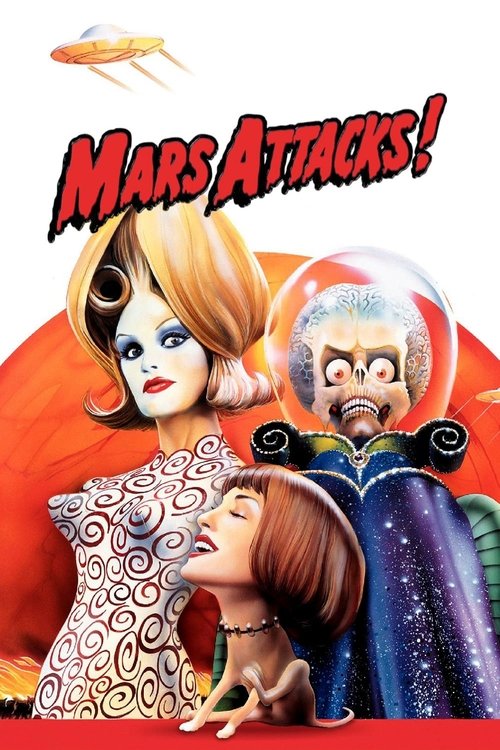
Mars Attacks!
1996 · Directed by Tim Burton
Ultra Based
Consciousness Score: 4%
Representation Casting
Score: 15/100
The ensemble cast includes women and minorities in various roles, but this reflects practical casting needs rather than conscious representation efforts. No character receives meaningful development based on their identity.
LGBTQ+ Themes
Score: 0/100
No LGBTQ+ themes or representation are present in the film.
Feminist Agenda
Score: 5/100
Female characters exist throughout the film but primarily in supporting or decorative roles. There is no feminist agenda or examination of gender dynamics.
Racial Consciousness
Score: 0/100
The film contains no examination of race, racism, or racial identity. Characters of color are present but race is never thematized or discussed.
Climate Crusade
Score: 0/100
Climate change and environmental themes are entirely absent from this alien invasion comedy.
Eat the Rich
Score: 0/100
While the film satirizes government institutions, it contains no critique of capitalism or wealth inequality.
Body Positivity
Score: 0/100
Body positivity themes are not present. The film treats physical appearance as material for comedic absurdity rather than as a vehicle for social commentary.
Neurodivergence
Score: 0/100
No representation of or engagement with neurodivergence is present in the film.
Revisionist History
Score: 0/100
The film does not reinterpret historical events or narratives. It is set in a fictional present-day scenario.
Lecture Energy
Score: 0/100
The film contains no preachy messaging or lecture-like exposition about social issues. It is deliberately absurdist and anti-serious.


Synopsis
A fleet of Martian spacecraft surrounds the world's major cities and all of humanity waits to see if the extraterrestrial visitors have, as they claim, "come in peace." U.S. President James Dale receives assurance from science professor Donald Kessler that the Martians' mission is a friendly one. But when a peaceful exchange ends in the total annihilation of the U.S. Congress, military men call for a full-scale nuclear retaliation.
Consciousness Assessment
Mars Attacks is a 1996 artifact of pre-millennial cinema, a deliberately campy pastiche of 1950s alien invasion films that treats its own subject matter with the gravity of a teenager mocking their substitute teacher. Tim Burton assembled one of the most expensive ensemble casts ever committed to a film whose primary ambition appears to be the destruction of Congress, pursued with the enthusiasm of a toddler dismantling a dollhouse. The film's satire, such as it is, targets Cold War militarism and government incompetence through broad farce rather than pointed critique, and these themes do not constitute contemporary cultural consciousness.
The ensemble approach does feature a diverse cross-section of Hollywood talent, though this reflects the film's need to fill numerous speaking roles rather than any deliberate commitment to representation. Women appear throughout, though primarily in decorative or supporting capacities. The humor derives entirely from absurdist spectacle and the casting of recognizable faces in ridiculous situations, not from any examination of systemic inequality or social structures. Burton's anarchic sensibility finds Congress worth destroying, but the film expresses no coherent political philosophy beyond "institutions are silly."
This is a comedy of surfaces, a visual gag stretched across two hours, with no interest in the kinds of thematic commitments that would elevate its social consciousness score beyond nominal levels. The film succeeds entirely as entertainment and fails entirely as social commentary, which is precisely the point. We are watching aliens vaporize politicians with ray guns while Tom Jones sings. The absence of earnest messaging is the entire appeal.
Analysis generated by our Consciousness Algorithm
Consciousness Markers
The ensemble cast includes women and minorities in various roles, but this reflects practical casting needs rather than conscious representation efforts. No character receives meaningful development based on their identity.
No LGBTQ+ themes or representation are present in the film.
Female characters exist throughout the film but primarily in supporting or decorative roles. There is no feminist agenda or examination of gender dynamics.
The film contains no examination of race, racism, or racial identity. Characters of color are present but race is never thematized or discussed.
Climate change and environmental themes are entirely absent from this alien invasion comedy.
While the film satirizes government institutions, it contains no critique of capitalism or wealth inequality.
Body positivity themes are not present. The film treats physical appearance as material for comedic absurdity rather than as a vehicle for social commentary.
No representation of or engagement with neurodivergence is present in the film.
The film does not reinterpret historical events or narratives. It is set in a fictional present-day scenario.
The film contains no preachy messaging or lecture-like exposition about social issues. It is deliberately absurdist and anti-serious.