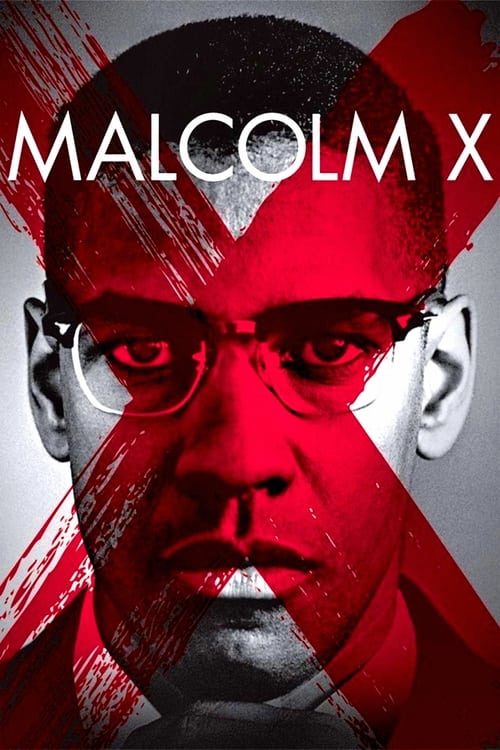
Malcolm X
1992 · Directed by Spike Lee
Woke Score
CriticCritic Score
Audience
Woke-Adjacent
Critics rated this 25 points above its woke score. Among Woke-Adjacent films, this critic score ranks #68 of 151.
Representation Casting
Score: 45/100
The film centers Black actors and Black experience, with Denzel Washington and Angela Bassett in leading roles. However, this casting reflects historical necessity rather than deliberate contemporary representation strategy.
LGBTQ+ Themes
Score: 0/100
No LGBTQ+ themes, characters, or representation present in the film. The historical record and narrative do not incorporate this element.
Feminist Agenda
Score: 15/100
Angela Bassett's Betty Shabazz is portrayed respectfully but remains secondary to the protagonist's arc. The Nation of Islam's historical gender roles are presented without contemporary feminist critique or reframing.
Racial Consciousness
Score: 65/100
The film extensively explores Black identity, self-determination, and racial pride through Malcolm X's journey. However, this emerges from historical documentation rather than contemporary progressive analysis or preachy messaging.
Climate Crusade
Score: 0/100
No climate or environmental themes appear in the film. The historical biographical focus precludes any engagement with climate consciousness.
Eat the Rich
Score: 20/100
The film touches on economic exploitation and the Nation of Islam's self-sufficiency ideology, but does not present anti-capitalism as a primary thematic concern or engage in contemporary critique of wealth inequality.
Body Positivity
Score: 0/100
No body positivity messaging or themes are present. The film does not engage with contemporary discourse around body image or acceptance.
Neurodivergence
Score: 0/100
No representation of neurodivergent characters or exploration of neurodiversity. The film does not address this category.
Revisionist History
Score: 10/100
The film attempts historical accuracy rather than revisionism. It presents Malcolm X's actual biography, though Lee's directorial perspective shapes interpretation. No significant rewriting of historical events occurs.
Lecture Energy
Score: 25/100
While the film contains Malcolm X's famous speeches, these emerge organically from the narrative rather than functioning as preachy lectures to the audience. The tone is documentary rather than hortatory.


Synopsis
A tribute to the controversial black activist and leader of the struggle for black liberation. He hit bottom during his imprisonment in the '50s, he became a Black Muslim and then a leader in the Nation of Islam. His assassination in 1965 left a legacy of self-determination and racial pride.
Consciousness Assessment
Spike Lee's Malcolm X stands as a monument to 1990s historical consciousness, a film that treats its subject with the gravity of a museum curator rather than the sensibilities of contemporary progressive cinema. Denzel Washington's performance captures the activist's intellectual evolution with precision, yet the film remains a traditional biographical epic: it documents transformation, not interrogation. The narrative arc from street hustler to spiritual leader to assassinated martyr unfolds with classical dramatic integrity, which is to say it privileges historical accuracy and narrative momentum over the kind of social commentary that would later come to characterize the 2020s cultural moment.
What distinguishes Malcolm X from later progressive filmmaking is its lack of the specific markers that define modern wokeness. The film centers Black experience and racial consciousness, yes, but it does so as historical record rather than cultural critique. There is no lecture about systemic racism because the film assumes we already understand it. There are no invented diverse characters present for representation's sake because the story demands only the participants of history. Angela Bassett's portrayal of Betty Shabazz is dignified but marginal, reflecting the historical record rather than performing contemporary feminism. The Nation of Islam's complicated relationship with gender roles receives no contemporary reframing. Body positivity, neurodivergence, climate consciousness, anti-capitalism as spectacle: these markers of modern cultural awareness simply do not apply to a film concerned with documenting the life of a specific historical figure.
The film's power derives from its refusal to soften Malcolm's ideology or his complexity. It presents his journey without apology and without the contemporary urge to contextualize or qualify. This restraint, this commitment to the subject rather than to the audience's comfort, is precisely what prevents it from scoring higher on a scale designed to measure the specific constellation of 2020s progressive sensibilities. Malcolm X is a serious film about serious matters, but seriousness and wokeness are not synonymous.
Analysis generated by our Consciousness Algorithm
Critic Reviews
“Mr. Lee means for Malcolm X to be an epic, and it is in its concerns and its physical scope. In Denzel Washington it also has a fine actor who does for Malcolm X what Ben Kingsley did for “Gandhi.” [18 November 1992]”
“The film is inspirational and educational - and it is also entertaining, as movies must be before they can be anything else.”
“With Malcolm X, Lee has created a galvanizing political tragedy, the story of a leader who, through his very perception and daring, recognized that death — and only death — would be his final evolution.”
“Lee has tried hard to give this shapeless picture some visual patterning though the cluttered effect created by his mistrust of silence is even more harmful than in the past.”
Consciousness Markers
The film centers Black actors and Black experience, with Denzel Washington and Angela Bassett in leading roles. However, this casting reflects historical necessity rather than deliberate contemporary representation strategy.
No LGBTQ+ themes, characters, or representation present in the film. The historical record and narrative do not incorporate this element.
Angela Bassett's Betty Shabazz is portrayed respectfully but remains secondary to the protagonist's arc. The Nation of Islam's historical gender roles are presented without contemporary feminist critique or reframing.
The film extensively explores Black identity, self-determination, and racial pride through Malcolm X's journey. However, this emerges from historical documentation rather than contemporary progressive analysis or preachy messaging.
No climate or environmental themes appear in the film. The historical biographical focus precludes any engagement with climate consciousness.
The film touches on economic exploitation and the Nation of Islam's self-sufficiency ideology, but does not present anti-capitalism as a primary thematic concern or engage in contemporary critique of wealth inequality.
No body positivity messaging or themes are present. The film does not engage with contemporary discourse around body image or acceptance.
No representation of neurodivergent characters or exploration of neurodiversity. The film does not address this category.
The film attempts historical accuracy rather than revisionism. It presents Malcolm X's actual biography, though Lee's directorial perspective shapes interpretation. No significant rewriting of historical events occurs.
While the film contains Malcolm X's famous speeches, these emerge organically from the narrative rather than functioning as preachy lectures to the audience. The tone is documentary rather than hortatory.