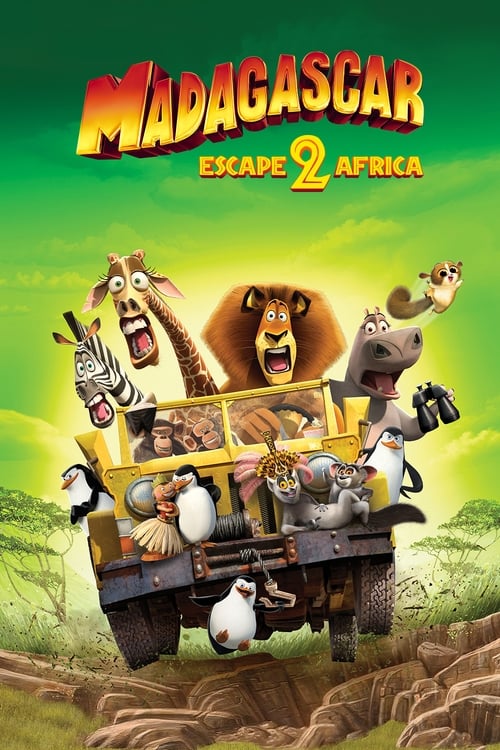
Madagascar: Escape 2 Africa
2008 · Directed by Tom McGrath
Woke Score
CriticCritic Score
Audience
Ultra Based
Critics rated this 43 points above its woke score. Among Ultra Based films, this critic score ranks #864 of 1469.
Representation Casting
Score: 35/100
The voice cast includes Black actors like Chris Rock and Jada Pinkett Smith, but their casting appears to be color-blind rather than intentional representation. No particular effort is made to highlight or celebrate their presence.
LGBTQ+ Themes
Score: 0/100
No LGBTQ+ themes, representation, or subtext of any kind. The film is entirely heteronormative without acknowledgment or commentary.
Feminist Agenda
Score: 15/100
Female characters exist in the film but are largely peripheral and defined by traditional roles. No feminist agenda or critique of gender dynamics is present.
Racial Consciousness
Score: 20/100
The film's portrayal of African characters and the African setting relies on familiar stereotypes and tropes. No interrogation of these images or acknowledgment of their problematic nature occurs.
Climate Crusade
Score: 0/100
No environmental messaging, climate consciousness, or ecological themes. The natural world exists purely as backdrop for adventure.
Eat the Rich
Score: 5/100
The film contains no critique of capitalism, wealth inequality, or systemic economic exploitation. Zoo animals are property, but this is never interrogated.
Body Positivity
Score: 0/100
No body-positive messaging. Animal characters are drawn according to traditional designs with no variation or celebration of different body types.
Neurodivergence
Score: 0/100
No representation of neurodivergent characters or conditions. No accommodation or acknowledgment of neurodiversity.
Revisionist History
Score: 25/100
The film depicts Africa through a lens of exoticism and primitivism without historical context. While not explicitly revisionist, it perpetuates colonial-era stereotypes about African wilderness and peoples.
Lecture Energy
Score: 10/100
The film contains minimal preachy messaging. It aims purely for entertainment without attempting to educate or instruct the audience on social issues.


Synopsis
Alex, Marty, and other zoo animals find a way to escape from Madagascar when the penguins reassemble a wrecked airplane. The precariously repaired craft stays airborne just long enough to make it to the African continent. There the New Yorkers encounter members of their own species for the first time. Africa proves to be a wild place, but Alex and company wonder if it is better than their Central Park home.
Consciousness Assessment
Madagascar: Escape 2 Africa occupies that curious position of a mainstream animated sequel from the pre-woke era, when cultural self-consciousness had not yet metastasized through the entertainment industry like a particularly aggressive fungal bloom. The film features a diverse voice cast, including Chris Rock and Jada Pinkett Smith, though their presence serves more as color-blind casting rather than any deliberate commitment to representation. The narrative remains largely apolitical, concerned with slapstick humor and the fish-out-of-water antics of anthropomorphic zoo animals rather than any meaningful engagement with themes of social justice or progressive sensibilities.
What cultural commentary exists tends toward the inadvertent rather than the intentional. The film's portrayal of African characters and the continent itself relies on familiar tropes and stereotypes that would likely draw scrutiny in a contemporary context, yet the film makes no effort whatsoever to interrogate these images or complicate them with nuance. There is no lecture energy here, no attempt to educate the audience about colonial legacies or systemic inequality. The animal characters simply bumble through their adventures without ideological baggage.
The film's complete indifference to modern progressive sensibilities actually becomes its defining characteristic. No environmental message mars the proceedings, no body-positive rhetoric intrudes upon the comedy, no neurodivergent representation earns inclusion points. This is a work of pure entertainment, untethered from the urgent cultural anxieties that would later come to dominate animated features. In the graveyard of 2000s cinema, Madagascar 2 stands as a monument to simpler times, when a film could be merely amusing without also serving as a vehicle for social consciousness.
Analysis generated by our Consciousness Algorithm
Critic Reviews
“The outcomes of all the mini-dramedies are too messy and equivocal to produce morals; that's just as it should be in a farce about confusion. Co-directors Eric Darnell and Tom McGrath are most intent on completing the circle of comedy.”
“Escape 2 Africa is pretty tame, but it knows how to keep its own turf tidy.”
“The visual style is typical, ultra crisp computer animation, bright, sharp, somewhat clinical.”
“When it comes to time-wasting memory games, crossword puzzles are more fun than this movie.”
Consciousness Markers
The voice cast includes Black actors like Chris Rock and Jada Pinkett Smith, but their casting appears to be color-blind rather than intentional representation. No particular effort is made to highlight or celebrate their presence.
No LGBTQ+ themes, representation, or subtext of any kind. The film is entirely heteronormative without acknowledgment or commentary.
Female characters exist in the film but are largely peripheral and defined by traditional roles. No feminist agenda or critique of gender dynamics is present.
The film's portrayal of African characters and the African setting relies on familiar stereotypes and tropes. No interrogation of these images or acknowledgment of their problematic nature occurs.
No environmental messaging, climate consciousness, or ecological themes. The natural world exists purely as backdrop for adventure.
The film contains no critique of capitalism, wealth inequality, or systemic economic exploitation. Zoo animals are property, but this is never interrogated.
No body-positive messaging. Animal characters are drawn according to traditional designs with no variation or celebration of different body types.
No representation of neurodivergent characters or conditions. No accommodation or acknowledgment of neurodiversity.
The film depicts Africa through a lens of exoticism and primitivism without historical context. While not explicitly revisionist, it perpetuates colonial-era stereotypes about African wilderness and peoples.
The film contains minimal preachy messaging. It aims purely for entertainment without attempting to educate or instruct the audience on social issues.