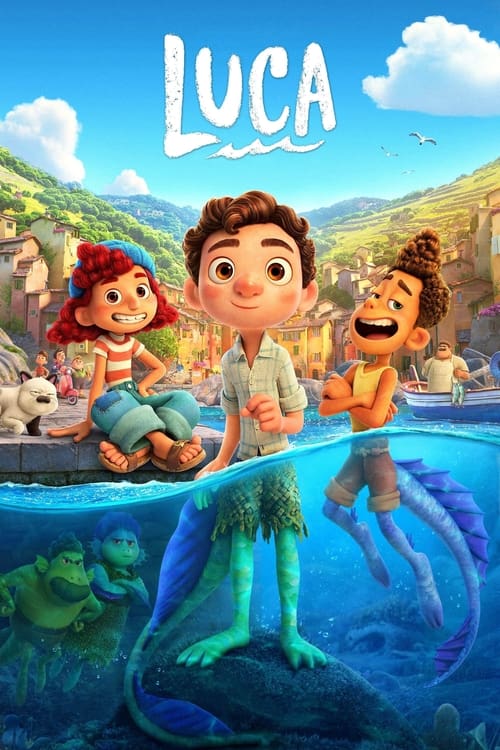
Luca
2021 · Directed by Enrico Casarosa
Woke Score
CriticCritic Score
Audience
Woke-Adjacent
Critics rated this 23 points above its woke score. Among Woke-Adjacent films, this critic score ranks #77 of 151.
Representation Casting
Score: 50/100
Diverse voice cast including Maya Rudolph, but casting feels incidental rather than intentional. Italian characters present but representation lacks depth or commentary.
LGBTQ+ Themes
Score: 65/100
The sea monster concealment reads as LGBTQ+ allegory for many audiences. The film centers emotional intimacy between two male characters, though it carefully avoids explicit textual engagement with this reading.
Feminist Agenda
Score: 35/100
Giulia is portrayed as capable and athletic, but the film makes no particular feminist statement. Female characters exist but lack ideological weight or agency beyond typical supporting roles.
Racial Consciousness
Score: 25/100
The film's racial consciousness remains minimal. Italian characters are presented without commentary on ethnicity or cultural identity. No engagement with systemic racial themes.
Climate Crusade
Score: 15/100
The ocean setting and sea monster characters exist without any climate advocacy or environmental consciousness. The film treats water as scenic backdrop rather than ecological concern.
Eat the Rich
Score: 0/100
No meaningful critique of capitalism or class structures. The Portorosso setting is presented as charming and aspirational rather than economically examined.
Body Positivity
Score: 30/100
Characters display varied body types in human and sea monster forms, but the film offers no explicit body positivity messaging. Transformation between forms plays into typical beauty standards.
Neurodivergence
Score: 0/100
No meaningful representation of neurodivergence. Characters are neurotypical and the film contains no discussion of neurodiversity.
Revisionist History
Score: 5/100
No engagement with historical revision. The film is set in a timeless Italian Riviera fantasy space without historical commentary.
Lecture Energy
Score: 20/100
The film favors gentle metaphor over direct messaging. No characters deliver speeches about acceptance or identity. The progressive elements remain subtextual and non-preachy.

Synopsis
Luca and his best friend Alberto experience an unforgettable summer on the Italian Riviera. But all the fun is threatened by a deeply-held secret: they are sea monsters from another world just below the water's surface.
Consciousness Assessment
Luca presents itself as a moderately progressive meditation on acceptance and self-discovery, though the film's commitment to these themes remains somewhat ambivalent. The central conceit, in which two boys must hide their true nature from society, has been widely interpreted as LGBTQ+ allegory by audiences and critics alike. Whether intentional or merely convenient, this subtext generates a certain cultural resonance, though the film never explicitly engages with such readings. The narrative prefers the safety of metaphor over specificity, allowing viewers to project their own meanings onto the sea monster disguise without requiring the film itself to stake any particular ideological position.
The film's representation landscape proves more complicated upon inspection. While the cast includes voice actors of various backgrounds and the setting features Italian characters with Italian names, the diversity feels incidental rather than purposeful. Maya Rudolph voices a character in what amounts to a supporting role. The female characters, including Giulia, are rendered with agency but hardly constitute a feminist statement of consequence. The film's relationship to its Italian setting borders on the touristic, trading in picturesque coastal imagery and gelato shop charm without deeper cultural engagement. There is no particular lecture energy, which some will read as restraint and others as evasion.
The film ultimately occupies an uncomfortable middle ground: progressive enough to attract audiences seeking progressive sensibilities, yet cautious enough to offend no one. It is a Pixar film designed to be all things to all people, which means it is finally nothing to anyone. The progressive markers present in Luca are real but diffuse, more suggested than asserted, which yields a moderate score reflecting genuine progressive elements tempered by corporate caution and the film's unwillingness to commit to its own implications.
Analysis generated by our Consciousness Algorithm
Critic Reviews
“This movie will fill your heart up. Casarosa is an artist with a true perspective, fearless in his creative impulses and limitless in his compassion, and Luca is a pure expression of these sensibilities.”
“The layered dynamics and pure, honest emotions underneath Luca‘s simple coming-of-age story are what elevate the film to one of Pixar’s best — and an example of what animation can be if they stop trying to race forward, and just stop and take a breath.”
“Luca is sweet and affecting, capturing the bond that strangers can build over a summer, and how that friendship can endure. And like its shape-shifting protagonists, it’s got plenty going on beneath the surface.”
“It’s a lot, but also very little: The action amounts to multiple variations on “try not to get wet, or caught out” to push along a plot that dispenses the usual life lessons about being brave and valuing friendship.”
Consciousness Markers
Diverse voice cast including Maya Rudolph, but casting feels incidental rather than intentional. Italian characters present but representation lacks depth or commentary.
The sea monster concealment reads as LGBTQ+ allegory for many audiences. The film centers emotional intimacy between two male characters, though it carefully avoids explicit textual engagement with this reading.
Giulia is portrayed as capable and athletic, but the film makes no particular feminist statement. Female characters exist but lack ideological weight or agency beyond typical supporting roles.
The film's racial consciousness remains minimal. Italian characters are presented without commentary on ethnicity or cultural identity. No engagement with systemic racial themes.
The ocean setting and sea monster characters exist without any climate advocacy or environmental consciousness. The film treats water as scenic backdrop rather than ecological concern.
No meaningful critique of capitalism or class structures. The Portorosso setting is presented as charming and aspirational rather than economically examined.
Characters display varied body types in human and sea monster forms, but the film offers no explicit body positivity messaging. Transformation between forms plays into typical beauty standards.
No meaningful representation of neurodivergence. Characters are neurotypical and the film contains no discussion of neurodiversity.
No engagement with historical revision. The film is set in a timeless Italian Riviera fantasy space without historical commentary.
The film favors gentle metaphor over direct messaging. No characters deliver speeches about acceptance or identity. The progressive elements remain subtextual and non-preachy.