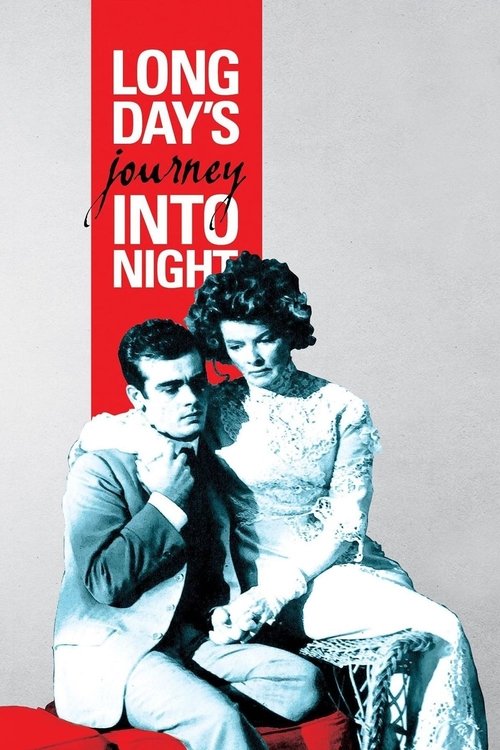
Long Day's Journey Into Night
1962 · Directed by Sidney Lumet
Woke Score
CriticCritic Score
Audience
Ultra Based
Critics rated this 86 points above its woke score. Among Ultra Based films, this critic score ranks #183 of 1469.
Representation Casting
Score: 0/100
The cast reflects the story's Irish-American setting without any apparent consideration for diversity in casting. No evidence of deliberate representation efforts.
LGBTQ+ Themes
Score: 0/100
The film contains no LGBTQ+ themes or representation of any kind. All relationships depicted are heterosexual and marital.
Feminist Agenda
Score: 5/100
While Hepburn's character is sympathetically portrayed as a victim of circumstance and addiction, the film does not advance any feminist agenda or critique of gender roles. Her suffering is presented as individual tragedy rather than systemic.
Racial Consciousness
Score: 0/100
No racial themes, commentary, or consciousness present. The film's focus on an Irish-American family does not engage with racial or ethnic politics.
Climate Crusade
Score: 0/100
No climate or environmental themes whatsoever. The setting is entirely domestic and interior.
Eat the Rich
Score: 0/100
While the father's wealth and miserliness are character traits, they are not presented as social critique. No anti-capitalist messaging or class consciousness appears.
Body Positivity
Score: 0/100
No body positivity themes or commentary. The film is concerned with psychological and emotional states, not physical appearance or body acceptance.
Neurodivergence
Score: 0/100
While addiction and psychological distress are central, the film does not address neurodivergence as a concept or advocate for neurodivergent representation.
Revisionist History
Score: 0/100
The film is set in 1912 but makes no attempt to reframe or reinterpret historical events. It is purely concerned with private family drama.
Lecture Energy
Score: 3/100
The film's dialogue is verbose and philosophical, with characters engaging in lengthy monologues about suffering and fate. However, this reflects O'Neill's theatrical style rather than preachy social messaging.


Synopsis
An Irish miser, his morphine addicted wife, their debauched older son, and a gravely ill younger son. A quiet Connecticut vacation home on one foggy day in August 1912 becomes the backdrop for domestic decline.
Consciousness Assessment
Sidney Lumet's adaptation of Eugene O'Neill's autobiographical play is a suffocating portrait of family dysfunction that predates modern social consciousness by decades. The film concerns itself almost entirely with internal psychological torment and the particular cruelties that blood relations inflict upon one another. Katharine Hepburn delivers a devastating performance as a woman trapped by morphine addiction and a loveless marriage, yet the film makes no attempt to contextualize her suffering within any framework of social injustice or systemic oppression. It is simply tragedy, rendered in bleak black and white.
The work contains no representation politics, no progressive sexual content, no examination of racial or economic structures beyond the incidental fact that the family is Irish and moderately wealthy. The father's miserliness is presented as a character flaw rooted in personal trauma, not as a critique of capitalism or wealth accumulation. The mother's addiction is a private horror, not a statement about pharmaceutical industries or healthcare systems. We are asked only to witness the slow poisoning of intimacy within these four walls.
This is a film entirely unconcerned with the markers by which we now measure cultural consciousness. It belongs to an era when drama meant the unflinching observation of human suffering without the need for social diagnosis or redemptive messaging. In that sense, it remains almost defiantly indifferent to progressive sensibilities. One might call this refusal to didactize a kind of artistic integrity, though such observations are best left to those who still believe in art for its own sake.
Analysis generated by our Consciousness Algorithm
Critic Reviews
“The unexpected love child of Wong Kar-wai and Andrei Tarkovsky, “Long Day’s Journey Into Night” transforms from a lush, slow-burn pastiche to an audacious filmmaking gamble while maintaining the pictorial sophistication of its earlier section. It’s both languorous and eye-popping at once.”
“While Long Day’s plot seems an afterthought, the experience is all that matters: the audience gathers all the clues, rummage through them to soak up the atmosphere and enter a world unlike any seen before. Make no mistake about it, Long Day’s Journey Into Night is a flat-out masterpiece. ”
“A sense of disorientation is a wholly appropriate response to a movie in which the past is both irretrievable and unshakable. But even at its most openly baffling, “Long Day’s Journey Into Night” never loses its seductive pull.”
“Plunging viewers into an extended dream sequence in the name of abstract motifs such as memory, time, and space, the film is a lush plotless mood-piece swimming in artsy references and ostentatious technical exercises, with a star (Tang Wei, “Lust, Caution”) as decoration.”
Consciousness Markers
The cast reflects the story's Irish-American setting without any apparent consideration for diversity in casting. No evidence of deliberate representation efforts.
The film contains no LGBTQ+ themes or representation of any kind. All relationships depicted are heterosexual and marital.
While Hepburn's character is sympathetically portrayed as a victim of circumstance and addiction, the film does not advance any feminist agenda or critique of gender roles. Her suffering is presented as individual tragedy rather than systemic.
No racial themes, commentary, or consciousness present. The film's focus on an Irish-American family does not engage with racial or ethnic politics.
No climate or environmental themes whatsoever. The setting is entirely domestic and interior.
While the father's wealth and miserliness are character traits, they are not presented as social critique. No anti-capitalist messaging or class consciousness appears.
No body positivity themes or commentary. The film is concerned with psychological and emotional states, not physical appearance or body acceptance.
While addiction and psychological distress are central, the film does not address neurodivergence as a concept or advocate for neurodivergent representation.
The film is set in 1912 but makes no attempt to reframe or reinterpret historical events. It is purely concerned with private family drama.
The film's dialogue is verbose and philosophical, with characters engaging in lengthy monologues about suffering and fate. However, this reflects O'Neill's theatrical style rather than preachy social messaging.