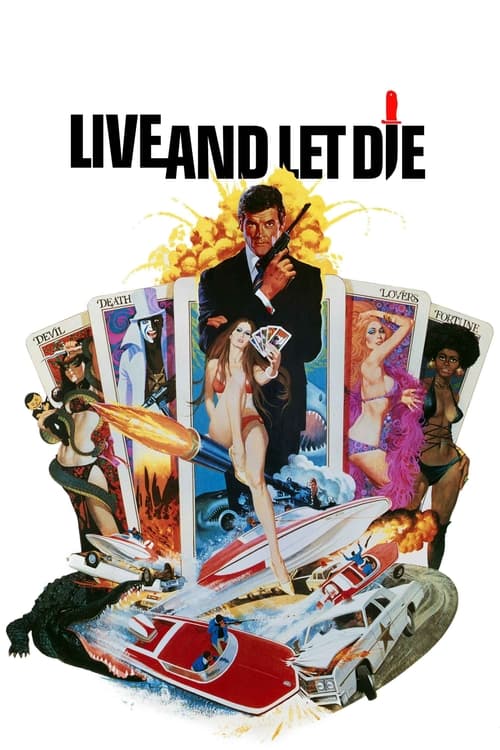
Live and Let Die
1973 · Directed by Guy Hamilton
Woke Score
CriticCritic Score
Audience
Ultra Based
Critics rated this 51 points above its woke score. Among Ultra Based films, this critic score ranks #1060 of 1469.
Representation Casting
Score: 15/100
The film includes Black actors in prominent supporting roles, which was notable for 1973 Hollywood, but they are confined to stereotypical character types with minimal agency or complexity.
LGBTQ+ Themes
Score: 0/100
No LGBTQ+ themes or characters are present in the film. Sexuality is treated entirely through a heterosexual male gaze.
Feminist Agenda
Score: 5/100
Female characters exist primarily as romantic conquests or decorative elements. Jane Seymour's character is relatively passive and exists primarily to be rescued or seduced.
Racial Consciousness
Score: 0/100
The film perpetuates racial stereotypes and colonial attitudes toward Caribbean culture and Black characters. There is no evidence of racial consciousness or critique.
Climate Crusade
Score: 0/100
No engagement with environmental themes whatsoever. The film treats natural settings as mere scenery.
Eat the Rich
Score: 0/100
The film is fundamentally pro-capitalist and pro-establishment, celebrating Western intelligence agencies and the status quo.
Body Positivity
Score: 0/100
Standard 1970s action film with no consideration for body diversity or representation.
Neurodivergence
Score: 0/100
No representation of or engagement with neurodivergent characters or perspectives.
Revisionist History
Score: 0/100
The film makes no attempt to revise or reexamine historical narratives. It reproduces colonial power dynamics without critique.
Lecture Energy
Score: 5/100
The film contains no expository dialogue about social issues. Any 'lesson' is incidental to the plot mechanics of a spy thriller.


Synopsis
James Bond must investigate a mysterious murder case of a British agent in New Orleans. Soon he finds himself up against a gangster boss named Mr. Big.
Consciousness Assessment
Live and Let Die occupies a curious space in the cultural history of mainstream cinema. Released in 1973, it represents Hollywood's attempt to capitalize on the blaxploitation wave, yet the film does so through a lens of such profound condescension and stereotyping that it inadvertently documents the era's casual racism. The depiction of Caribbean settings reduces complex cultures to exotic backdrops for action sequences, while Black characters are frequently portrayed through crude typologies: the menacing gangster, the mystical villain, the sexualized woman. Roger Moore's Bond moves through these spaces as an agent of white Western superiority, treating the locales and their inhabitants as mere obstacles to overcome.
What makes this film marginally relevant to contemporary discussions of progressive sensibilities is not the film's intentions, but rather the accident of its casting and the incidental presence of Black characters in prominent roles. Yaphet Kotto and Geoffrey Holder provide skilled performances despite the material, and their presence in a major studio production was itself noteworthy for 1973, even if their characters remain trapped within reductive frameworks. The film makes no attempt at what we would now call racial consciousness or cultural awareness. It simply reproduces the dominant power structures of its moment without irony or critique.
This is a film of its time, frozen in amber. To score it by contemporary standards would be a category error, yet the evidence of its racial insensitivity is undeniable. The low score reflects not modern progressive values imposed retroactively, but rather the film's genuine lack of any social consciousness whatsoever.
Analysis generated by our Consciousness Algorithm
Critic Reviews
“A modernised Bond is dragged kicking and screaming into the 70s.”
“There is a marvelous escape from an alligator farm (deadly reptiles are rather a motif in this movie), a superb collection of grotesque ways of killing, and a fine sense of pace and rhythm.”
“Live and Let Die isn't the best of the series by far, but it's not the worst either. The fun doesn't last due to the interference of the flimsy plot, centered around one of the least threatening Bond villains ever.”
“Guy Hamilton's direction lacks enthusiasm and pace, while even the art direction—long the Bond films' real secret weapon—seems to have fallen to a shrunken budget. Not much fun.”
Consciousness Markers
The film includes Black actors in prominent supporting roles, which was notable for 1973 Hollywood, but they are confined to stereotypical character types with minimal agency or complexity.
No LGBTQ+ themes or characters are present in the film. Sexuality is treated entirely through a heterosexual male gaze.
Female characters exist primarily as romantic conquests or decorative elements. Jane Seymour's character is relatively passive and exists primarily to be rescued or seduced.
The film perpetuates racial stereotypes and colonial attitudes toward Caribbean culture and Black characters. There is no evidence of racial consciousness or critique.
No engagement with environmental themes whatsoever. The film treats natural settings as mere scenery.
The film is fundamentally pro-capitalist and pro-establishment, celebrating Western intelligence agencies and the status quo.
Standard 1970s action film with no consideration for body diversity or representation.
No representation of or engagement with neurodivergent characters or perspectives.
The film makes no attempt to revise or reexamine historical narratives. It reproduces colonial power dynamics without critique.
The film contains no expository dialogue about social issues. Any 'lesson' is incidental to the plot mechanics of a spy thriller.