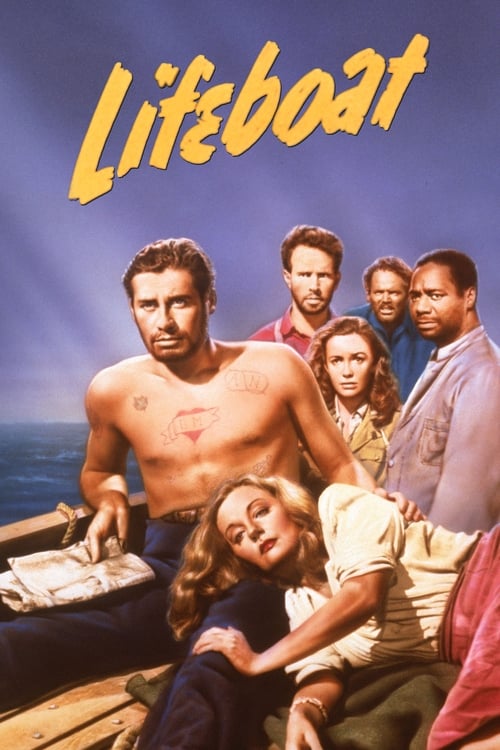
Lifeboat
1944 · Directed by Alfred Hitchcock
Woke Score
CriticCritic Score
Audience
Ultra Based
Critics rated this 74 points above its woke score. Among Ultra Based films, this critic score ranks #433 of 1469.
Representation Casting
Score: 15/100
Canada Lee, a prominent Black actor, appears in the cast as one of the survivors. His inclusion reflects era-appropriate diverse casting rather than modern representation politics.
LGBTQ+ Themes
Score: 0/100
No LGBTQ+ themes, characters, or representation present in the film.
Feminist Agenda
Score: 5/100
Tallulah Bankhead plays a female survivor, but her character exists as one member of an ensemble rather than as a vehicle for feminist critique or messaging.
Racial Consciousness
Score: 0/100
While Canada Lee appears in the cast, the film contains no thematic exploration of race, racism, or racial consciousness in any modern sense.
Climate Crusade
Score: 0/100
No environmental or climate-related themes appear in this wartime survival narrative.
Eat the Rich
Score: 0/100
The film contains no critique of capitalism or messaging about economic systems and inequality.
Body Positivity
Score: 0/100
No body positivity representation or messaging present in the film.
Neurodivergence
Score: 0/100
No representation of neurodivergent characters or themes related to neurodivergence.
Revisionist History
Score: 0/100
The film is a contemporary wartime drama rather than a revisionist reinterpretation of historical events.
Lecture Energy
Score: 10/100
The film explores philosophical questions about morality and human nature under duress, though this reflects universal humanist inquiry rather than contemporary social messaging.


Synopsis
During World War II, a small group of survivors is stranded in a lifeboat together after the ship they were traveling on is destroyed by a German U-boat.
Consciousness Assessment
Lifeboat arrives from a pre-woke era so thoroughly distant that evaluating it through contemporary sensibilities feels almost like linguistic archaeology. Hitchcock's 1944 survival thriller, based on John Steinbeck's story, traps a diverse group of civilians and military personnel in a lifeboat with a German U-boat captain, exploring human nature under duress. The film's inclusion of Canada Lee, a distinguished Black actor who brought dignified presence to the ensemble, marks its only notable gesture toward representation, though this reflects the casting choices of the era rather than any thematic engagement with modern identity politics.
The film was controversial upon release, with some critics accusing Hitchcock of presenting the German captain in an unduly sympathetic light, a charge that speaks more to wartime anxieties than to any contemporary progressive messaging. The narrative explores moral ambiguity and the fragility of civilization when resources dwindle, but these are universal humanist themes rather than markers of modern social consciousness. We find here no interrogation of systemic power structures, no celebration of bodily diversity, no queer representation, no climate advocacy.
This is a masterwork of confined-space tension and character study, a technical achievement of remarkable economy. It simply exists in a world before the constellation of cultural markers that define contemporary progressive sensibilities had congealed into their current form. To score it highly for wokeness would be to mistake the film for something it never attempted to be.
Analysis generated by our Consciousness Algorithm
Critic Reviews
“Lifeboat is actually much more complicated than it first appears. Its emphasis on moral debates in dialogue can seem a little dry, but Hitchcock’s shifting sympathies guarantee our guilty involvement with the characters until he builds to a climax of intellectual and spiritual excitation.”
“The entire cast is superb, but the standouts are Bankhead, as the spoiled, wealthy dilettante writer whose expensive furs and jewelry are worth more to her than the lives of her fellow survivors, and Bendix, as the compassionate but not-too-bright stoker whose gangrenous leg poses a threat to his dreams of returning home to dance with his sweetheart.”
“The suspense is pulse tearing, but Hitchcock, in a movie made explicitly for the war effort, gives it an extra edge. Also, in his favorite and most ingenious cameo role, Hitch solves the problem of appearing in a film with no extras -- the cast consists only of the other shipwreck survivors -- by having himself photographed before and after losing 100 pounds on a special crash diet. [15 Nov 2005, p.C3]”
Consciousness Markers
Canada Lee, a prominent Black actor, appears in the cast as one of the survivors. His inclusion reflects era-appropriate diverse casting rather than modern representation politics.
No LGBTQ+ themes, characters, or representation present in the film.
Tallulah Bankhead plays a female survivor, but her character exists as one member of an ensemble rather than as a vehicle for feminist critique or messaging.
While Canada Lee appears in the cast, the film contains no thematic exploration of race, racism, or racial consciousness in any modern sense.
No environmental or climate-related themes appear in this wartime survival narrative.
The film contains no critique of capitalism or messaging about economic systems and inequality.
No body positivity representation or messaging present in the film.
No representation of neurodivergent characters or themes related to neurodivergence.
The film is a contemporary wartime drama rather than a revisionist reinterpretation of historical events.
The film explores philosophical questions about morality and human nature under duress, though this reflects universal humanist inquiry rather than contemporary social messaging.