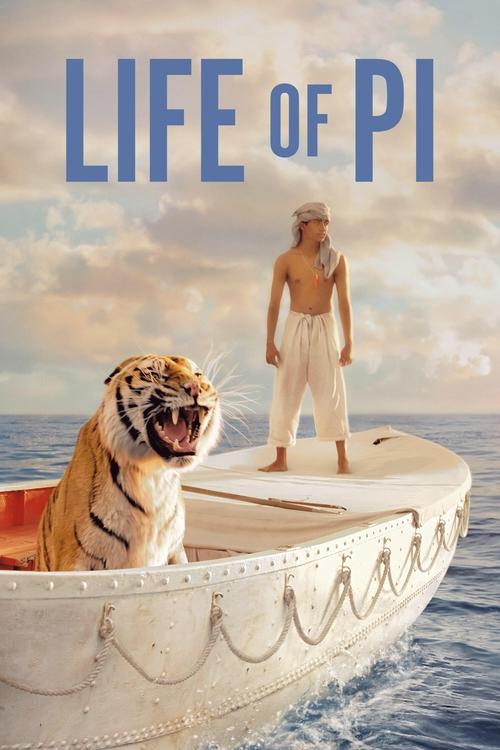
Life of Pi
2012 · Directed by Ang Lee
Woke Score
CriticCritic Score
Audience
Ultra Based
Critics rated this 64 points above its woke score. Among Ultra Based films, this critic score ranks #386 of 1469.
Representation Casting
Score: 25/100
Features an Indian protagonist and predominantly South Asian cast in a major studio production. However, this derives from source material rather than deliberate progressive casting choices.
LGBTQ+ Themes
Score: 0/100
No LGBTQ+ representation or themes present in this survival narrative.
Feminist Agenda
Score: 0/100
Male-centered narrative with minimal female characters and no feminist messaging.
Racial Consciousness
Score: 20/100
Explores religious plurality and cultural identity through Pi's simultaneous embrace of Hinduism, Christianity, and Islam, though framed as spiritual rather than explicitly racial consciousness.
Climate Crusade
Score: 0/100
Features ocean and animal elements but contains no environmental activism or climate messaging.
Eat the Rich
Score: 0/100
Apolitical spiritual adventure narrative with no commentary on economic systems or class struggle.
Body Positivity
Score: 0/100
No body positivity themes or discussions present.
Neurodivergence
Score: 0/100
No neurodivergent characters or representation in the film.
Revisionist History
Score: 0/100
Non-historical narrative with no revisionist historical claims.
Lecture Energy
Score: 15/100
Contains philosophical and spiritual reflections on faith and meaning-making, though integrated into the narrative rather than delivered as explicit lectures.


Synopsis
The story of an Indian boy named Pi, a zookeeper's son who finds himself in the company of a hyena, zebra, orangutan, and a Bengal tiger after a shipwreck sets them adrift in the Pacific Ocean.
Consciousness Assessment
Ang Lee's "Life of Pi" arrives as a visually sumptuous meditation on faith and survival, a film that operates almost entirely outside the frame of contemporary progressive sensibility. The narrative concerns itself with spiritual pluralism, not social consciousness, and its representation of an Indian protagonist stems from fidelity to source material rather than any conscious effort at diversification. The film treats its cultural specificity as setting rather than statement.
What emerges from this 2012 artifact is a work concerned with personal narrative and belief systems. Pi's simultaneous adherence to multiple faiths reads as spiritual syncretism, a philosophical position that precedes modern identity politics by centuries. The film philosophizes about meaning-making in catastrophe, about the stories we tell ourselves to survive, but it does so without the explicit social consciousness markers that define contemporary progressive cinema. The ocean, the tiger, and the lifeboat are metaphors for internal struggle, not vehicles for external social commentary.
The film's cultural composition reflects its source material and the casting of Suraj Sharma in the lead, yet the production makes no particular claim about representation as a value or statement. It simply tells its story through these characters. This is not a work designed to lecture or instruct about social structures. It remains apolitical, concerned with the eternal questions of faith and survival rather than the urgent social questions of its era.
Analysis generated by our Consciousness Algorithm
Critic Reviews
“Meticulous care is evident in every aspect of the film. All three actors playing Pi are outstanding.”
“Pi is a giant leap forward, outward and upward in expanding the resources of the evolving medium of movies. Magical realism was rarely so magical and never before so real. ”
“Pi has designed his own terrarium to keep from staring directly into the abyss. It's not denial. It's faith in something else: the transformative power of storytelling. The film is transcendent.”
“Life of Pi manages occasional spiritual wonder through its 3-D visuals but otherwise sinks like a stone.”
Consciousness Markers
Features an Indian protagonist and predominantly South Asian cast in a major studio production. However, this derives from source material rather than deliberate progressive casting choices.
No LGBTQ+ representation or themes present in this survival narrative.
Male-centered narrative with minimal female characters and no feminist messaging.
Explores religious plurality and cultural identity through Pi's simultaneous embrace of Hinduism, Christianity, and Islam, though framed as spiritual rather than explicitly racial consciousness.
Features ocean and animal elements but contains no environmental activism or climate messaging.
Apolitical spiritual adventure narrative with no commentary on economic systems or class struggle.
No body positivity themes or discussions present.
No neurodivergent characters or representation in the film.
Non-historical narrative with no revisionist historical claims.
Contains philosophical and spiritual reflections on faith and meaning-making, though integrated into the narrative rather than delivered as explicit lectures.