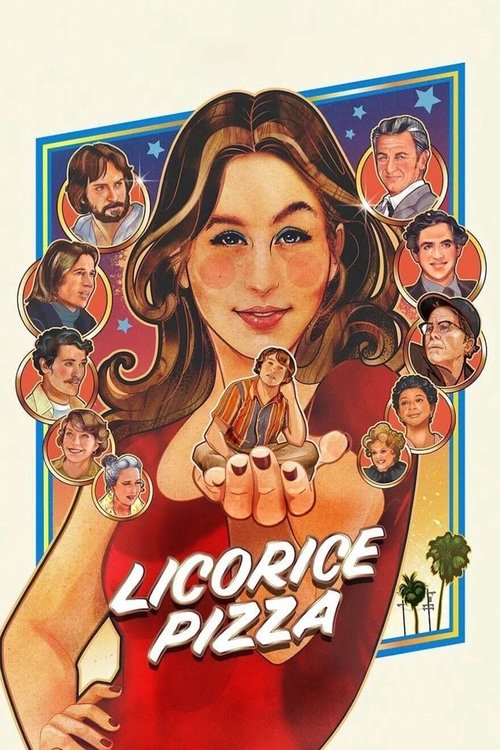
Licorice Pizza
2021 · Directed by Paul Thomas Anderson
Woke Score
CriticCritic Score
Audience
Ultra Based
Critics rated this 72 points above its woke score. Among Ultra Based films, this critic score ranks #128 of 1469.
Representation Casting
Score: 35/100
The cast includes diverse performers in supporting roles, and Alana Haim as a lead provides some gender representation, though the narrative centers on a teenage boy's perspective and romantic desires rather than substantively exploring female experience.
LGBTQ+ Themes
Score: 0/100
No LGBTQ+ themes, representation, or storylines are present in the film. The narrative focuses exclusively on heterosexual romance.
Feminist Agenda
Score: 15/100
While Alana is depicted as independent and capable, the film's primary concern is her romantic entanglement with a teenager. She functions more as an object of desire and romantic plot device than as a character whose agency or perspective is meaningfully centered.
Racial Consciousness
Score: 5/100
A scene features a white character performing a racist Asian accent, presented without critique or commentary. This suggests a lack of racial awareness rather than any conscious engagement with racial themes.
Climate Crusade
Score: 0/100
No climate-related themes, messaging, or environmental consciousness appears in the film.
Eat the Rich
Score: 20/100
The film depicts entrepreneurial teenage ventures and small business activity with general fondness, suggesting a light acceptance of capitalist hustle without critique. No substantive anti-capitalist commentary is present.
Body Positivity
Score: 0/100
The film contains no apparent body positivity messaging or representation of diverse body types in ways that challenge conventional beauty standards.
Neurodivergence
Score: 0/100
No neurodivergent characters, representation, or thematic engagement with neurodivergence appears in the film.
Revisionist History
Score: 50/100
The film presents a deliberately romanticized vision of the 1970s San Fernando Valley, smoothing over historical realities and social tensions of the era in favor of a nostalgic, aestheticized version of the period.
Lecture Energy
Score: 5/100
The film avoids explicit preachiness or lectures about social issues, maintaining a casual, observational tone. However, this restraint extends to avoiding any meaningful engagement with the problematic elements of its own narrative.


Synopsis
The story of Gary Valentine and Alana Kane growing up, running around and going through the treacherous navigation of first love in the San Fernando Valley, 1973.
Consciousness Assessment
Paul Thomas Anderson's "Licorice Pizza" presents itself as a nostalgic celebration of 1970s San Fernando Valley life, a project that aims for the freedom and authenticity of that era while remaining firmly rooted in contemporary filmmaking. Yet the film stumbles significantly when confronted with the implications of its own narrative choices. The central romantic premise, in which a 25-year-old woman becomes involved with a 15-year-old boy, exists in a strange state of denial, neither interrogating nor defending its premise with any coherence. Anderson appears to treat this dynamic as a charming period detail rather than something requiring examination, a choice that reads as either naively regressive or deliberately provocative. The inclusion of a scene featuring a white character's exaggerated Asian accent stereotype compounds this discomfort, suggesting a filmmaker more interested in verisimilitude to the 1970s than in considering what such verisimilitude might endorse.
The film's approach to gender and power dynamics proves similarly uneven. Alana Kane emerges as a capable, independent figure, yet her primary function remains defined through her relationship to Gary, particularly the uncomfortable romantic entanglement that structures the narrative. The female characters are not poorly represented in a crude sense, but neither are they centered in ways that might complicate or challenge the film's nostalgic worldview. This is not a story about women's experiences in the 1970s, despite having a female lead. Instead, it is a story about a boy's coming of age told through his interaction with an adult woman who serves as romantic prize and mentor interchangeably.
Anderson's film occupies an interesting position relative to contemporary sensibilities. It is neither aggressively reactionary nor genuinely progressive, but rather seems to exist in a state of indifference toward questions of power, consent, and representation that have become central to cultural discourse. The critical reception reflected this tension, with defenders arguing for historical context and artistic merit while detractors questioned whether nostalgia could justify depicting certain dynamics without comment. The film ultimately reads as a work more interested in capturing a mood than engaging with any of the uncomfortable truths embedded within its own narrative.
Analysis generated by our Consciousness Algorithm
Critic Reviews
“The film rides upon the shoulders of first-timers Haim (Anderson has directed several of her band’s videos) and Hoffman (son of frequent Anderson collaborator, the late Philip Seymour Hoffman), and they’re both thoroughly engaging.”
“In Licorice Pizza, time isn’t something that keeps people apart — it’s the only thing that allows them to find each other in the first place. And this euphoric movie doesn’t waste a minute of it.”
“It’s such a delectable film: I’ll be cutting myself another slice very soon.”
“Boxing Licorice Pizza inside the realm of juvenile memory more often feels like an excuse than a conceit.”
Consciousness Markers
The cast includes diverse performers in supporting roles, and Alana Haim as a lead provides some gender representation, though the narrative centers on a teenage boy's perspective and romantic desires rather than substantively exploring female experience.
No LGBTQ+ themes, representation, or storylines are present in the film. The narrative focuses exclusively on heterosexual romance.
While Alana is depicted as independent and capable, the film's primary concern is her romantic entanglement with a teenager. She functions more as an object of desire and romantic plot device than as a character whose agency or perspective is meaningfully centered.
A scene features a white character performing a racist Asian accent, presented without critique or commentary. This suggests a lack of racial awareness rather than any conscious engagement with racial themes.
No climate-related themes, messaging, or environmental consciousness appears in the film.
The film depicts entrepreneurial teenage ventures and small business activity with general fondness, suggesting a light acceptance of capitalist hustle without critique. No substantive anti-capitalist commentary is present.
The film contains no apparent body positivity messaging or representation of diverse body types in ways that challenge conventional beauty standards.
No neurodivergent characters, representation, or thematic engagement with neurodivergence appears in the film.
The film presents a deliberately romanticized vision of the 1970s San Fernando Valley, smoothing over historical realities and social tensions of the era in favor of a nostalgic, aestheticized version of the period.
The film avoids explicit preachiness or lectures about social issues, maintaining a casual, observational tone. However, this restraint extends to avoiding any meaningful engagement with the problematic elements of its own narrative.