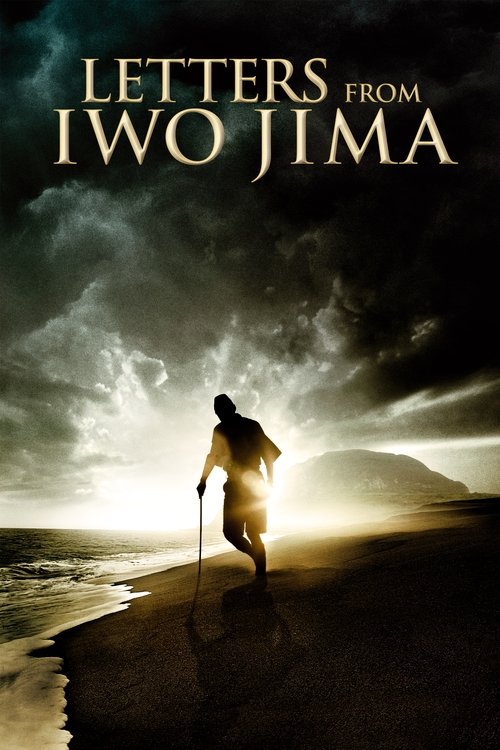
Letters from Iwo Jima
2006 · Directed by Clint Eastwood
Woke Score
CriticCritic Score
Audience
Ultra Based
Critics rated this 85 points above its woke score. Among Ultra Based films, this critic score ranks #154 of 1469.
Representation Casting
Score: 0/100
While the film employs Japanese actors in Japanese roles, this is historical accuracy rather than conscious representation activism. No modern diversity discourse is present.
LGBTQ+ Themes
Score: 0/100
No LGBTQ+ themes, characters, or representation appear in the film.
Feminist Agenda
Score: 0/100
This is an all-male war film with no significant female characters or feminist themes present.
Racial Consciousness
Score: 0/100
While Japanese soldiers are depicted with dignity and humanity, this reflects historical empathy rather than modern racial consciousness activism.
Climate Crusade
Score: 0/100
No environmental themes or climate messaging is present in the film.
Eat the Rich
Score: 0/100
There is no critique of capitalism, corporate power, or wealth inequality in the narrative.
Body Positivity
Score: 0/100
No body positivity messaging or representation of diverse body types beyond what naturally occurs in a war film.
Neurodivergence
Score: 0/100
No representation of neurodivergent characters or themes related to neurodiversity.
Revisionist History
Score: 0/100
The film presents a sympathetic Japanese perspective on a historical battle through humanistic storytelling, not through contemporary revisionist frameworks.
Lecture Energy
Score: 0/100
The narrative unfolds through character and drama rather than preachy exposition or preaching about social issues.


Synopsis
The story of the battle of Iwo Jima between the United States and Imperial Japan during World War II, as told from the perspective of the Japanese who fought it.
Consciousness Assessment
Clint Eastwood's 2006 companion piece to Flags of Our Fathers presents the Battle of Iwo Jima from the Japanese perspective with considerable technical skill and historical fidelity. The film humanizes its subjects through intimate character work and refuses the temptation to reduce Japanese soldiers to mere antagonists. Shot entirely in Japanese with an all-Japanese cast, it is a work of genuine artistic ambition that earned multiple Academy Award nominations and recognition from historians for its accuracy.
Yet this humanistic approach, however admirable, does not constitute contemporary progressive cultural consciousness. The film exists in a different register entirely: it is a serious war drama concerned with the individual human experience of combat and the clash between duty and survival. There is no contemporary social commentary, no interrogation of modern power structures, no representation activism, and no preachy framework imposed upon the narrative.
To score this film on the metrics of 2020s progressive sensibility would be a category error of the highest order. It is a work of historical cinema that treats its subject matter with dignity and moral gravity. These are virtues in themselves, but they are not the same as the specific cultural markers we measure. The film simply exists prior to that conversation entirely.
Analysis generated by our Consciousness Algorithm
Critic Reviews
“It's unprecedented, a sorrowful and savagely beautiful elegy that can stand in the company of the greatest antiwar movies.”
“Clint Eastwood's profound, magisterial, and gripping companion piece to his ambitious meditation on wartime image and reality, "Flags of Our Fathers."”
“Eastwood's direction here is a thing of beauty, blending the ferocity of the classic films of Akira Kurosawa (Seven Samurai) with the delicacy and unblinking gaze of Yasujiro Ozu (Tokyo Story).”
“Even with the great Ken Watanabe lending command and compassion to the role of General Kuribayashi, it's a formless slog across a treacherous field.”
Consciousness Markers
While the film employs Japanese actors in Japanese roles, this is historical accuracy rather than conscious representation activism. No modern diversity discourse is present.
No LGBTQ+ themes, characters, or representation appear in the film.
This is an all-male war film with no significant female characters or feminist themes present.
While Japanese soldiers are depicted with dignity and humanity, this reflects historical empathy rather than modern racial consciousness activism.
No environmental themes or climate messaging is present in the film.
There is no critique of capitalism, corporate power, or wealth inequality in the narrative.
No body positivity messaging or representation of diverse body types beyond what naturally occurs in a war film.
No representation of neurodivergent characters or themes related to neurodiversity.
The film presents a sympathetic Japanese perspective on a historical battle through humanistic storytelling, not through contemporary revisionist frameworks.
The narrative unfolds through character and drama rather than preachy exposition or preaching about social issues.